Agelaius phoeniceus
Red-winged Blackbird
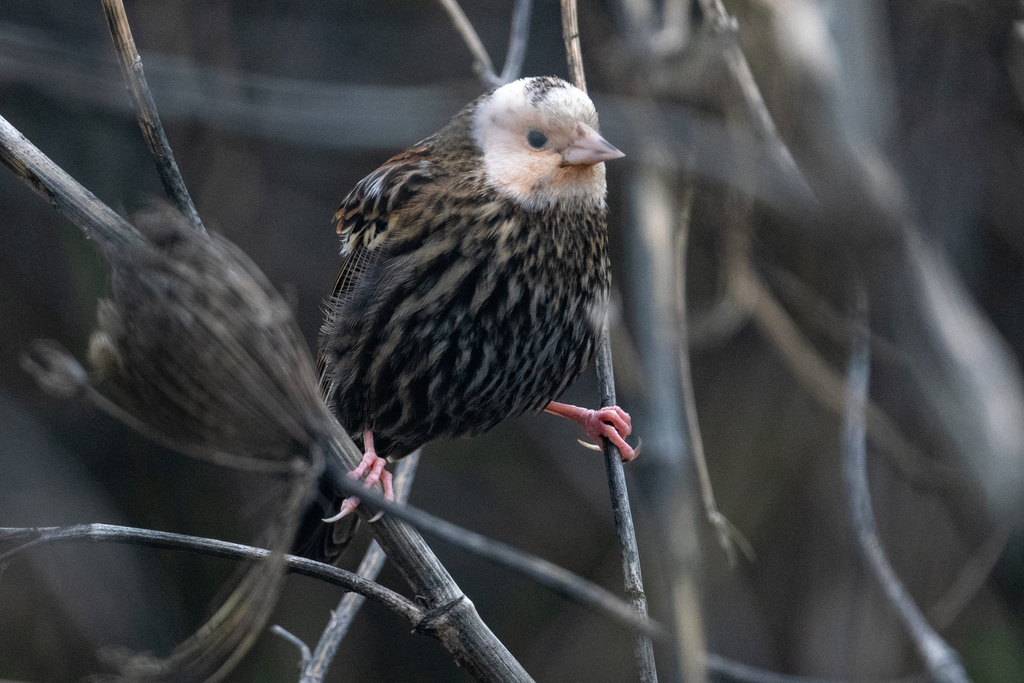
(c) Jonathan Eisen, some rights reserved (CC BY) · licence
Family: Icteridae · Class: Aves · Order: Passeriformes
Agelaius phoeniceus (Red-winged Blackbird) is a California animal in the Icteridae family.
The Red-winged Blackbird (Agelaius phoeniceus) is a medium-sized songbird in the family Icteridae. Males measure 22-24 cm (8.7-9.4 inches) in length with a wingspan of 31-40 cm (12-16 inches), weighing 41-65 g (1.4-2.3 oz). Females are notably smaller at 17-18 cm (6.7-7.1 inches) and 28-38 g (1.0-1.3 oz). Males display glossy black plumage with distinctive bright red shoulder patches (epaulets) bordered by yellow or buff-colored bands. These epaulets can be concealed or displayed depending on behavioral context. Females exhibit heavily streaked brown and buff plumage with a lighter breast, providing camouflage during nesting. Juveniles resemble females but males begin showing red shoulder patches during their first winter. Red-winged Blackbirds have one of the most extensive breeding ranges of any North American bird, occurring from southern Alaska and Canada south through most of the United States to Costa Rica. In California, the species is found year-round throughout the state from sea level to elevations exceeding 2,400 m (7,900 feet). Populations occur in all 58 counties, with highest densities in the Central Valley, coastal regions, and areas with abundant wetland habitat. The species inhabits freshwater and brackish marshes, wet meadows, agricultural fields, and areas near water sources. Primary habitat requirements include emergent vegetation for nesting, particularly cattails (Typha spp.), bulrushes (Scirpus spp.), and sedges (Carex spp.). Red-winged Blackbirds also utilize riparian woodlands, irrigation ditches, roadside ditches, and suburban areas with suitable water sources and vegetation structure. During winter, they form large flocks in agricultural areas, particularly rice fields in the Central Valley. Males establish territories averaging 0.1-0.2 hectares in size during the breeding season, which extends from March through August in California. The species exhibits polygynous mating systems, with successful males attracting multiple females. Females construct cup-shaped nests 0.3-4 m above water, woven around vertical stems of marsh vegetation. Clutch size ranges from 2-4 eggs, with an incubation period of 11-13 days. Females may produce 2-3 broods per season under favorable conditions. Diet consists primarily of insects during breeding season, including beetles, caterpillars, and flies, supplemented by seeds, particularly grass and sedge seeds. Winter diet shifts to agricultural grains, with flocks causing significant crop damage in some areas. Red-winged Blackbirds are not federally or state listed and maintain stable populations across most of their range. The North American Breeding Bird Survey indicates relatively stable long-term population trends, though some regional declines have occurred due to wetland habitat loss. In California, the species benefits from rice agriculture, which provides winter foraging habitat. Primary conservation concerns include continued wetland habitat preservation, particularly in the Central Valley where 95% of historical wetlands have been lost. Climate change may affect breeding phenology and habitat availability, but the species' adaptability and broad habitat tolerance suggest continued population stability.
Classification
Class: Aves · Order: Passeriformes · Family: Icteridae
Frequently asked questions
How is Agelaius phoeniceus classified?
Agelaius phoeniceus belongs to class Aves, order Passeriformes, family Icteridae.
What family does Agelaius phoeniceus belong to?
Agelaius phoeniceus is in the Icteridae family.
What is Agelaius phoeniceus?
The Red-winged Blackbird (Agelaius phoeniceus) is a medium-sized songbird in the family Icteridae.
Is Agelaius phoeniceus found in California?
Yes. Agelaius phoeniceus is recorded in California in The California Species Project's catalogue.
Related species
Other California species in the same genus, family, or bioregion.
Data from The California Species Project — 14,000+ California species with verified data from CNPS, CDFW, USFWS, and more.