Ageniella coronata
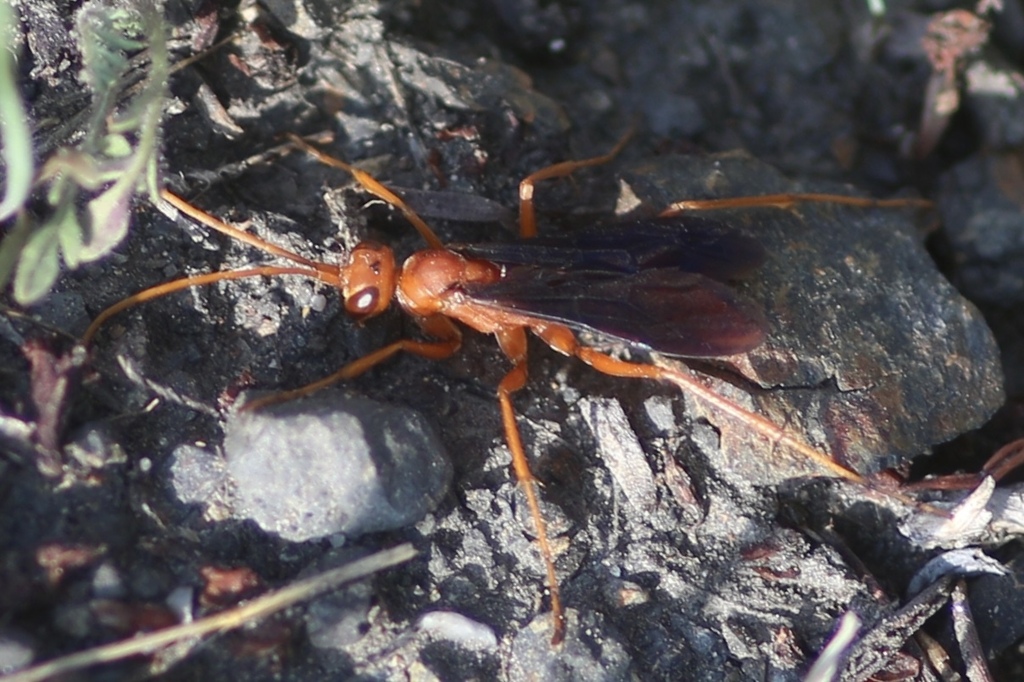
no rights reserved · CC0
Family: Pompilidae · Class: Insecta · Order: Hymenoptera
Ageniella coronata is a California animal in the Pompilidae family.
Ageniella coronata is a species of spider wasp in the family Pompilidae, order Hymenoptera. This species belongs to the genus Ageniella, which comprises solitary wasps that typically hunt spiders as prey for their larvae (Evans & Yoshimoto 1962). Like other pompilid wasps, A. coronata likely exhibits the characteristic behavior of paralyzing spiders with venom and using them as living food sources for developing offspring (Wasbauer 1995). Adult females search for appropriate spider hosts, sting them to induce paralysis, and then transport the immobilized prey to prepared nests where eggs are deposited. The larvae develop as external parasitoids, consuming the paralyzed spider while it remains alive (BugGuide 2024). Adult wasps typically feed on nectar and other carbohydrate sources. Pompilid wasps are generally characterized by long legs, a narrow waist between thorax and abdomen, and often dark coloration with or without bright markings (Evans & Yoshimoto 1962). The wings of pompilids typically have a characteristic venation pattern, and many species exhibit a distinctive gait when walking, often flicking their wings nervously (Wasbauer 1995). Males are typically smaller than females and do not engage in hunting behavior. Female spider wasps possess robust mandibles and strong legs adapted for grasping and manipulating spider prey. The genus Ageniella is distributed across North America, with species typically associated with sandy or loose soil habitats where they can excavate burrows for nesting (Evans & Yoshimoto 1962). Many Ageniella species show preferences for specific spider families as hosts, though the particular host associations of A. coronata have not been documented in accessible literature. The specific morphological characteristics, habitat preferences, distribution, and ecological relationships of A. coronata have not been well documented in readily accessible scientific literature. Detailed taxonomic descriptions, behavioral studies, and distribution records for this species appear to be limited or housed in specialized entomological collections and taxonomic references. The original description and taxonomic placement within Ageniella would require consultation of primary taxonomic literature and type specimens. The conservation status of A. coronata has not been formally assessed, and the species does not appear on federal or state threatened and endangered species lists. Like many invertebrate species, particularly specialized parasitoid wasps, A. coronata may face threats from habitat loss, pesticide use, and decline of host spider populations, though specific conservation concerns have not been documented. The narrow host specificity typical of pompilid wasps makes them potentially vulnerable to ecosystem disruptions that affect their spider prey (O'Neill 2001). Further research is needed to establish basic biological and ecological information for this species, including detailed morphological descriptions, host specificity, geographic distribution, seasonal activity patterns, and habitat requirements. Given the specialized nature of pompilid ecology and the importance of spider-wasp interactions in arthropod communities, comprehensive studies of poorly known species like A. coronata would contribute significantly to understanding parasitoid diversity and ecosystem function.
Classification
Class: Insecta · Order: Hymenoptera · Family: Pompilidae
Frequently asked questions
How is Ageniella coronata classified?
Ageniella coronata belongs to class Insecta, order Hymenoptera, family Pompilidae.
What family does Ageniella coronata belong to?
Ageniella coronata is in the Pompilidae family.
What is Ageniella coronata?
Ageniella coronata is a species of spider wasp in the family Pompilidae, order Hymenoptera.
Is Ageniella coronata found in California?
Yes. Ageniella coronata is recorded in California in The California Species Project's catalogue.
Related species
Other California species in the same genus, family, or bioregion.
Data from The California Species Project — 14,000+ California species with verified data from CNPS, CDFW, USFWS, and more.