Aglossa acallalis
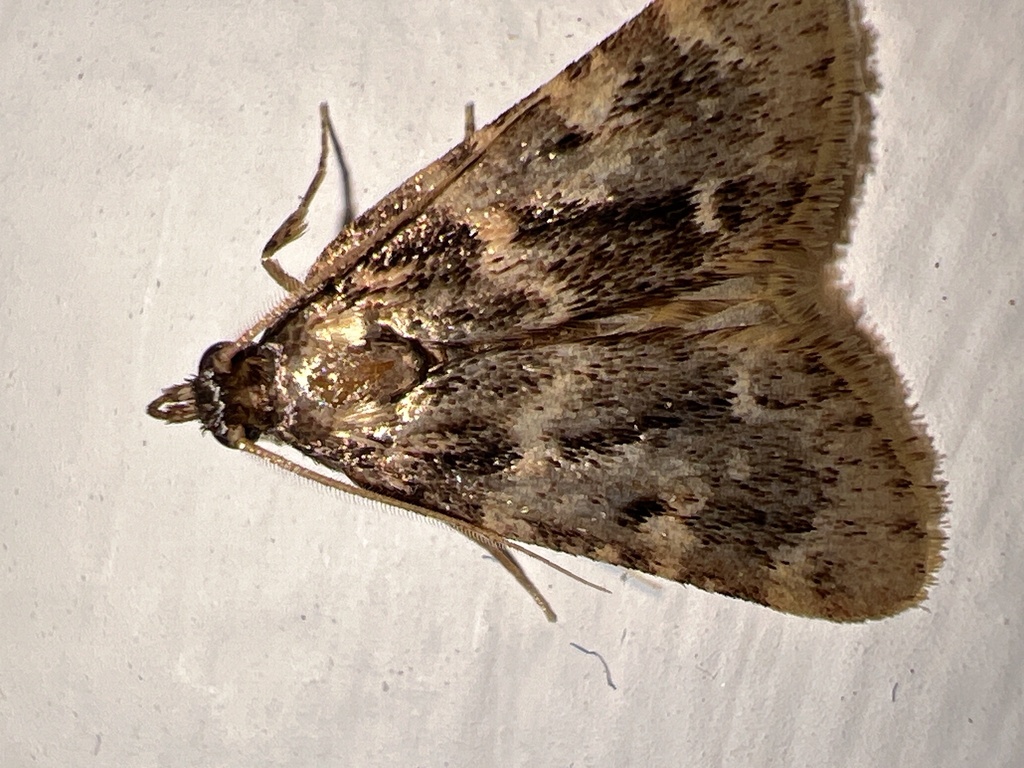
(c) Healthy Yards, some rights reserved (CC BY) · licence
Family: Pyralidae · Class: Insecta · Order: Lepidoptera
Aglossa acallalis is a California animal in the Pyralidae family.
Aglossa acallalis is a small moth belonging to the family Pyralidae, commonly known as grass moths or snout moths. This species represents one of the lesser-documented pyralid moths, with limited published information available regarding its specific characteristics and distribution patterns. Physical description details for Aglossa acallalis remain poorly documented in the scientific literature. Like other members of the genus Aglossa, this species likely exhibits the typical pyralid moth characteristics including relatively small size, narrow forewings, and distinctive labial palps that project forward from the head, giving the group their common name of snout moths. The wingspan and specific coloration patterns have not been comprehensively described in accessible taxonomic references. The geographic range and distribution of Aglossa acallalis are not well-established in current literature. While the species has been taxonomically recognized, comprehensive distribution data including specific counties or regions within California where it occurs has not been documented in major databases or field guides. This information gap reflects the broader challenge of documenting micromoth species that may have restricted ranges or specific habitat requirements. Habitat preferences for Aglossa acallalis have not been specifically documented. Members of the Pyralidae family typically occupy diverse habitats ranging from grasslands to forest environments, with many species associated with specific host plants during their larval stage. The microhabitat requirements, elevation range, and vegetation associations for this particular species remain unknown based on available scientific literature. Behavioral and ecological information for Aglossa acallalis is extremely limited. Like other pyralid moths, the species likely undergoes complete metamorphosis with egg, larval, pupal, and adult stages. Adult flight periods, mating behaviors, larval feeding habits, and host plant relationships have not been documented in accessible sources. The number of generations per year, seasonal activity patterns, and specific ecological role within its ecosystem remain unstudied or unpublished. The conservation status of Aglossa acallalis has not been formally assessed at federal, state, or international levels. The species does not appear on current threatened or endangered species lists, nor has it been evaluated by conservation organizations. This absence from conservation assessments may reflect either stable populations that do not warrant concern, or more likely, insufficient data to conduct meaningful population assessments. The lack of baseline population data, distribution information, and ecological requirements makes it impossible to determine whether conservation measures are needed. The limited information available for Aglossa acallalis highlights the significant knowledge gaps that exist for many small moth species. Further taxonomic research, field surveys, and ecological studies would be necessary to develop a comprehensive understanding of this species' biology, distribution, and conservation needs. Such research would be particularly valuable given the important ecological roles that many pyralid moths play as both herbivores and prey species in their respective ecosystems.
Classification
Class: Insecta · Order: Lepidoptera · Family: Pyralidae
Frequently asked questions
How is Aglossa acallalis classified?
Aglossa acallalis belongs to class Insecta, order Lepidoptera, family Pyralidae.
What family does Aglossa acallalis belong to?
Aglossa acallalis is in the Pyralidae family.
What is Aglossa acallalis?
Aglossa acallalis is a small moth belonging to the family Pyralidae, commonly known as grass moths or snout moths.
Is Aglossa acallalis found in California?
Yes. Aglossa acallalis is recorded in California in The California Species Project's catalogue.
Related species
Other California species in the same genus, family, or bioregion.
Data from The California Species Project — 14,000+ California species with verified data from CNPS, CDFW, USFWS, and more.