Aglossa caprealis
Stored Grain Moth
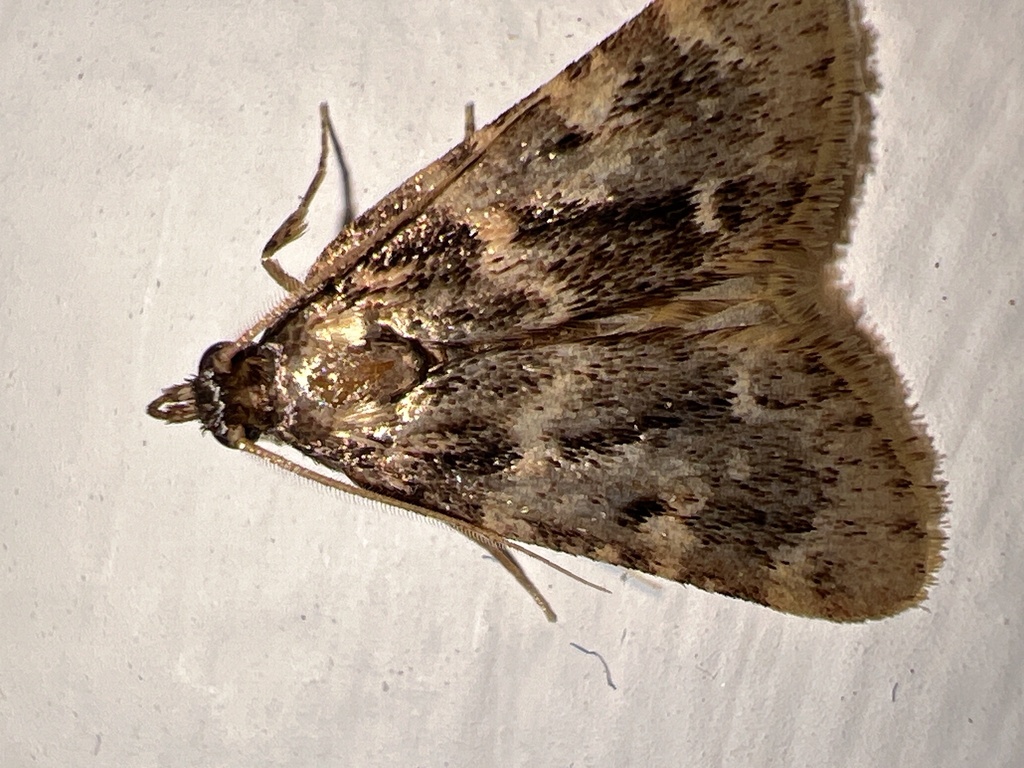
(c) Healthy Yards, some rights reserved (CC BY) · licence
Family: Pyralidae · Class: Insecta · Order: Lepidoptera
Aglossa caprealis (Stored Grain Moth) is a California animal in the Pyralidae family.
The Stored Grain Moth (Aglossa caprealis) is a small pyralid moth belonging to the family Pyralidae. Adults measure 15-20 mm (0.6-0.8 inches) in wingspan, with forewings that are typically grayish-brown to dark brown with distinctive white or pale yellow markings. The forewings display a characteristic pattern of pale transverse lines and spots, including a prominent white discal spot and zigzag postmedial line. The hindwings are lighter in coloration, ranging from pale gray to whitish with darker marginal borders. Males can be distinguished from females by their narrower wings and more pronounced antennae. The species has a cosmopolitan distribution and occurs throughout California, though specific county-level distribution data is limited. Aglossa caprealis is found across North America, Europe, Asia, and other regions where suitable food sources are available. In California, the moth has been recorded from various elevations, from sea level to mountainous regions, though it is most commonly associated with human-modified environments. Stored Grain Moths inhabit a variety of environments but are primarily associated with stored agricultural products and food storage facilities. The species thrives in warehouses, granaries, mills, food processing plants, and residential pantries where grains and dried organic matter accumulate. They are also found in natural settings including bird nests, animal burrows, and areas with decomposing organic material. The moths prefer warm, humid conditions that promote the development of their larvae. Larvae of Aglossa caprealis feed on a wide range of stored products including wheat, corn, rice, barley, oats, flour, meal, and various processed grain products. They also consume dried fruits, nuts, seeds, and other organic debris. The caterpillars create silk webbing as they feed, often binding food particles together. Adults are nocturnal and are attracted to artificial lights. The species is multivoltine, producing multiple generations per year in favorable conditions. Development from egg to adult typically takes 6-8 weeks under optimal temperature and humidity conditions. Females deposit eggs singly or in small clusters on or near food sources. The Stored Grain Moth is not listed under federal or California endangered species legislation and is not considered a conservation concern. As a cosmopolitan species adapted to human environments, populations appear stable. However, the moth is considered a significant agricultural and stored product pest, causing economic losses through contamination and consumption of stored grains and food products. Integrated pest management strategies are employed to control infestations, including sanitation, temperature manipulation, and targeted pesticide applications. The species' ability to exploit human-created environments has likely contributed to its widespread distribution and population stability.
Classification
Class: Insecta · Order: Lepidoptera · Family: Pyralidae
Frequently asked questions
How is Aglossa caprealis classified?
Aglossa caprealis belongs to class Insecta, order Lepidoptera, family Pyralidae.
What family does Aglossa caprealis belong to?
Aglossa caprealis is in the Pyralidae family.
What is Aglossa caprealis?
The Stored Grain Moth (Aglossa caprealis) is a small pyralid moth belonging to the family Pyralidae.
Is Aglossa caprealis found in California?
Yes. Aglossa caprealis is recorded in California in The California Species Project's catalogue.
Related species
Other California species in the same genus, family, or bioregion.
Data from The California Species Project — 14,000+ California species with verified data from CNPS, CDFW, USFWS, and more.