Aglossa electalis
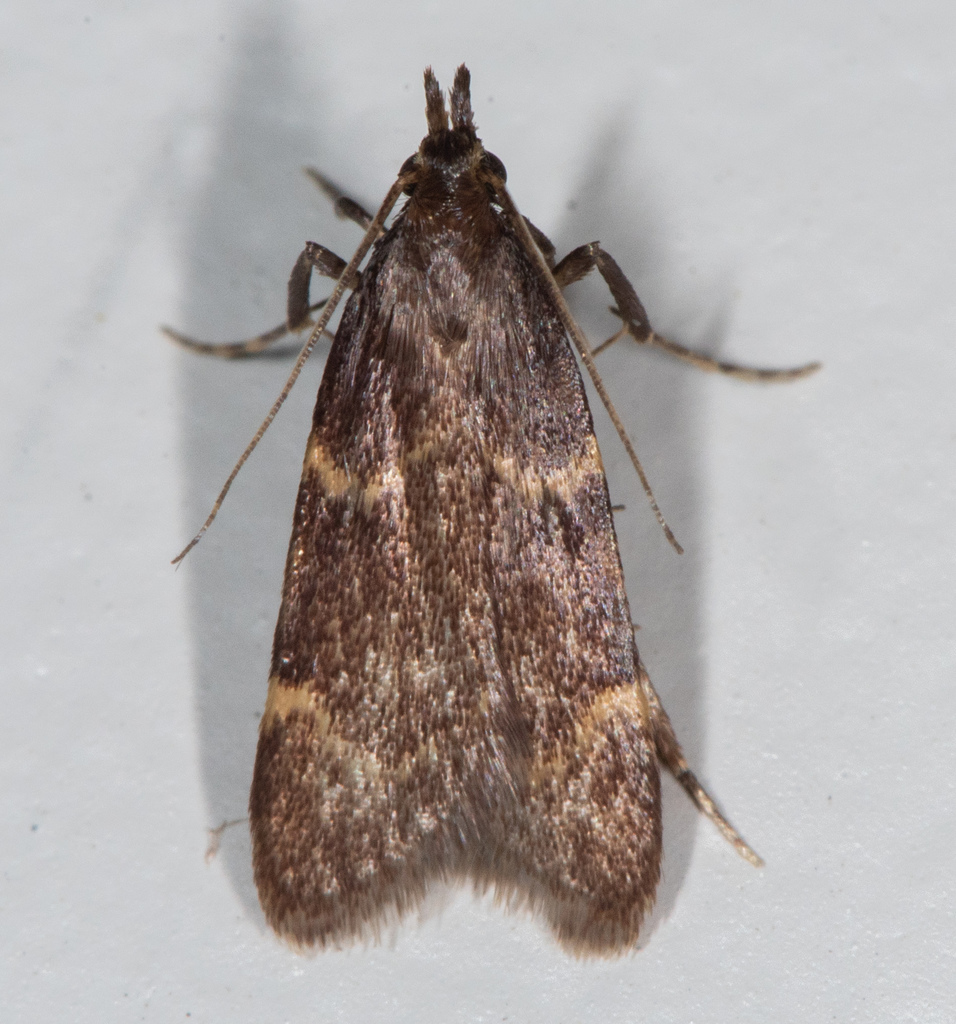
(c) Don Loarie, some rights reserved (CC BY) · licence
Family: Pyralidae · Class: Insecta · Order: Lepidoptera
Aglossa electalis is a California animal in the Pyralidae family.
Aglossa electalis is a small moth in the family Pyralidae, commonly known as the snout moths or grass moths. This species belongs to a genus of moths that are typically associated with stored grain products and organic debris. Adults are small, with forewings typically measuring 8-12 mm in length, displaying a wingspan of approximately 16-24 mm. The forewings are generally pale brown to grayish-brown with darker markings and cross-lines that create a mottled appearance. The hindwings are lighter in coloration, often appearing whitish or pale gray with reduced markings. Like other members of the Pyralidae family, A. electalis possesses prominent labial palpi that project forward from the head, giving the appearance of a snout. Aglossa electalis occurs in southern California and Arizona, representing the southwestern extent of its North American distribution. Within California, the species is likely found in the southern counties including Los Angeles, Orange, Riverside, San Bernardino, and Imperial counties, though specific locality records require further documentation. The Arizona portion of its range extends the species' distribution into the Sonoran Desert region. This species inhabits areas where organic matter accumulates, including agricultural settings, warehouses, and natural environments with decomposing plant material. Aglossa species are typically associated with dried organic matter, stored grain products, and areas with accumulated plant debris. In natural settings, they may be found in packrat middens, caves, and other locations where organic detritus collects. The species appears adapted to arid and semi-arid environments characteristic of the southwestern United States. The larvae of A. electalis likely feed on dried organic matter, following the feeding patterns typical of the genus Aglossa. Larvae may consume stored grain products, dried plant material, and organic debris. Development from egg to adult typically requires several weeks to months, depending on temperature and food availability. Adults are likely active during warmer months, with multiple generations possible per year in favorable conditions. Like many Pyralidae species, adults are probably attracted to lights and may be collected at artificial light sources during evening hours. No specific conservation status has been designated for Aglossa electalis at federal or state levels. The species appears to lack formal conservation assessment, suggesting it may not face immediate threats or may be understudied. Many small moths in the Pyralidae family remain poorly documented regarding their population status and ecological requirements. Potential threats to the species could include habitat modification, pesticide use in agricultural areas, and urbanization within its limited range. The species' apparent association with stored products may provide some buffering against habitat loss, as it can potentially utilize human-modified environments. However, the lack of comprehensive surveys and ecological data makes it difficult to assess the true conservation needs of this southwestern moth species.
Classification
Class: Insecta · Order: Lepidoptera · Family: Pyralidae
Frequently asked questions
How is Aglossa electalis classified?
Aglossa electalis belongs to class Insecta, order Lepidoptera, family Pyralidae.
What family does Aglossa electalis belong to?
Aglossa electalis is in the Pyralidae family.
What is Aglossa electalis?
Aglossa electalis is a small moth in the family Pyralidae, commonly known as the snout moths or grass moths.
Is Aglossa electalis found in California?
Yes. Aglossa electalis is recorded in California in The California Species Project's catalogue.
Related species
Other California species in the same genus, family, or bioregion.
Data from The California Species Project — 14,000+ California species with verified data from CNPS, CDFW, USFWS, and more.