Agonopterix alstroemeriana
Poison Hemlock Moth
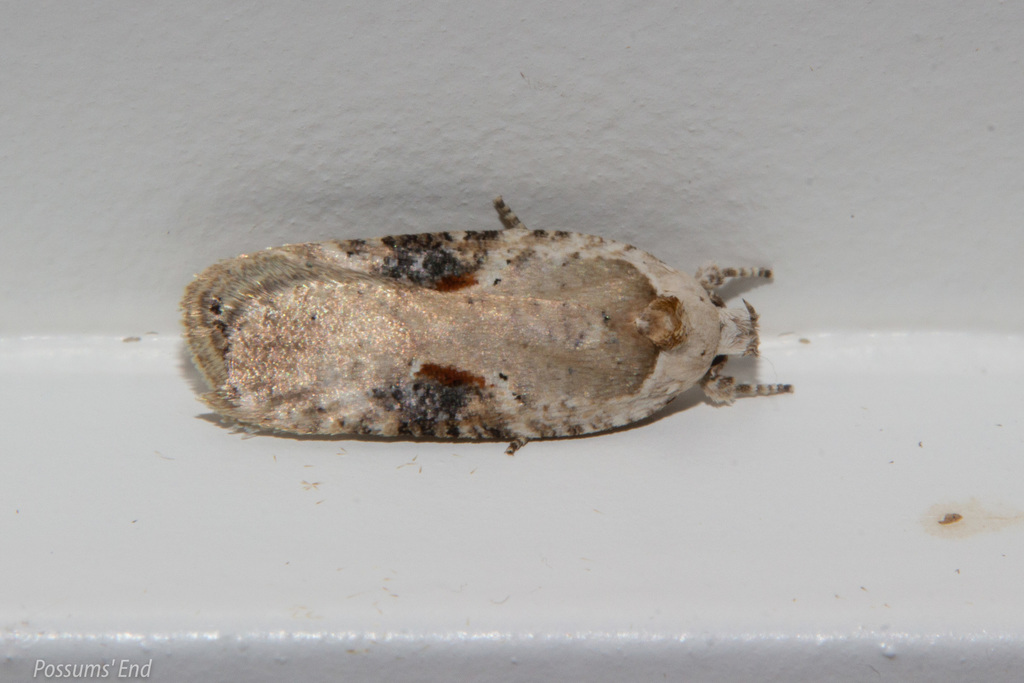
(c) Possums' End, some rights reserved (CC BY) · licence
Family: Depressariidae · Class: Insecta · Order: Lepidoptera
Agonopterix alstroemeriana (Poison Hemlock Moth) is a California animal in the Depressariidae family.
The Poison Hemlock Moth (Agonopterix alstroemeriana) is a small microlepidopteran moth in the family Depressariidae. Adults typically measure 8-12 mm in forewing length, with a wingspan of approximately 16-24 mm. The forewings are grayish-brown to pale brown with darker markings and subtle metallic scales that give them a slightly iridescent appearance. The hindwings are narrower and typically lighter in coloration, ranging from pale gray to whitish. At rest, the moth holds its wings roof-like over the body, creating a narrow triangular silhouette characteristic of many elachistid moths. This species is native to Europe but has become established in North America, including California. In California, populations have been documented in coastal and inland areas where its primary host plant occurs. The moth's distribution in the state appears to be closely tied to the presence of poison hemlock (Conium maculatum), an introduced plant species that has become widely naturalized throughout much of California's temperate regions. Poison hemlock moths inhabit areas where their host plant thrives, including disturbed soils, roadsides, field margins, waste areas, and riparian corridors. The species shows a preference for locations with moderate moisture levels and partial shade, though it can tolerate full sun exposure. Elevation range in California extends from sea level to approximately 1,500 meters (4,900 feet), primarily in Mediterranean climate zones with cool, wet winters and warm, dry summers. The life cycle is closely synchronized with the phenology of poison hemlock. Adults are active from late spring through early fall, with peak flight periods typically occurring in May through July. Females deposit eggs on poison hemlock foliage, and the developing larvae are internal feeders, creating mines within the leaves and stems of the host plant. The larvae are pale yellowish-white with brown head capsules and measure approximately 6-8 mm when fully developed. Pupation occurs within the plant tissue or in nearby soil. The species appears to produce multiple generations per year in California's favorable climate conditions. The moths are primarily nocturnal, becoming active at dusk and continuing flight activity into the night hours. Adults are attracted to artificial lights and can be found resting on vegetation during daylight hours. Their feeding behavior as adults focuses on nectar from small flowers, including those of their host plant when available. Currently, Agonopterix alstroemeriana has no special conservation status in California or federally. As an introduced species associated with a widely distributed invasive host plant, the moth does not face significant conservation concerns. The species' population stability appears closely linked to the continued presence and spread of poison hemlock throughout suitable habitats in California. The moth's ecological impact is considered minimal, as it specializes on a single introduced plant species and does not appear to affect native plant communities directly.
Classification
Class: Insecta · Order: Lepidoptera · Family: Depressariidae
Frequently asked questions
How is Agonopterix alstroemeriana classified?
Agonopterix alstroemeriana belongs to class Insecta, order Lepidoptera, family Depressariidae.
What family does Agonopterix alstroemeriana belong to?
Agonopterix alstroemeriana is in the Depressariidae family.
What is Agonopterix alstroemeriana?
The Poison Hemlock Moth (Agonopterix alstroemeriana) is a small microlepidopteran moth in the family Depressariidae.
Is Agonopterix alstroemeriana found in California?
Yes. Agonopterix alstroemeriana is recorded in California in The California Species Project's catalogue.
Related species
Other California species in the same genus, family, or bioregion.
Data from The California Species Project — 14,000+ California species with verified data from CNPS, CDFW, USFWS, and more.