Agonopterix arnicella
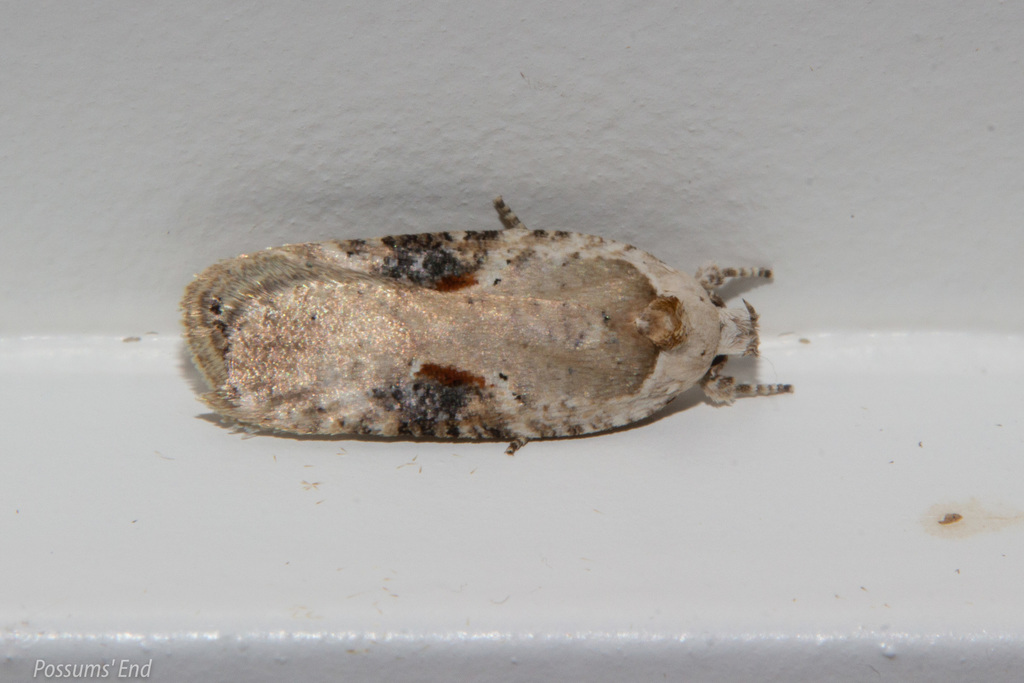
(c) Possums' End, some rights reserved (CC BY) · licence
Family: Depressariidae · Class: Insecta · Order: Lepidoptera
Agonopterix arnicella is a California animal in the Depressariidae family.
Agonopterix arnicella is a small moth in the family Depressariidae, characterized by narrow forewings typically measuring 8-12 mm in length. The forewings are generally grayish-brown to ochre with darker markings and pale streaks, though coloration can vary among individuals. The hindwings are pale gray and fringed. Adults hold their wings roof-like over the body when at rest, a characteristic posture of the Agonopterix genus. The species exhibits sexual dimorphism, with males possessing feathered antennae that are more prominent than the thread-like antennae of females. The distribution of Agonopterix arnicella in North America includes western regions, with confirmed records from California, Oregon, and Washington. In California, the species has been documented in northern counties including Humboldt, Mendocino, and Sonoma counties, though comprehensive distribution surveys are lacking. The species also occurs in parts of Europe, where it is more thoroughly studied. Agonopterix arnicella inhabits areas where its host plants are present, typically in open woodlands, forest edges, and disturbed sites. The species shows a preference for elevations ranging from sea level to approximately 1,500 meters (4,920 feet). Adults are found in habitats supporting Asteraceae family plants, particularly where arnica species grow. The moth favors areas with partial sun exposure and well-drained soils that support healthy populations of its larval host plants. The larvae of Agonopterix arnicella feed internally within the stems, roots, or flower heads of plants in the sunflower family (Asteraceae). Primary host plants include various Arnica species, from which the species derives its scientific name. Larvae create galleries within plant tissues, pupating within the host plant or in nearby soil. Adults typically emerge during late spring through early summer, with flight periods extending from May through August depending on elevation and local climate conditions. The species is univoltine, producing one generation per year. Adults are primarily nocturnal and are attracted to artificial lights during evening hours. The conservation status of Agonopterix arnicella in California remains poorly documented due to limited systematic surveys of microlepidoptera. The species is not currently listed under federal or state endangered species legislation. Population trends are unknown, though habitat modification and loss of native Asteraceae plants may pose potential threats. Urban development, agricultural conversion, and invasive plant species displacement of native host plants could negatively impact local populations. Climate change effects on high-elevation populations and shifts in host plant distributions represent additional concerns for long-term population stability. The cryptic nature and small size of this moth species make population monitoring challenging, requiring specialized expertise in microlepidoptera identification. Further research is needed to assess population status, habitat requirements, and conservation needs throughout the species' California range.
Classification
Class: Insecta · Order: Lepidoptera · Family: Depressariidae
Frequently asked questions
How is Agonopterix arnicella classified?
Agonopterix arnicella belongs to class Insecta, order Lepidoptera, family Depressariidae.
What family does Agonopterix arnicella belong to?
Agonopterix arnicella is in the Depressariidae family.
What is Agonopterix arnicella?
Agonopterix arnicella is a small moth in the family Depressariidae, characterized by narrow forewings typically measuring 8-12 mm in length.
Is Agonopterix arnicella found in California?
Yes. Agonopterix arnicella is recorded in California in The California Species Project's catalogue.
Related species
Other California species in the same genus, family, or bioregion.
Data from The California Species Project — 14,000+ California species with verified data from CNPS, CDFW, USFWS, and more.