Agonopterix canadensis
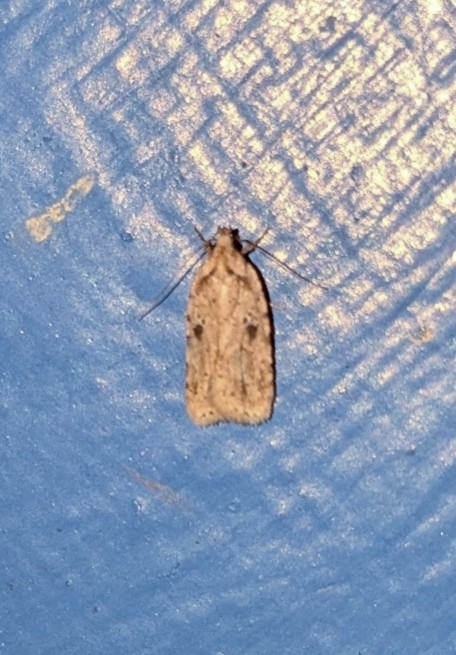
(c) alicia penney, some rights reserved (CC BY) · licence
Family: Depressariidae · Class: Insecta · Order: Lepidoptera
Agonopterix canadensis is a California animal in the Depressariidae family.
Agonopterix canadensis is a small moth species belonging to the family Depressariidae, a group commonly known as grass miner moths. This species represents one of numerous microlepidoptera found in North America, though detailed morphological descriptions remain limited in published literature. Like other members of the genus Agonopterix, adults likely measure 8 to 12 millimeters in forewing length, with narrow forewings and relatively broad hindwings characteristic of the family. The range of A. canadensis extends across portions of North America, with the species name suggesting a Canadian origin or primary distribution. However, comprehensive distributional data for this species remains sparse in accessible databases and taxonomic literature. The presence of this species in California, if confirmed, would represent part of the state's diverse microlepidoptera fauna, which includes hundreds of small moth species that are often understudied compared to larger, more conspicuous Lepidoptera. Habitat requirements for A. canadensis are not well-documented in current literature. Members of the genus Agonopterix typically inhabit areas where their host plants occur, often in open woodlands, grasslands, or disturbed areas. Many species in this genus are associated with herbaceous plants, particularly those in the families Apiaceae, Asteraceae, or Rosaceae. The larvae are generally leaf miners or external feeders on leaves and flowers of their host plants. Life history details for A. canadensis remain largely unknown. Most Agonopterix species undergo complete metamorphosis with egg, larval, pupal, and adult stages. Larvae typically feed within or on host plant tissues, creating characteristic feeding patterns that can aid in species identification. Adults are generally active during warmer months, with flight periods varying by species and geographic location. Many microlepidoptera have specialized relationships with particular plant species, making habitat conservation critical for their persistence. The conservation status of A. canadensis has not been formally assessed by major conservation organizations. Like many small moth species, it likely faces threats from habitat loss, pesticide use, and climate change, though the severity of these impacts cannot be determined without population data. The general lack of information about this species reflects a broader challenge in lepidopteran conservation, where many small moths remain poorly studied despite their ecological importance as pollinators, herbivores, and food sources for other wildlife. Taxonomic research and field surveys are needed to better understand the distribution, ecology, and conservation needs of A. canadensis. Citizen science initiatives and specialized moth surveys could help fill knowledge gaps about this and other microlepidoptera species. The species' classification within Depressariidae places it among a family of moths known for their small size and often cryptic appearance, making field identification challenging without microscopic examination of wing venation and genital structures.
Classification
Class: Insecta · Order: Lepidoptera · Family: Depressariidae
Frequently asked questions
How is Agonopterix canadensis classified?
Agonopterix canadensis belongs to class Insecta, order Lepidoptera, family Depressariidae.
What family does Agonopterix canadensis belong to?
Agonopterix canadensis is in the Depressariidae family.
What is Agonopterix canadensis?
Agonopterix canadensis is a small moth species belonging to the family Depressariidae, a group commonly known as grass miner moths.
Is Agonopterix canadensis found in California?
Yes. Agonopterix canadensis is recorded in California in The California Species Project's catalogue.
Related species
Other California species in the same genus, family, or bioregion.
Data from The California Species Project — 14,000+ California species with verified data from CNPS, CDFW, USFWS, and more.