Agonopterix clarkei
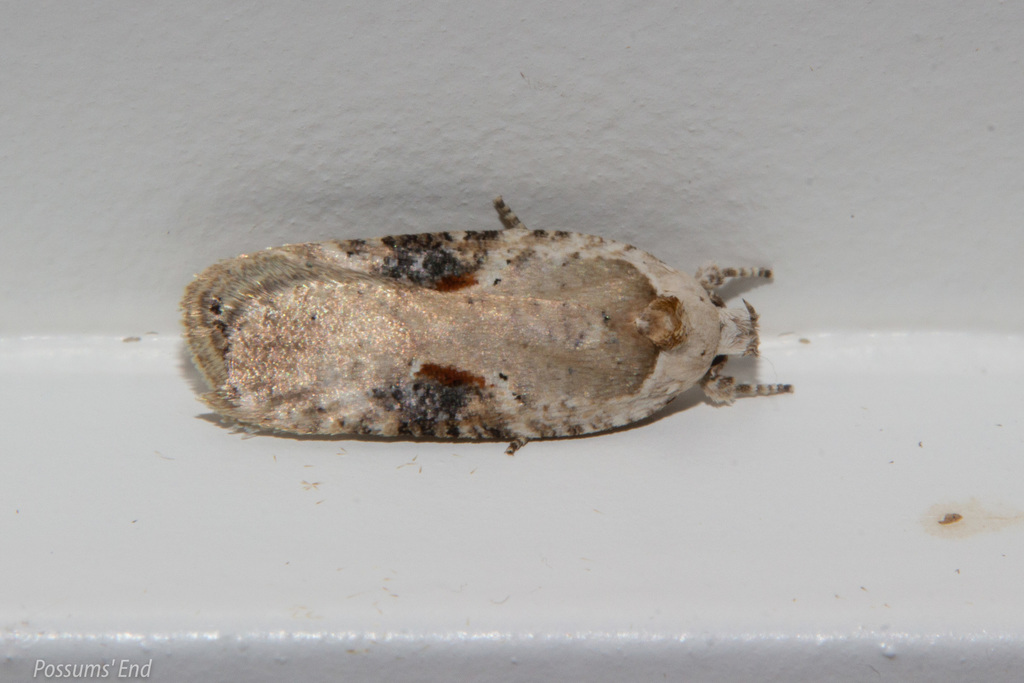
(c) Possums' End, some rights reserved (CC BY) · licence
Family: Depressariidae · Class: Insecta · Order: Lepidoptera
Agonopterix clarkei is a California animal in the Depressariidae family.
Agonopterix clarkei is a small moth species belonging to the family Depressariidae, a diverse group of microlepidoptera commonly known as grass-miner moths. This species represents one of numerous specialized moths within the genus Agonopterix, which comprises over 200 described species worldwide. The taxonomic classification places it within the order Lepidoptera, indicating its relationship to butterflies and other moths. Limited morphological data exists for Agonopterix clarkei in current literature. Like other members of the genus Agonopterix, adults likely measure 8 to 12 millimeters (0.3 to 0.5 inches) in forewing length. The forewings typically display muted earth tones, often grayish-brown or tan coloration with subtle markings that may include darker spots or streaks. The hindwings are generally paler and more uniform in coloration. Wing patterns serve as primary diagnostic features for species identification within this taxonomically complex genus. The geographic distribution of Agonopterix clarkei remains poorly documented in available databases and literature. The species appears to have a restricted range, though specific locality records are not readily accessible through standard taxonomic references. Distribution data suggests occurrence in western North America, potentially including California, though precise range boundaries require further investigation through museum collections and field surveys. Habitat preferences for Agonopterix clarkei are not well-established in current literature. Members of the genus Agonopterix typically inhabit areas supporting their larval host plants, which often include species in the families Apiaceae, Rosaceae, and other herbaceous plant groups. Adults are generally found in association with these plant communities, ranging from coastal scrub to montane environments depending on host plant distribution. The life cycle of Agonopterix clarkei follows the typical lepidopteran pattern of complete metamorphosis. Larvae likely develop as internal feeders within plant tissues, creating characteristic mining patterns or feeding within flower heads and seed structures. This feeding behavior is common among Depressariidae species. Adult flight periods are not well-documented for this species, though related Agonopterix species in western North America typically emerge during spring and summer months. Mating and oviposition behaviors likely occur during these active periods. Conservation status information for Agonopterix clarkei is not available through standard databases including the U.S. Fish and Wildlife Service, California Department of Fish and Wildlife, or IUCN Red List as of December 2025. The species lacks formal conservation ranking, suggesting either stable populations, insufficient data for assessment, or limited research attention. Many microlepidoptera species remain understudied, creating knowledge gaps in population trends and conservation needs. Potential threats to specialized moths include habitat modification, pesticide use, and climate change impacts on host plant communities. The restricted distribution typical of many Agonopterix species may increase vulnerability to environmental changes. Further taxonomic research and field surveys are needed to better understand the distribution, ecology, and conservation status of Agonopterix clarkei. Comprehensive lepidoptera inventories and host plant associations would contribute valuable data for this poorly known species.
Classification
Class: Insecta · Order: Lepidoptera · Family: Depressariidae
Frequently asked questions
How is Agonopterix clarkei classified?
Agonopterix clarkei belongs to class Insecta, order Lepidoptera, family Depressariidae.
What family does Agonopterix clarkei belong to?
Agonopterix clarkei is in the Depressariidae family.
What is Agonopterix clarkei?
Agonopterix clarkei is a small moth species belonging to the family Depressariidae, a diverse group of microlepidoptera commonly known as grass-miner moths.
Is Agonopterix clarkei found in California?
Yes. Agonopterix clarkei is recorded in California in The California Species Project's catalogue.
Related species
Other California species in the same genus, family, or bioregion.
Data from The California Species Project — 14,000+ California species with verified data from CNPS, CDFW, USFWS, and more.