Agonopterix fusciterminella
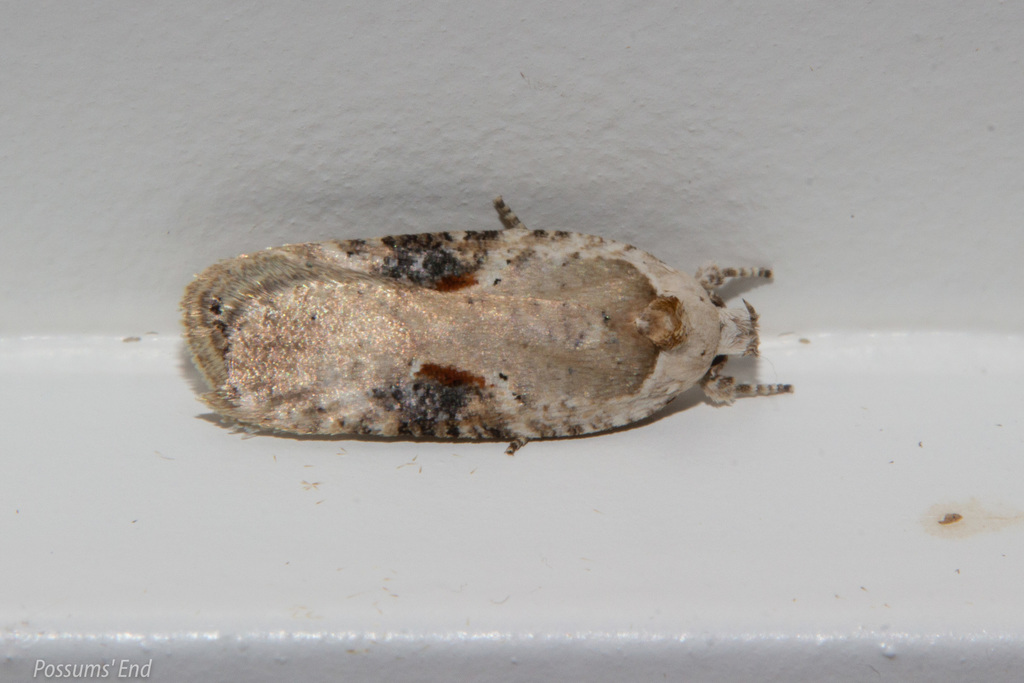
(c) Possums' End, some rights reserved (CC BY) · licence
Family: Depressariidae · Class: Insecta · Order: Lepidoptera
Agonopterix fusciterminella is a California animal in the Depressariidae family.
Agonopterix fusciterminella is a small moth in the family Depressariidae (formerly placed in Elachistidae), representing one of numerous microlepidoptera species found in California. This species belongs to a genus of moths whose larvae typically develop as leaf miners or stem borers in herbaceous plants. Adult moths in the genus Agonopterix are generally characterized by narrow forewings with mottled brown and gray coloration, though specific morphological details for A. fusciterminella require further documentation. The wingspan typically ranges from 12 to 18 mm, consistent with other members of this genus. The forewings display a pattern of light and dark scaling, with the species name "fusciterminella" suggesting darker terminal areas on the wing margins. The hindwings are typically pale gray to whitish with reduced venation. Adult moths hold their wings roof-like over the body when at rest, a characteristic posture of the family Depressariidae. The antennae are thread-like and held forward when the moth is active. Like other members of the genus, males can be distinguished from females by their more robust antennae and slightly smaller overall size. The current distribution and range of Agonopterix fusciterminella in California remains poorly documented in the scientific literature. Limited collection records suggest the species may occur in various regions of the state, though comprehensive survey data are lacking. Many Agonopterix species have restricted distributions tied to their specific host plant requirements, suggesting this species may have similarly localized populations. The habitat preferences of A. fusciterminella are not well established, though related species in the genus typically inhabit areas where their host plants occur naturally. These environments often include grasslands, chaparral margins, woodland edges, and disturbed areas where herbaceous plants flourish. The elevation range and specific microhabitat requirements remain undocumented for this species. Host plant associations are critical for understanding the ecology of Agonopterix moths, as larvae are typically monophagous or oligophagous feeders. The specific host plants for A. fusciterminella have not been definitively established, though many congeners feed on plants in families such as Apiaceae, Asteraceae, or Rosaceae. Larvae likely develop as leaf miners or stem borers, creating characteristic feeding damage on their host plants. Adult flight periods and reproductive behavior remain undocumented for this species. Most Agonopterix species are univoltine, producing one generation per year, with adults typically active during spring or early summer months. Mating occurs through pheromone communication, with females laying eggs singly or in small clusters on or near host plants. The conservation status of Agonopterix fusciterminella cannot be properly assessed due to insufficient data on its distribution, abundance, and ecological requirements. The species lacks formal conservation rankings at state, federal, or global levels. Like many microlepidoptera, this species may face threats from habitat loss, invasive plant species that displace native host plants, and pesticide applications. Climate change could potentially affect the species through altered growing seasons and shifts in host plant phenology. Comprehensive surveys and taxonomic research are needed to better understand the status and conservation needs of this and other poorly known microlepidoptera species in California.
Classification
Class: Insecta · Order: Lepidoptera · Family: Depressariidae
Frequently asked questions
How is Agonopterix fusciterminella classified?
Agonopterix fusciterminella belongs to class Insecta, order Lepidoptera, family Depressariidae.
What family does Agonopterix fusciterminella belong to?
Agonopterix fusciterminella is in the Depressariidae family.
What is Agonopterix fusciterminella?
Agonopterix fusciterminella is a small moth in the family Depressariidae (formerly placed in Elachistidae), representing one of numerous microlepidoptera species found in California.
Is Agonopterix fusciterminella found in California?
Yes. Agonopterix fusciterminella is recorded in California in The California Species Project's catalogue.
Related species
Other California species in the same genus, family, or bioregion.
Data from The California Species Project — 14,000+ California species with verified data from CNPS, CDFW, USFWS, and more.