Agonopterix nervosa
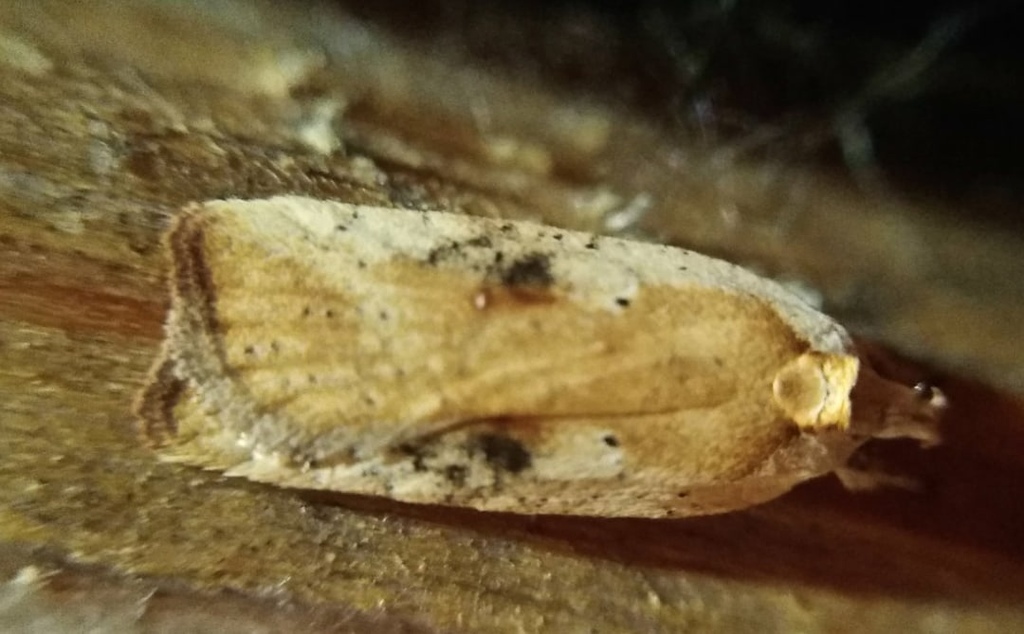
(c) Evgenij Samarin, some rights reserved (CC BY) · licence
Family: Depressariidae · Class: Insecta · Order: Lepidoptera
Agonopterix nervosa is a California animal in the Depressariidae family.
Agonopterix nervosa is a small moth species belonging to the family Depressariidae, a diverse group of microlepidoptera found worldwide. Adults are characterized by narrow forewings with a wingspan typically ranging from 12 to 16 millimeters (0.47 to 0.63 inches). The forewings display a mottled pattern of gray and brown scales with subtle darker markings, while the hindwings are pale gray and fringed. The antennae are filiform and the palpi are well-developed, extending forward from the head. The distribution and range of Agonopterix nervosa remain poorly documented in the scientific literature. Like many members of the genus Agonopterix, this species likely has a restricted geographic distribution, though specific locality records and range boundaries have not been comprehensively surveyed. The genus Agonopterix contains approximately 180 described species globally, with several taxa occurring in western North America. Habitat preferences for A. nervosa are not well-established due to limited ecological studies. Members of the genus Agonopterix typically inhabit areas supporting their host plants, which are often herbaceous perennials or woody shrubs. Many species in this genus show strong host plant specificity, with larvae developing as leaf miners, stem borers, or external feeders on particular plant families. The microhabitat requirements likely include areas with suitable moisture levels and protection from extreme weather conditions during the vulnerable larval stages. The life cycle of A. nervosa follows the typical lepidopteran pattern of complete metamorphosis through egg, larval, pupal, and adult stages. Adults are likely active during specific seasonal periods, though flight times and reproductive behavior have not been documented. Larvae probably feed on a restricted range of host plants, potentially creating mines in leaves or feeding within stems or flowers. The number of annual generations and overwintering stage remain unknown. Mating behavior, egg-laying preferences, and larval development time require further investigation. The conservation status of Agonopterix nervosa is undetermined due to insufficient data on population size, distribution, and ecological requirements. This species lacks formal state or federal conservation listing status. Many microlepidoptera face threats from habitat modification, pesticide use, and climate change, though specific impacts on A. nervosa have not been assessed. The narrow host plant associations typical of Agonopterix species may make them particularly vulnerable to habitat loss or changes in plant community composition. Comprehensive surveys are needed to determine population status, distribution boundaries, and conservation needs. Without baseline ecological data, it is difficult to assess whether this species requires conservation attention or to develop appropriate management strategies. Further taxonomic work may also be necessary to confirm the species' validity and clarify its relationship to other Agonopterix taxa.
Classification
Class: Insecta · Order: Lepidoptera · Family: Depressariidae
Frequently asked questions
How is Agonopterix nervosa classified?
Agonopterix nervosa belongs to class Insecta, order Lepidoptera, family Depressariidae.
What family does Agonopterix nervosa belong to?
Agonopterix nervosa is in the Depressariidae family.
What is Agonopterix nervosa?
Agonopterix nervosa is a small moth species belonging to the family Depressariidae, a diverse group of microlepidoptera found worldwide.
Is Agonopterix nervosa found in California?
Yes. Agonopterix nervosa is recorded in California in The California Species Project's catalogue.
Related species
Other California species in the same genus, family, or bioregion.
Data from The California Species Project — 14,000+ California species with verified data from CNPS, CDFW, USFWS, and more.