Agonopterix posticella
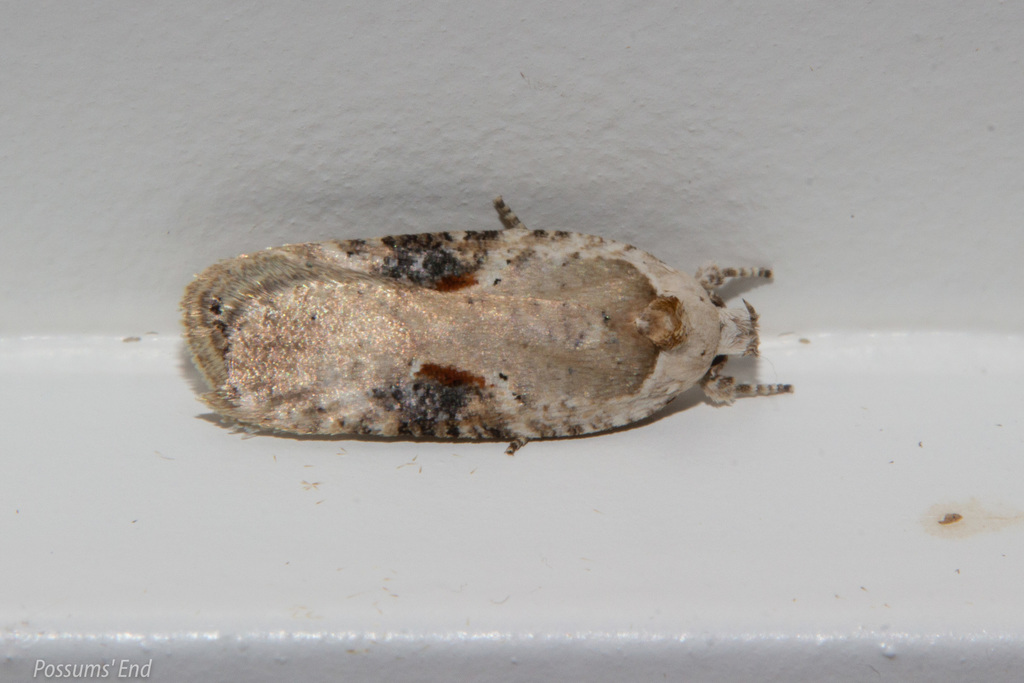
(c) Possums' End, some rights reserved (CC BY) · licence
Family: Depressariidae · Class: Insecta · Order: Lepidoptera
Agonopterix posticella is a California animal in the Depressariidae family.
Agonopterix posticella is a small moth in the family Depressariidae, representing one of the numerous microlepidoptera species found in California. This species belongs to the genus Agonopterix, which contains over 100 described species worldwide, many of which are specialized herbivores with narrow host plant associations. Adult moths of A. posticella are small, typically measuring 8-12 mm in wingspan, characteristic of the Depressariidae family. The forewings are generally narrow and elongated, often displaying mottled brown and gray coloration with subtle patterning that aids in camouflage when resting on bark or vegetation. The hindwings are typically lighter in coloration and fringed, as is common in microlepidoptera. Sexual dimorphism may be present, with males often having more prominent antennae and slightly different wing patterns compared to females. The distribution and range of Agonopterix posticella in California remain poorly documented in the scientific literature. Like many microlepidoptera, this species likely has a restricted range within specific habitat types that support its host plants. The genus Agonopterix is known to occur throughout temperate regions of North America, with various species adapted to different ecological niches. Habitat requirements for A. posticella are closely tied to the presence of suitable host plants, as is typical for specialized herbivorous moths. Members of the genus Agonopterix are frequently associated with plants in the families Apiaceae (carrot family) and Asteraceae (sunflower family), though specific host plant relationships for this species require further documentation. The larvae typically develop as leaf miners or stem borers, creating characteristic feeding patterns within plant tissues. The life cycle of A. posticella follows the typical lepidopteran pattern of complete metamorphosis. Females deposit eggs on or near host plants, where larvae develop through several instars before pupating. The timing of emergence likely coincides with the availability of host plants and favorable environmental conditions. Adult flight periods may be seasonal, with specific timing varying based on local climate conditions and elevation. Larvae are the primary feeding stage, consuming plant tissues and potentially creating visible damage patterns that can aid in species identification and ecological studies. Like many microlepidoptera species, Agonopterix posticella faces conservation challenges related to habitat loss and degradation. The specialized nature of host plant relationships means that populations are vulnerable to changes in plant community composition due to development, agricultural conversion, or invasive species establishment. Climate change may also affect the synchronization between moth emergence and host plant phenology. The lack of comprehensive survey data for this species makes it difficult to assess population trends or conservation status. Further research is needed to document the distribution, ecology, and conservation needs of A. posticella within California's diverse ecosystems.
Classification
Class: Insecta · Order: Lepidoptera · Family: Depressariidae
Frequently asked questions
How is Agonopterix posticella classified?
Agonopterix posticella belongs to class Insecta, order Lepidoptera, family Depressariidae.
What family does Agonopterix posticella belong to?
Agonopterix posticella is in the Depressariidae family.
What is Agonopterix posticella?
Agonopterix posticella is a small moth in the family Depressariidae, representing one of the numerous microlepidoptera species found in California.
Is Agonopterix posticella found in California?
Yes. Agonopterix posticella is recorded in California in The California Species Project's catalogue.
Related species
Other California species in the same genus, family, or bioregion.
Data from The California Species Project — 14,000+ California species with verified data from CNPS, CDFW, USFWS, and more.