Agonopterix rosaciliella
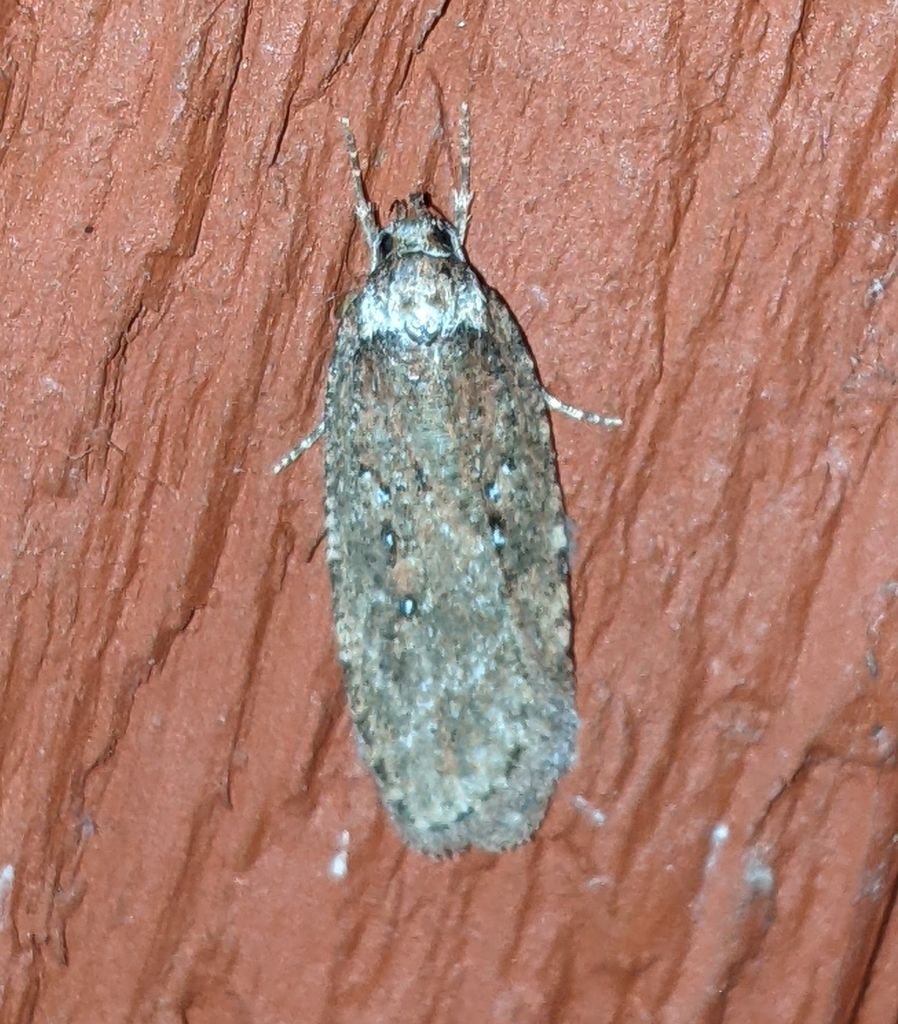
no rights reserved · CC0
Family: Depressariidae · Class: Insecta · Order: Lepidoptera
Agonopterix rosaciliella is a California animal in the Depressariidae family.
Agonopterix rosaciliella is a small moth in the family Depressariidae, subfamily Oecophorinae. This species belongs to a genus of microlepidoptera commonly known as detritivorous moths. Adults typically measure 8-12 mm in wingspan, with forewings displaying a mottled pattern of brown and gray scales. The forewings are elongated and narrow, characteristic of the Agonopterix genus, with distinct markings that may include darker crossbands and lighter patches. The hindwings are typically pale gray to whitish with long fringe scales along the margins. The distribution and range of Agonopterix rosaciliella remain poorly documented in the scientific literature. Limited records suggest this species occurs in western North America, potentially including California, though specific locality data are scarce. The species appears to have a restricted distribution, which may contribute to the lack of comprehensive distributional studies. Without confirmed collection records or systematic surveys, the full extent of this moth's range cannot be definitively established. Habitat requirements for Agonopterix rosaciliella are not well characterized in available literature. Members of the genus Agonopterix typically inhabit areas where their host plants occur, which often include shrubland, woodland edges, and disturbed habitats. The microhabitat preferences likely depend on the presence of suitable larval host plants, though specific host plant associations for this species have not been documented in accessible scientific sources. The life history and ecological behavior of Agonopterix rosaciliella remain largely unknown. Most Agonopterix species are univoltine, producing one generation per year, with larvae typically feeding on the leaves or stems of herbaceous plants or shrubs. The larvae are usually concealed feeders, creating shelters by folding or webbing leaves together. Pupation commonly occurs within the larval feeding site or in the soil nearby. Adult flight periods for related species typically occur during spring or early summer months, but specific timing for A. rosaciliella has not been documented. The conservation status of Agonopterix rosaciliella is uncertain due to insufficient data regarding its distribution, abundance, and population trends. This species does not appear on federal or state endangered species lists, and no formal conservation assessments have been conducted. The apparent rarity of collection records may reflect either genuine scarcity, limited survey effort in appropriate habitats, or taxonomic confusion with related species. Many microlepidoptera remain poorly studied, and this species represents one of numerous small moths requiring additional research to determine their conservation needs. The lack of ecological data makes it difficult to assess potential threats or develop appropriate conservation strategies. Further taxonomic work, distribution surveys, and life history studies are needed to evaluate the status of this species and determine whether conservation measures may be warranted.
Classification
Class: Insecta · Order: Lepidoptera · Family: Depressariidae
Frequently asked questions
How is Agonopterix rosaciliella classified?
Agonopterix rosaciliella belongs to class Insecta, order Lepidoptera, family Depressariidae.
What family does Agonopterix rosaciliella belong to?
Agonopterix rosaciliella is in the Depressariidae family.
What is Agonopterix rosaciliella?
Agonopterix rosaciliella is a small moth in the family Depressariidae, subfamily Oecophorinae.
Is Agonopterix rosaciliella found in California?
Yes. Agonopterix rosaciliella is recorded in California in The California Species Project's catalogue.
Related species
Other California species in the same genus, family, or bioregion.
Data from The California Species Project — 14,000+ California species with verified data from CNPS, CDFW, USFWS, and more.