Agonum belleri
Beller’s ground beetle
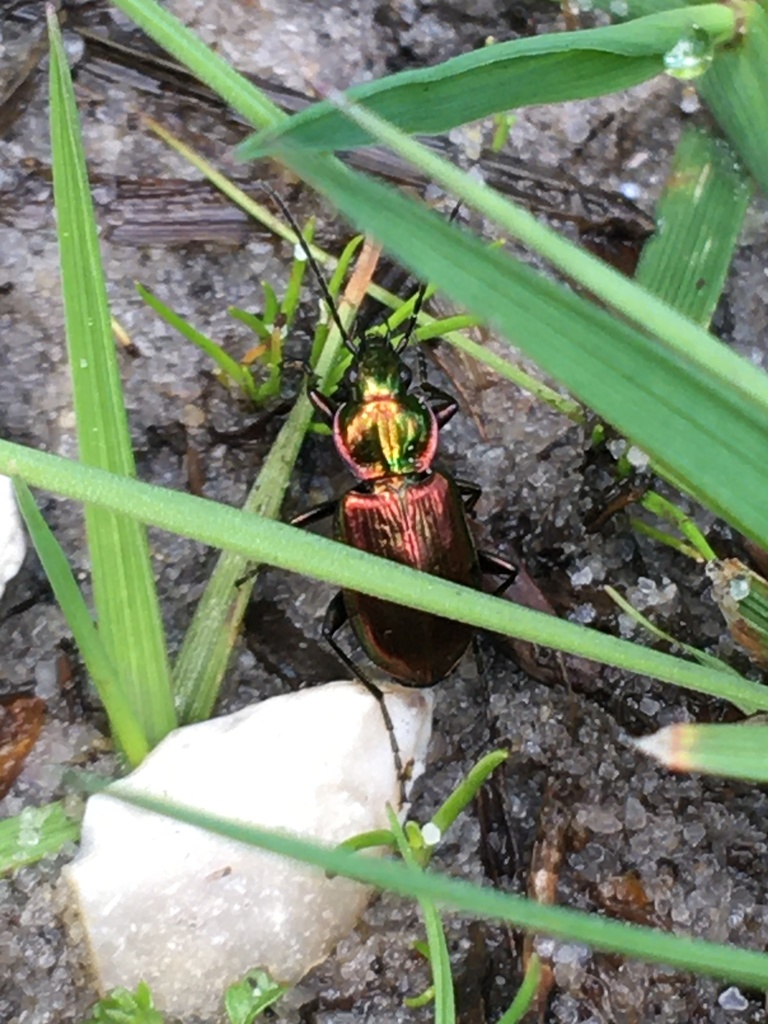
(c) elinorn, some rights reserved (CC BY) · licence
Family: Carabidae · Class: Insecta · Order: Coleoptera
Agonum belleri (Beller’s ground beetle) is a California animal in the Carabidae family.
Beller's ground beetle is a small, flightless ground beetle endemic to the Pacific Northwest. This wetland-dependent species is consistently brachypterous, meaning it possesses shortened wing covers and lacks flight capability (Lindroth 1969). The beetle exhibits typical carabid morphology with an elongated body and well-developed legs adapted for terrestrial movement across bog surfaces. The species occurs from sea level to elevations of approximately 1,005 meters (3,300 feet) in Washington and Oregon (Applegarth 1995, LaBonte et al. 2001). Historically documented locations include Kings Lake Bog near North Bend in King County, Washington, and Chase Lake Bog in Snohomish County, Washington, though the latter population has been extirpated due to habitat destruction (USFWS 1978). Current populations are known from Mt. Hood National Forest, including Bear Springs in Wasco County and Little Crater Lake Meadows near Timothy Lake in Clackamas County (LaBonte 2006). The species likely occurs on Mt. Baker/Snoqualmie National Forest and possibly on Olympic and Gifford Pinchot National Forests. Agonun belleri inhabits acidic Sphagnum bogs in forested regions, showing a strong preference for floating mats of Sphagnum moss immediately adjacent to open water (Johnson 1979). Primary bog species include Sphagnum magellanicum and other sphagnum species that create the characteristic acidic wetland environment. Marginal habitats include small sphagnum patches at springs and stream backwaters, as well as bogs in late successional stages transitioning to meadows. The surrounding forest typically consists of bigleaf maple (Acer macrophyllum), alder (Alnus spp.), fir (Abies spp.), western hemlock (Tsuga heterophylla), western red cedar (Thuja plicata), and Douglas fir (Pseudotsuga menziesii). Within available moisture gradients, individuals occur only in the wettest areas (Bergdahl 1997, Maynard 2004). The beetle is quite active on sphagnum bog surfaces and overwinters in upland habitat surrounding wetlands (Bergdahl 1997). Diptera larvae appear to constitute an important food resource, though specific dietary studies remain limited. As a flightless species, Agonum belleri exhibits restricted dispersal capability, making populations particularly vulnerable to habitat fragmentation. Beller's ground beetle has been considered a Species of Concern by the U.S. Fish and Wildlife Service, though the current status of this designation requires verification. Primary threats include habitat destruction from urban development, logging, water-level alteration, peat mining, pesticide application, and livestock grazing and trampling. Logging and development represent the most serious threats to individual populations, as substantial numbers of bogs have been destroyed by these activities. Climate change poses additional risks by potentially altering bog water levels and seasonal duration periods. The species has already been extirpated from Chase Lake Bog due to severe habitat alteration from peat mining and housing development. Conservation management should focus on protecting water quality and quantity at known sites, as well as maintaining the surrounding plant communities essential for this specialized bog-dependent species.
Classification
Class: Insecta · Order: Coleoptera · Family: Carabidae
Frequently asked questions
How is Agonum belleri classified?
Agonum belleri belongs to class Insecta, order Coleoptera, family Carabidae.
What family does Agonum belleri belong to?
Agonum belleri is in the Carabidae family.
What is Agonum belleri?
Beller's ground beetle is a small, flightless ground beetle endemic to the Pacific Northwest.
Is Agonum belleri found in California?
Yes. Agonum belleri is recorded in California in The California Species Project's catalogue.
Related species
Other California species in the same genus, family, or bioregion.
Data from The California Species Project — 14,000+ California species with verified data from CNPS, CDFW, USFWS, and more.