Agrilus blandus
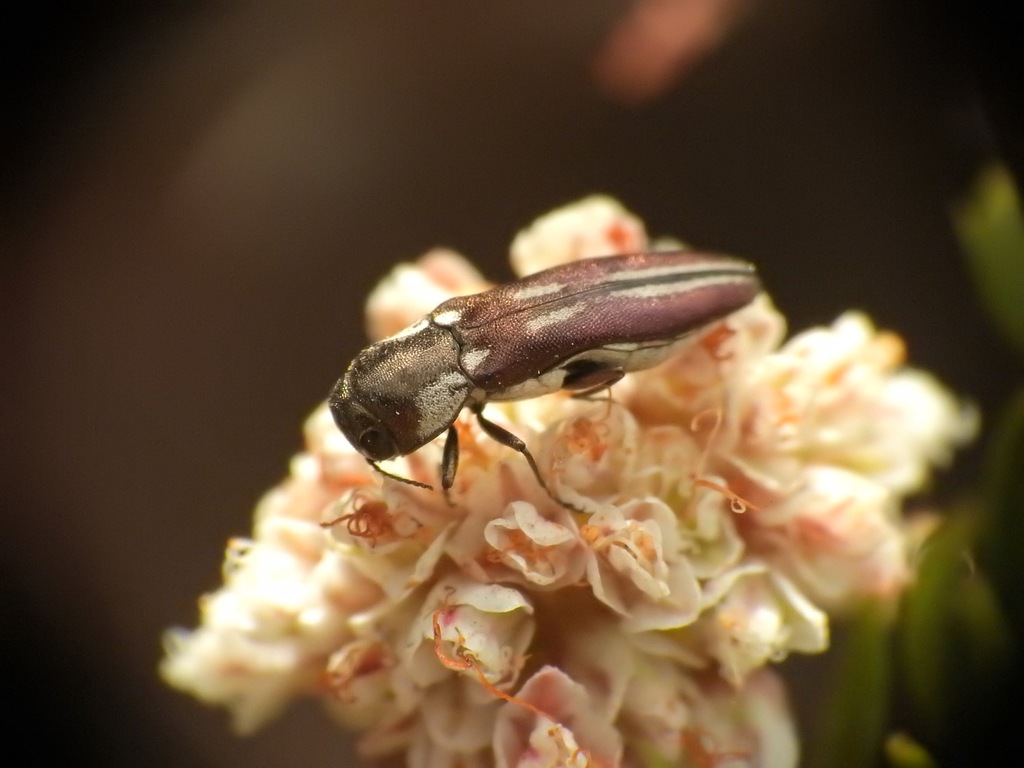
no rights reserved · CC0
Family: Buprestidae · Class: Insecta · Order: Coleoptera
Agrilus blandus is a California animal in the Buprestidae family.
Agrilus blandus is a small metallic wood-boring beetle in the family Buprestidae, commonly known as jewel beetles or metallic wood-boring beetles. As with other Agrilus species, adults are typically 3-8 mm in length with an elongated, narrow body profile and metallic coloration that may range from bronze to greenish or coppery hues. The elytra (wing covers) are finely punctured and may display subtle striations. The antennae are serrated, and the head is partially retracted into the prothorax when viewed from above. The distribution of A. blandus extends across North America, with documented occurrences in both the United States and Mexico. Within California, specific county-level distribution data remains limited in published literature. The species appears to have a relatively broad geographic range typical of many Agrilus species, though detailed surveys of its California populations have not been comprehensively documented. Like other members of the genus Agrilus, this species inhabits areas where suitable host trees are present. Agrilus beetles are obligate wood-borers, with larvae developing within the cambial tissues of woody plants. The specific host plant associations for A. blandus have not been thoroughly documented in the scientific literature, though related Agrilus species typically specialize on particular tree or shrub genera. Adults are commonly found on or near their larval host plants during the growing season. Adult A. blandus are active during warmer months, typically emerging in late spring through early fall when temperatures favor flight activity. Females lay eggs in bark crevices or under bark scales of suitable host trees. Larvae bore through the bark into the cambium and phloem tissues, creating winding galleries as they feed and develop. This feeding can create characteristic serpentine patterns under the bark. The larval stage typically lasts one year, though development time may vary with temperature and host plant quality. Pupation occurs in pupal cells constructed in the outer bark or wood. Agrilus blandus does not currently hold federal or state listing status under endangered species legislation. Population trends and conservation concerns for this species have not been systematically assessed. As with many wood-boring beetles, potential threats could include habitat loss through deforestation, changes in forest composition, and impacts on host plant species. However, without comprehensive population monitoring or ecological studies, the conservation status of A. blandus remains uncertain. Detailed ecological studies of this species are lacking. The information presented here synthesizes available taxonomic and distributional data from federal databases and general knowledge of Agrilus biology. Scientific documentation of host plant relationships, population dynamics, and specific habitat requirements would benefit from targeted field research. We welcome contributions of verified scientific data, photographs, or field observations to enhance this species account.
Classification
Class: Insecta · Order: Coleoptera · Family: Buprestidae
Frequently asked questions
How is Agrilus blandus classified?
Agrilus blandus belongs to class Insecta, order Coleoptera, family Buprestidae.
What family does Agrilus blandus belong to?
Agrilus blandus is in the Buprestidae family.
What is Agrilus blandus?
Agrilus blandus is a small metallic wood-boring beetle in the family Buprestidae, commonly known as jewel beetles or metallic wood-boring beetles.
Is Agrilus blandus found in California?
Yes. Agrilus blandus is recorded in California in The California Species Project's catalogue.
Related species
Other California species in the same genus, family, or bioregion.
Data from The California Species Project — 14,000+ California species with verified data from CNPS, CDFW, USFWS, and more.