Agriphila biothanatalis
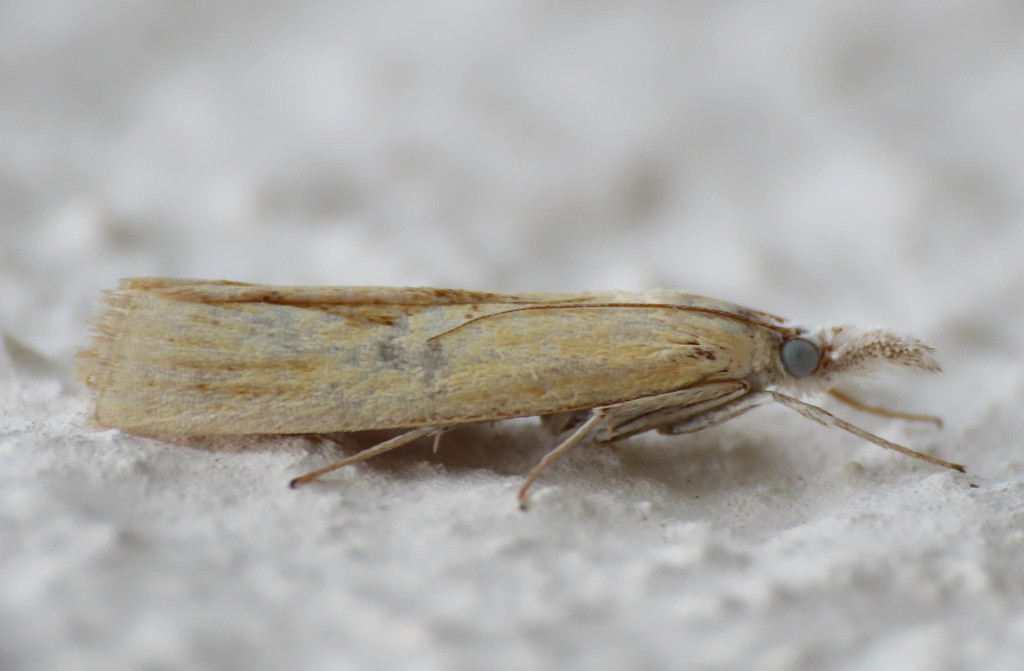
(c) Emanuele Santarelli, some rights reserved (CC BY-SA) · licence
Family: Crambidae · Class: Insecta · Order: Lepidoptera
Agriphila biothanatalis is a California animal in the Crambidae family.
Agriphila biothanatalis is a small moth in the family Crambidae, subfamily Crambinae, commonly known as crambid snout moths or grass-veneer moths. This species belongs to the genus Agriphila, which comprises numerous grass-feeding moths found throughout North America. The moths are characterized by their narrow forewings and elongated appearance typical of crambid moths, though specific morphological details for this species remain poorly documented in the scientific literature. Agriphila biothanatalis occurs in California and Oregon along the Pacific Coast region. Within California, the species has been documented in San Benito County, specifically in the Aromas area (BugGuide 2021). The full extent of its distribution within both states requires further documentation, as moth surveys in many regions remain incomplete. The species likely occupies suitable grassland and herbaceous habitats throughout its range where appropriate host plants are present. Like other members of the genus Agriphila, this species presumably inhabits grassland ecosystems, meadows, and areas with abundant graminoid vegetation. Crambid moths in this genus typically prefer open habitats with native and introduced grasses, though the specific habitat requirements for A. biothanatalis have not been comprehensively studied. The species may also occur in agricultural areas, roadsides, and other disturbed habitats where grass species persist. The larval stage of Agriphila biothanatalis likely feeds on grasses, consistent with the feeding patterns of related species in the genus. Adult moths are presumably active during warmer months, with flight periods that may extend from late spring through fall. A specimen was documented in October in San Benito County, suggesting potential late-season activity (BugGuide 2021). The specific host plants, voltinism, and detailed life cycle information for this species remain undocumented in available literature. Agriphila biothanatalis does not appear on federal or state endangered species lists, and its conservation status has not been formally assessed. The species faces potential threats common to grassland-associated insects, including habitat conversion, agricultural intensification, and invasive plant species that may displace native grass communities. Climate change may also affect the species' distribution and phenology, particularly given its apparent restriction to Pacific Coast states. The limited scientific documentation of this species reflects broader knowledge gaps regarding many native moth species in California and Oregon. Scientific documentation for this species remains extremely limited. The information presented here is based on available sources including BugGuide community observations and taxonomic databases. Detailed ecological studies, host plant associations, and comprehensive distribution surveys are needed to better understand this species' biology and conservation needs. We welcome contributions of verified scientific data, photographs, or field observations to enhance this species account.
Classification
Class: Insecta · Order: Lepidoptera · Family: Crambidae
Frequently asked questions
How is Agriphila biothanatalis classified?
Agriphila biothanatalis belongs to class Insecta, order Lepidoptera, family Crambidae.
What family does Agriphila biothanatalis belong to?
Agriphila biothanatalis is in the Crambidae family.
What is Agriphila biothanatalis?
Agriphila biothanatalis is a small moth in the family Crambidae, subfamily Crambinae, commonly known as crambid snout moths or grass-veneer moths.
Is Agriphila biothanatalis found in California?
Yes. Agriphila biothanatalis is recorded in California in The California Species Project's catalogue.
Related species
Other California species in the same genus, family, or bioregion.
Data from The California Species Project — 14,000+ California species with verified data from CNPS, CDFW, USFWS, and more.