Agrochola purpurea
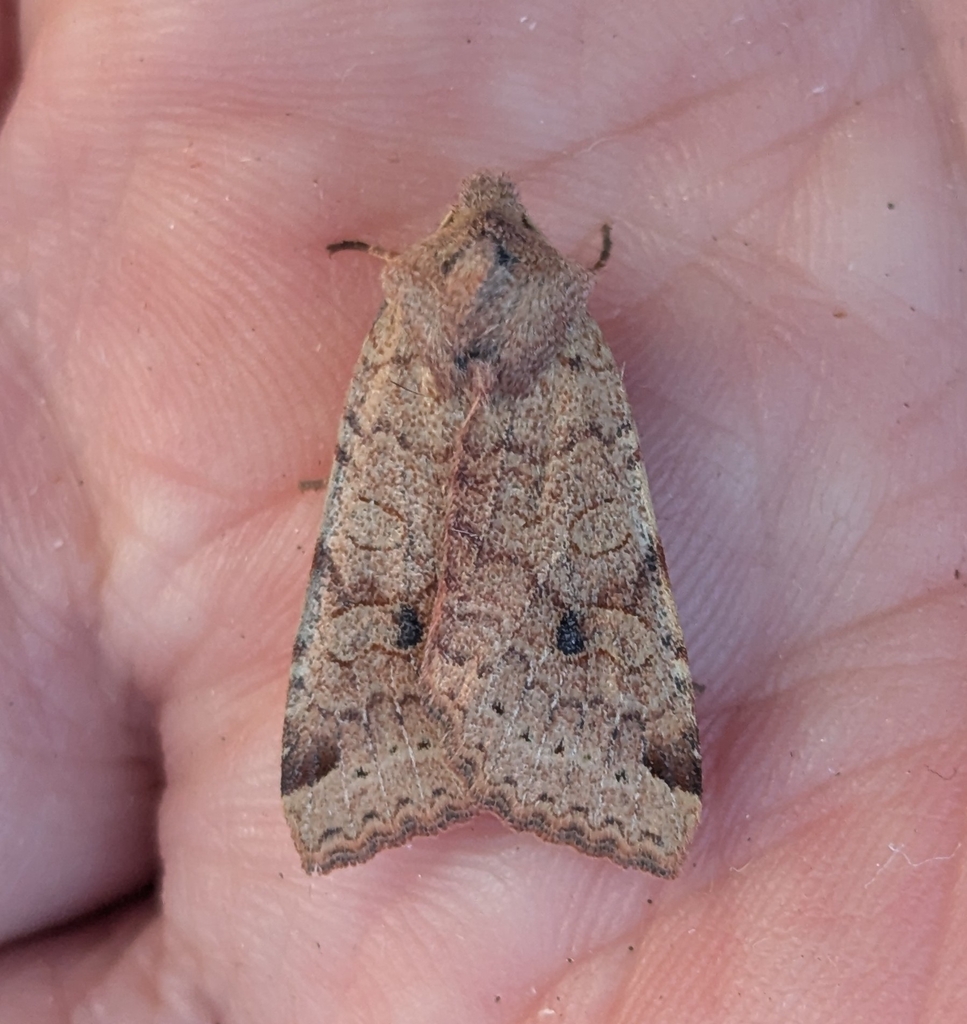
no rights reserved · CC0
Family: Noctuidae · Class: Insecta · Order: Lepidoptera
Agrochola purpurea is a California animal in the Noctuidae family.
Agrochola purpurea is a moth species in the family Noctuidae, commonly known as owlet moths or cutworm moths. This species belongs to the genus Agrochola, which comprises medium-sized nocturnal moths found primarily in temperate regions of North America. The taxonomic classification places it within the order Lepidoptera, the second-largest order of insects that includes all butterflies and moths. Adult Agrochola purpurea moths typically display the characteristic features of their genus, with forewings that exhibit muted coloration patterns. The species name 'purpurea' suggests purplish coloration, though detailed morphological descriptions of this specific species are limited in current literature. Like other Agrochola species, adults likely have a wingspan ranging from 35 to 45 millimeters (1.4 to 1.8 inches), with forewings bearing subtle patterns of lines and spots that aid in camouflage during daytime rest periods. The geographic distribution of Agrochola purpurea appears to be restricted, though comprehensive range data is not well documented in accessible databases. The genus Agrochola is generally distributed across North America, with various species occupying different ecological niches from coast to coast. However, the specific range limits and population distribution of A. purpurea require further taxonomic and ecological investigation. Habitat requirements for this species likely follow patterns observed in related Agrochola moths, which typically inhabit deciduous and mixed forests. These moths are generally associated with areas containing their larval host plants, which often include various deciduous trees and shrubs. The larvae, or caterpillars, likely feed on foliage during their development, pupating in soil or leaf litter before emerging as adults. Behavioral patterns of Agrochola purpurea likely align with other noctuidae species, being primarily active during nighttime hours when adults seek mates and nectar sources. Adults are attracted to artificial lights and may visit flowers of various plant species. The life cycle probably follows an annual pattern, with adults emerging during late summer or early fall months, mating, and laying eggs that overwinter before hatching in spring. The conservation status of Agrochola purpurea is not well established, as the species lacks formal federal or state protection designations. This absence of conservation status may reflect either stable populations, insufficient survey data, or taxonomic uncertainty. Many noctuidae species face pressures from habitat loss, pesticide use, and light pollution, which can disrupt their nocturnal behaviors and reproductive success. The limited available information about this species highlights the need for comprehensive lepidopteran surveys and taxonomic research to better understand the distribution, ecology, and conservation needs of lesser-known moth species in North America.
Classification
Class: Insecta · Order: Lepidoptera · Family: Noctuidae
Frequently asked questions
How is Agrochola purpurea classified?
Agrochola purpurea belongs to class Insecta, order Lepidoptera, family Noctuidae.
What family does Agrochola purpurea belong to?
Agrochola purpurea is in the Noctuidae family.
What is Agrochola purpurea?
Agrochola purpurea is a moth species in the family Noctuidae, commonly known as owlet moths or cutworm moths.
Is Agrochola purpurea found in California?
Yes. Agrochola purpurea is recorded in California in The California Species Project's catalogue.
Related species
Other California species in the same genus, family, or bioregion.
Data from The California Species Project — 14,000+ California species with verified data from CNPS, CDFW, USFWS, and more.