Agrotis venerabilis
Venerable Dart
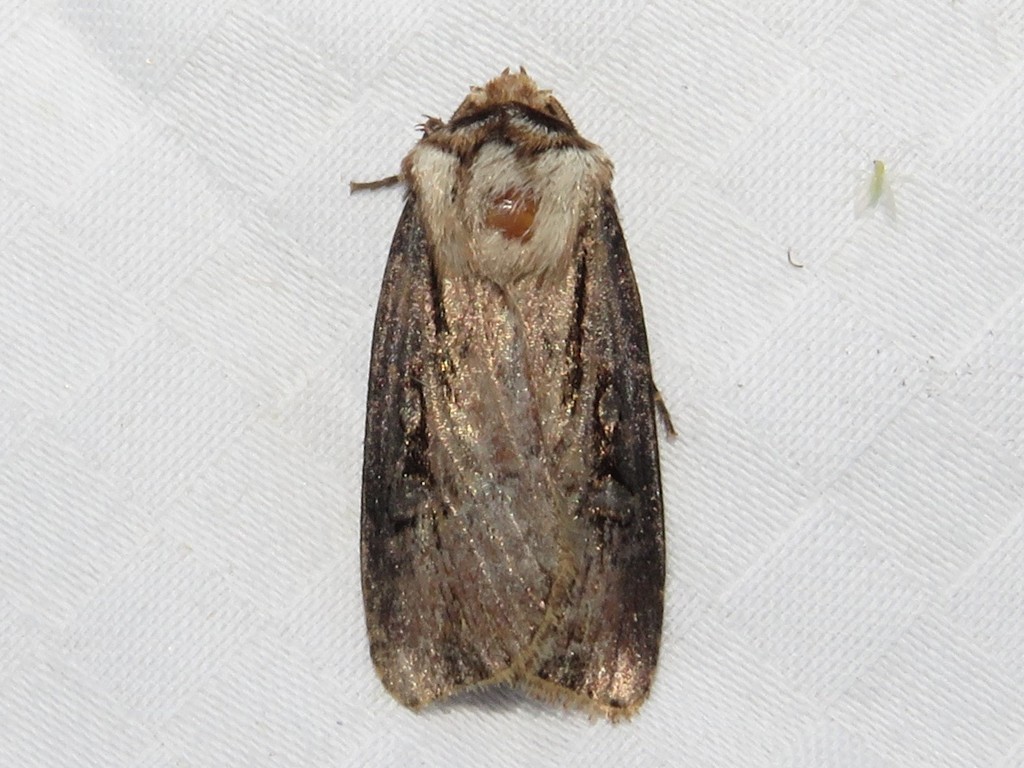
(c) Dan MacNeal, some rights reserved (CC BY) · licence
Family: Noctuidae · Class: Insecta · Order: Lepidoptera
Agrotis venerabilis (Venerable Dart) is a California animal in the Noctuidae family.
The Venerable Dart (Agrotis venerabilis) is a moth in the family Noctuidae, commonly known as owlet moths or cutworm moths. This species belongs to the genus Agrotis, which comprises numerous species of dart moths distributed across North America. Adult Venerable Darts typically measure 30 to 40 mm (1.2 to 1.6 inches) in wingspan. The forewings display mottled brown and gray coloration with darker markings, providing effective camouflage when resting on bark or soil during daylight hours. The hindwings are typically lighter, ranging from pale gray to whitish with darker marginal borders. Historically, Agrotis venerabilis was documented from various locations across western North America, including portions of California. The species' current distribution and population status remain poorly documented, with limited recent survey data available. Many Agrotis species have experienced range contractions due to habitat modification and agricultural practices, though specific information for A. venerabilis is lacking in contemporary literature. Venerable Darts inhabit diverse terrestrial environments, including grasslands, shrublands, and forest edges. Adults are typically active during late spring and summer months, with flight periods varying by elevation and local climate conditions. The species likely occurs from sea level to moderate elevations, consistent with habitat preferences of related Agrotis species. Larvae develop in soil environments where they feed on roots and lower stems of herbaceous plants. Like other dart moths, Venerable Darts are nocturnal, with adults attracted to artificial lights during evening hours. Mating occurs during nighttime, with females depositing eggs on or near host plants. Larvae, commonly called cutworms, live in the soil and emerge at night to feed on plant material. The larval stage typically lasts several months, with pupation occurring in earthen cells. Most Agrotis species complete one generation per year, overwintering as larvae or pupae depending on local conditions. The conservation status of Agrotis venerabilis remains uncertain due to limited recent survey efforts and taxonomic uncertainty within the genus. The species lacks federal or state conservation designations, though this may reflect insufficient data rather than stable populations. Many moth species have experienced population declines due to habitat loss, pesticide use, and light pollution. Nocturnal insects are particularly vulnerable to artificial lighting, which disrupts natural behavioral patterns and can affect reproduction and survival. Climate change may also impact the species through altered precipitation patterns and temperature regimes that affect larval development and adult flight periods. Without targeted surveys and taxonomic clarification, the current population trends and conservation needs of the Venerable Dart cannot be adequately assessed. Additional research is needed to determine the species' distribution, habitat requirements, and conservation status within California and throughout its range.
Classification
Class: Insecta · Order: Lepidoptera · Family: Noctuidae
Frequently asked questions
How is Agrotis venerabilis classified?
Agrotis venerabilis belongs to class Insecta, order Lepidoptera, family Noctuidae.
What family does Agrotis venerabilis belong to?
Agrotis venerabilis is in the Noctuidae family.
What is Agrotis venerabilis?
The Venerable Dart (Agrotis venerabilis) is a moth in the family Noctuidae, commonly known as owlet moths or cutworm moths.
Is Agrotis venerabilis found in California?
Yes. Agrotis venerabilis is recorded in California in The California Species Project's catalogue.
Related species
Other California species in the same genus, family, or bioregion.
Data from The California Species Project — 14,000+ California species with verified data from CNPS, CDFW, USFWS, and more.