Agulla bicolor
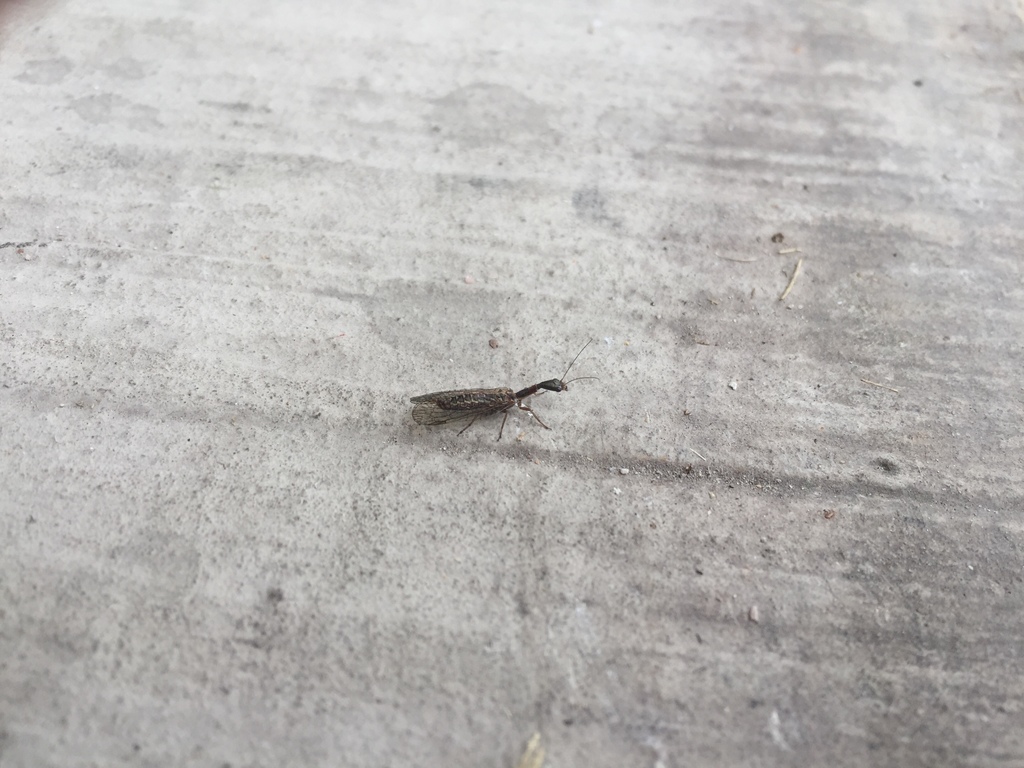
(c) Blake Bringhurst, some rights reserved (CC BY) · licence
Family: Raphidiidae · Class: Insecta · Order: Raphidioptera
Agulla bicolor is a California animal in the Raphidiidae family.
Agulla bicolor is a snakefly in the family Raphidiidae, representing one of the less studied members of the order Raphidioptera. Adult snakeflies are characterized by their distinctive elongated prothorax, which gives them their snake-like appearance, and clear membranous wings with extensive venation. The head is relatively large with prominent compound eyes and chewing mouthparts. Females possess a long, slender ovipositor extending from the tip of the abdomen. The specific distribution and range of Agulla bicolor in California has not been comprehensively documented in the literature. Members of the genus Agulla are generally found in forested regions of western North America, typically occurring in montane and foothill areas. Like other raphidiopterans, this species likely inhabits areas with suitable woody vegetation that supports the larval development requirements. Agulla bicolor adults are typically found in forest and woodland habitats where dead or decaying wood provides breeding sites. The larvae are predaceous and develop beneath bark of dead or dying trees, where they feed on other small arthropods including beetle larvae, aphids, and other soft-bodied insects. Adult snakeflies are also predatory, actively hunting small insects on bark surfaces and vegetation. The elongated prothorax allows for increased mobility when pursuing prey in crevices and under bark. The life cycle of Agulla bicolor likely follows the typical raphidiopteran pattern, though specific details for this species remain poorly documented. Adults are generally active during warmer months, with mating occurring in spring or early summer. Females use their ovipositors to deposit eggs in bark crevices or under loose bark of suitable host trees. Larval development occurs over one to several years, depending on environmental conditions and food availability. The larvae undergo several molts before pupating in chambers they construct within the wood substrate. No specific conservation status has been established for Agulla bicolor at federal or state levels. As with many arthropod species, population trends and conservation needs remain largely unknown due to limited systematic surveys and taxonomic studies. The genus Agulla contains numerous species with overlapping distributions and similar morphological characteristics, making accurate identification challenging without detailed taxonomic expertise. Forest management practices that maintain dead wood and snag habitat would benefit this and other bark-dwelling predatory species. Scientific documentation for this species remains limited. Research on North American Raphidioptera has been sporadic, with many species known from only a few specimens or collection records. The ecological role of snakeflies as predators in forest ecosystems suggests they may serve as indicators of forest health, though specific studies on Agulla bicolor are lacking. Additional field surveys and taxonomic research are needed to better understand the distribution, habitat requirements, and conservation status of this species within California's diverse forest ecosystems.
Classification
Class: Insecta · Order: Raphidioptera · Family: Raphidiidae
Frequently asked questions
How is Agulla bicolor classified?
Agulla bicolor belongs to class Insecta, order Raphidioptera, family Raphidiidae.
What family does Agulla bicolor belong to?
Agulla bicolor is in the Raphidiidae family.
What is Agulla bicolor?
Agulla bicolor is a snakefly in the family Raphidiidae, representing one of the less studied members of the order Raphidioptera.
Is Agulla bicolor found in California?
Yes. Agulla bicolor is recorded in California in The California Species Project's catalogue.
More California species
This species has no close relatives in our California data — here are other species to explore.
Data from The California Species Project — 14,000+ California species with verified data from CNPS, CDFW, USFWS, and more.