Aimophila ruficeps obscura
Santa Cruz Island Rufous- Crowned Sparrow
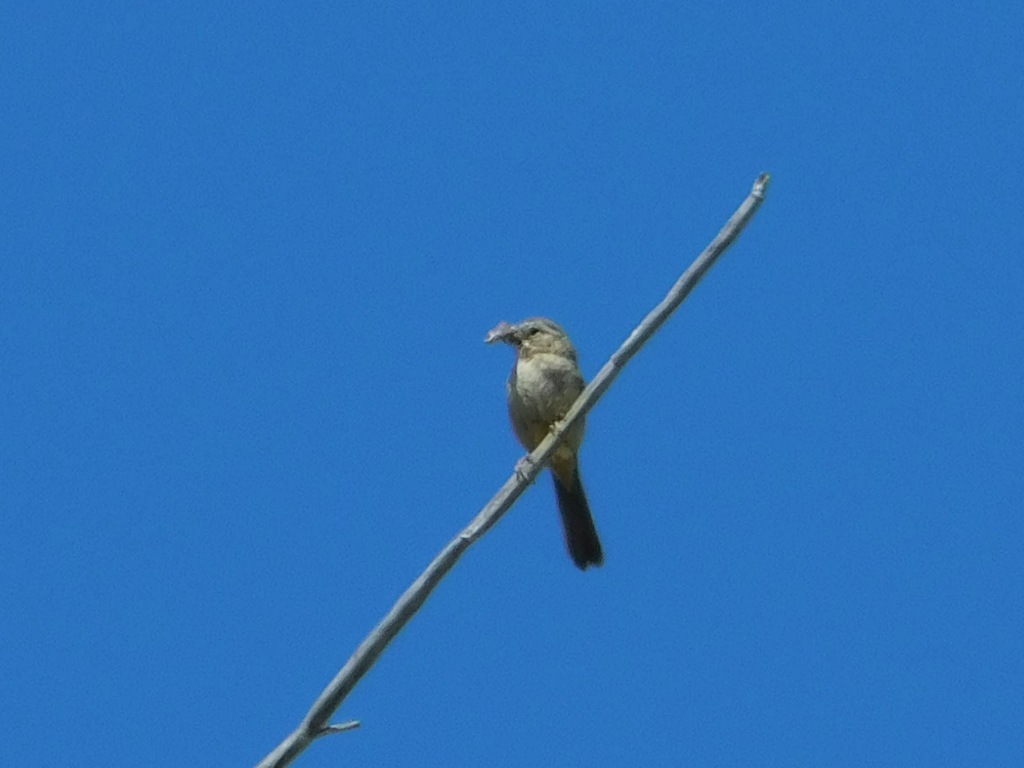
(c) Rajan Rao, some rights reserved (CC BY) · licence
Family: Passerellidae · Class: Aves · Order: Passeriformes
Conservation status: G5T2 S2
Aimophila ruficeps obscura (Santa Cruz Island Rufous- Crowned Sparrow) is a California animal in the Passerellidae family.
The Santa Cruz Island Rufous-crowned Sparrow (Aimophila ruficeps obscura) is a small passerine bird endemic to California's Channel Islands. This subspecies represents one of several geographically distinct populations of the Rufous-crowned Sparrow complex found across the southwestern United States. Adults measure approximately 12.5-15 cm (5-6 inches) in length with a relatively stocky build characteristic of the genus. The species displays sexual dimorphism in size, with males slightly larger than females. The distinctive rufous crown provides the common name, contrasting with grayish-brown upperparts and pale underparts with subtle streaking on the flanks. The face pattern includes a dark eye-line and malar stripe, with a pale supercilium above the eye. The bill is conical and well-adapted for seed consumption, while the tail is relatively long and often held cocked upward. According to NatureServe, the Santa Cruz rufous-crowned sparrow is limited in distribution to Santa Cruz and Anacapa Islands in Santa Barbara and Ventura Counties (NatureServe Explorer). This extremely restricted range makes it one of California's most geographically limited bird subspecies. The subspecies is separated from mainland populations by the Santa Barbara Channel, which has allowed for evolutionary divergence from the continental forms. The subspecies inhabits the diverse plant communities found on these Channel Islands, including coastal sage scrub, chaparral, and grassland habitats. Santa Cruz Island's varied topography, ranging from sea level to over 750 meters elevation, provides multiple microhabitats. The birds typically occupy areas with scattered shrubs and open ground, favoring habitat edges and areas with rock outcroppings that provide elevated perching sites. Like other Rufous-crowned Sparrow subspecies, A. r. obscura is primarily granivorous, feeding on seeds from grasses and forbs. The diet likely includes seeds from native island plants as well as some arthropods, particularly during the breeding season when protein requirements increase. Breeding biology follows the general pattern for the species, with clutch sizes typically ranging from 2-5 eggs, usually 3-4 (NatureServe). Females perform incubation duties while both parents tend the altricial nestlings. The breeding season likely extends from March through July, coinciding with peak food availability. The Santa Cruz Island Rufous-crowned Sparrow carries a Global/State Rank of G5T2 S2, indicating the full species is secure globally but this subspecies is imperiled. The extremely limited range makes the population vulnerable to habitat changes, invasive species, and environmental disturbances. Historical overgrazing by introduced livestock on Santa Cruz Island significantly altered native plant communities, though ongoing restoration efforts by The Nature Conservancy have removed feral animals and are restoring native vegetation. Climate change poses additional threats through altered precipitation patterns and potential sea level rise affecting coastal habitats. The small population size and restricted range make this subspecies particularly susceptible to stochastic events and genetic bottlenecks, emphasizing the importance of continued habitat protection and monitoring efforts on the Channel Islands.
Classification
Class: Aves · Order: Passeriformes · Family: Passerellidae
Conservation status
G5T2 S2
Frequently asked questions
How is Aimophila ruficeps obscura classified?
Aimophila ruficeps obscura belongs to class Aves, order Passeriformes, family Passerellidae.
What family does Aimophila ruficeps obscura belong to?
Aimophila ruficeps obscura is in the Passerellidae family.
Is Aimophila ruficeps obscura protected or of conservation concern?
Aimophila ruficeps obscura carries the following status: G5T2 S2.
What is Aimophila ruficeps obscura?
The Santa Cruz Island Rufous-crowned Sparrow (Aimophila ruficeps obscura) is a small passerine bird endemic to California's Channel Islands.
Is Aimophila ruficeps obscura found in California?
Yes. Aimophila ruficeps obscura is recorded in California in The California Species Project's catalogue.
Related species
Other California species in the same genus, family, or bioregion.
Data from The California Species Project — 14,000+ California species with verified data from CNPS, CDFW, USFWS, and more.