Aimophila ruficeps ssp. canescens
Southern California rufous-crowned sparrow
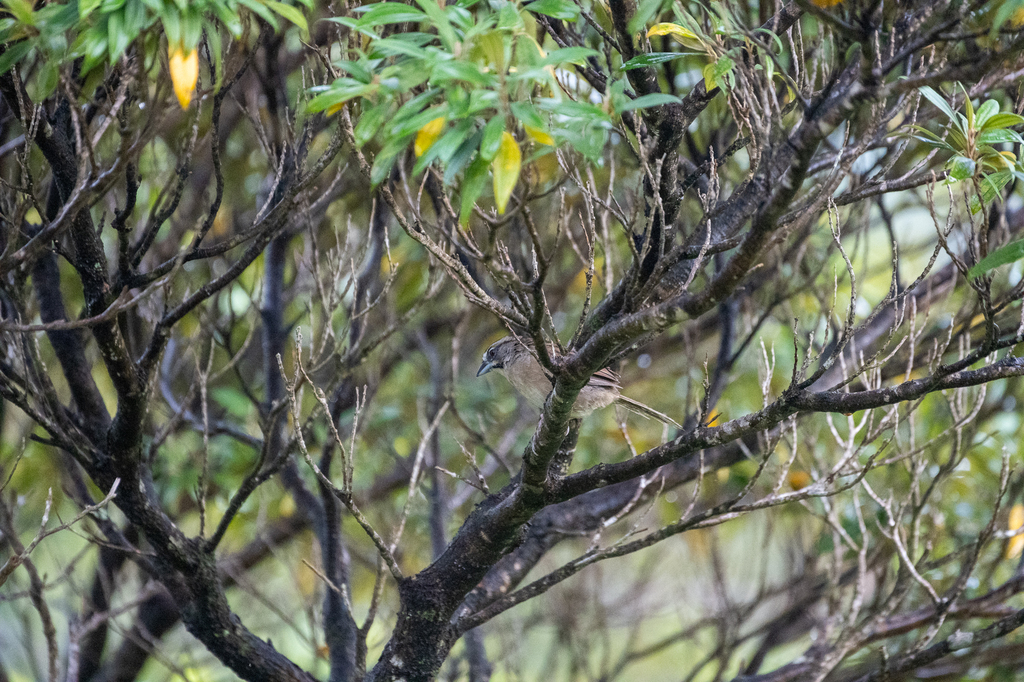
(c) Richard Littauer, some rights reserved (CC BY) · licence
Family: Passerellidae · Class: Aves · Order: Passeriformes
Conservation status: WL · G5T3 S3
Aimophila ruficeps ssp. canescens (Southern California rufous-crowned sparrow) is a California animal in the Passerellidae family.
The Southern California rufous-crowned sparrow (Aimophila ruficeps canescens) is a medium-sized sparrow subspecies endemic to the coastal and inland regions of southern California. Adults measure 125 to 150 mm (4.9 to 5.9 inches) in total length and weigh 17 to 24 grams. The species is characterized by a distinctive rufous crown stripe bordered by gray-brown lateral crown stripes, a white eye-ring, and a dark postocular stripe extending behind the eye. The back and wings are grayish-brown with darker streaking, while the underparts are pale gray to whitish. The bill is pale yellow to horn-colored, and the legs are pinkish-brown. Historically, Aimophila ruficeps canescens ranged throughout the coastal sage scrub and chaparral habitats from Ventura County south to Baja California, Mexico. Current distribution is fragmented, with populations persisting in scattered locations across Los Angeles, Orange, Riverside, San Bernardino, Ventura, and Santa Barbara counties. The subspecies has experienced significant range contraction, particularly in coastal areas where habitat conversion has been extensive. The Southern California rufous-crowned sparrow inhabits coastal sage scrub, chaparral, and oak woodland communities, typically on steep rocky slopes and canyon walls. Preferred habitat includes areas with 25 to 75 percent shrub cover, scattered rock outcrops, and patches of bare ground or sparse herbaceous vegetation. Aimophila ruficeps canescens occurs from sea level to approximately 1,220 meters (4,000 feet) elevation. Essential habitat components include dense shrub cover for nesting and escape cover, and adjacent open areas for foraging. This subspecies is largely sedentary and territorial year-round. Pairs defend territories of 0.4 to 1.2 hectares during the breeding season, which extends from February through August. The species constructs cup-shaped nests of grasses and small twigs, typically placed 0.3 to 1.5 meters above ground in dense shrub cover. Females lay 2 to 5 eggs, with clutch size averaging 3.2 eggs. Incubation lasts 12 to 13 days, and nestlings fledge after 9 to 11 days. Multiple broods per season are common when conditions are favorable. The diet consists primarily of small seeds from forbs and grasses, supplemented with insects during the breeding season, particularly for feeding nestlings. Aimophila ruficeps canescens is designated as a California Watch List species and has a state rank of S3, indicating vulnerability to extirpation. The global subspecies rank of G5T3 reflects stable overall populations but vulnerability of this particular subspecies. Primary threats include habitat loss and fragmentation due to urban development, particularly in coastal areas. Fire suppression has altered natural fire cycles, leading to habitat degradation through increased shrub density and reduced herbaceous ground cover. Cowbird parasitism poses an additional threat in areas near agricultural lands and urban edges. Climate change may exacerbate these threats through altered precipitation patterns and increased fire frequency. Conservation efforts focus on habitat protection and restoration, particularly maintaining the mosaic of shrub cover and open areas essential for the subspecies' survival.
Classification
Class: Aves · Order: Passeriformes · Family: Passerellidae
Conservation status
WL · G5T3 S3
Frequently asked questions
How is Aimophila ruficeps ssp. canescens classified?
Aimophila ruficeps ssp. canescens belongs to class Aves, order Passeriformes, family Passerellidae.
What family does Aimophila ruficeps ssp. canescens belong to?
Aimophila ruficeps ssp. canescens is in the Passerellidae family.
Is Aimophila ruficeps ssp. canescens protected or of conservation concern?
Aimophila ruficeps ssp. canescens carries the following status: WL · G5T3 S3.
What is Aimophila ruficeps ssp. canescens?
The Southern California rufous-crowned sparrow (Aimophila ruficeps canescens) is a medium-sized sparrow subspecies endemic to the coastal and inland regions of southern California.
Is Aimophila ruficeps ssp. canescens found in California?
Yes. Aimophila ruficeps ssp. canescens is recorded in California in The California Species Project's catalogue.
Related species
Other California species in the same genus, family, or bioregion.
Data from The California Species Project — 14,000+ California species with verified data from CNPS, CDFW, USFWS, and more.