Aix sponsa
Wood Duck
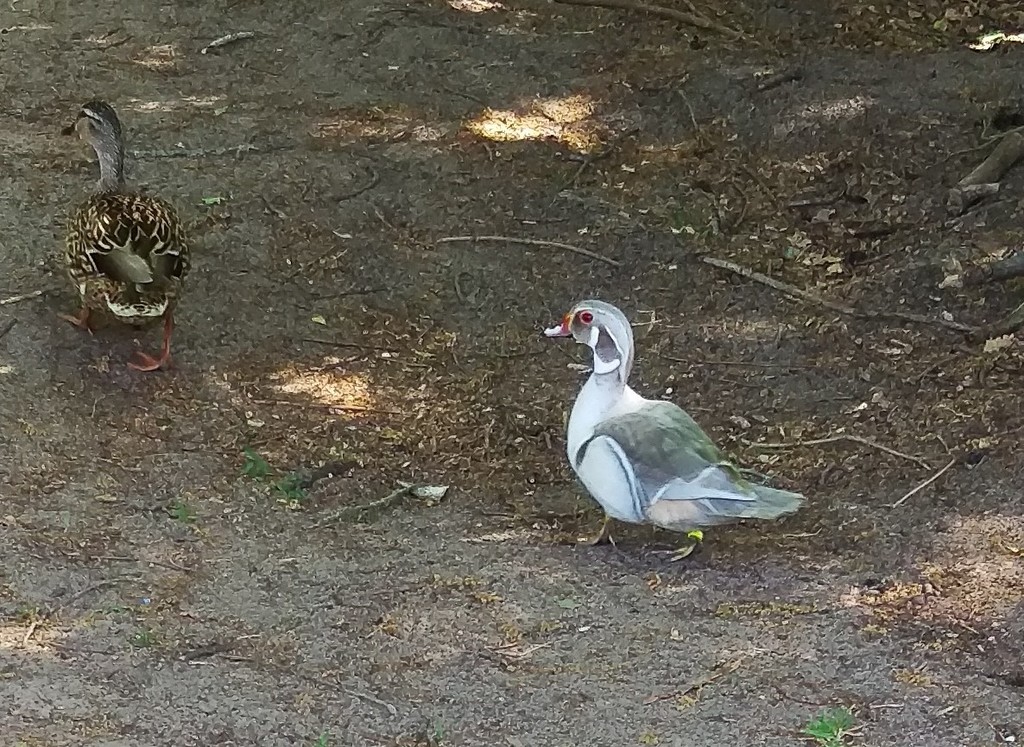
(c) Alexis Tinker-Tsavalas, some rights reserved (CC BY) · licence
Family: Anatidae · Class: Aves · Order: Anseriformes
Aix sponsa (Wood Duck) is a California animal in the Anatidae family.
The Wood Duck (Aix sponsa) is a medium-sized North American waterfowl species measuring 47 to 54 cm (18.5 to 21.3 inches) in length with a wingspan of 66 to 73 cm (26 to 29 inches). Adult males in breeding plumage display iridescent green and purple head coloration with distinctive white facial stripes and a prominent backward-swept crest. The breast is chestnut-colored with white spotting, while the flanks show intricate black and white vermiculation. Females and non-breeding males exhibit more subdued gray-brown plumage with white eye-rings and smaller crests. Both sexes possess broad, squared tails and relatively short necks compared to other dabbling ducks. Wood Ducks breed across much of eastern North America from southern Canada to the Gulf Coast, with a separate Pacific population extending from British Columbia through California. In California, the species occurs year-round in the Central Valley, Coast Ranges, and Sierra Nevada foothills below 1,500 meters (4,900 feet) elevation. The California population represents the western extent of the species' breeding range, with concentrations in the Sacramento-San Joaquin Delta, riparian corridors along major rivers, and oak woodland complexes with permanent water sources. The species inhabits wooded swamps, shallow lakes, marshes, and slow-moving streams with adjacent mature trees. Wood Ducks require both aquatic feeding areas and large trees with suitable nesting cavities, typically 1.5 to 18 meters (5 to 60 feet) above ground. Preferred cavity trees include oaks, willows, cottonwoods, and other hardwoods with trunk diameters exceeding 50 cm (20 inches). The species also utilizes artificial nest boxes when natural cavities are limited. Wood Ducks are omnivorous, consuming aquatic plants, seeds, fruits, and invertebrates. Their diet varies seasonally, with greater emphasis on protein-rich invertebrates during breeding season and carbohydrate-rich plant matter during fall and winter. In California, acorns from valley and coast live oaks constitute an important food source. Breeding occurs from March through August, with peak nesting in April and May. Females select cavity sites and lay 9 to 14 glossy, cream-colored eggs. Incubation lasts 28 to 37 days, after which ducklings jump from nest cavities to water, sometimes falling more than 15 meters (50 feet) without injury. The Wood Duck experienced severe population declines in the early 1900s due to habitat loss and unrestricted hunting, with near-extinction by 1918. Conservation efforts including hunting restrictions, habitat protection, and nest box programs facilitated substantial population recovery. Current North American populations exceed 3 million birds according to the North American Breeding Bird Survey. The species is not federally or state-listed in California, though local populations face ongoing pressures from riparian habitat conversion, water diversions, and urban development. Climate change may affect the species through altered precipitation patterns and shifts in suitable habitat distribution.
Classification
Class: Aves · Order: Anseriformes · Family: Anatidae
Frequently asked questions
How is Aix sponsa classified?
Aix sponsa belongs to class Aves, order Anseriformes, family Anatidae.
What family does Aix sponsa belong to?
Aix sponsa is in the Anatidae family.
What is Aix sponsa?
The Wood Duck (Aix sponsa) is a medium-sized North American waterfowl species measuring 47 to 54 cm (18.5 to 21.3 inches) in length with a wingspan of 66 to 73 cm (26 to 29 inches).
Is Aix sponsa found in California?
Yes. Aix sponsa is recorded in California in The California Species Project's catalogue.
Related species
Other California species in the same genus, family, or bioregion.
Data from The California Species Project — 14,000+ California species with verified data from CNPS, CDFW, USFWS, and more.