Albuna pyramidalis
Fireweed Clearwing Moth
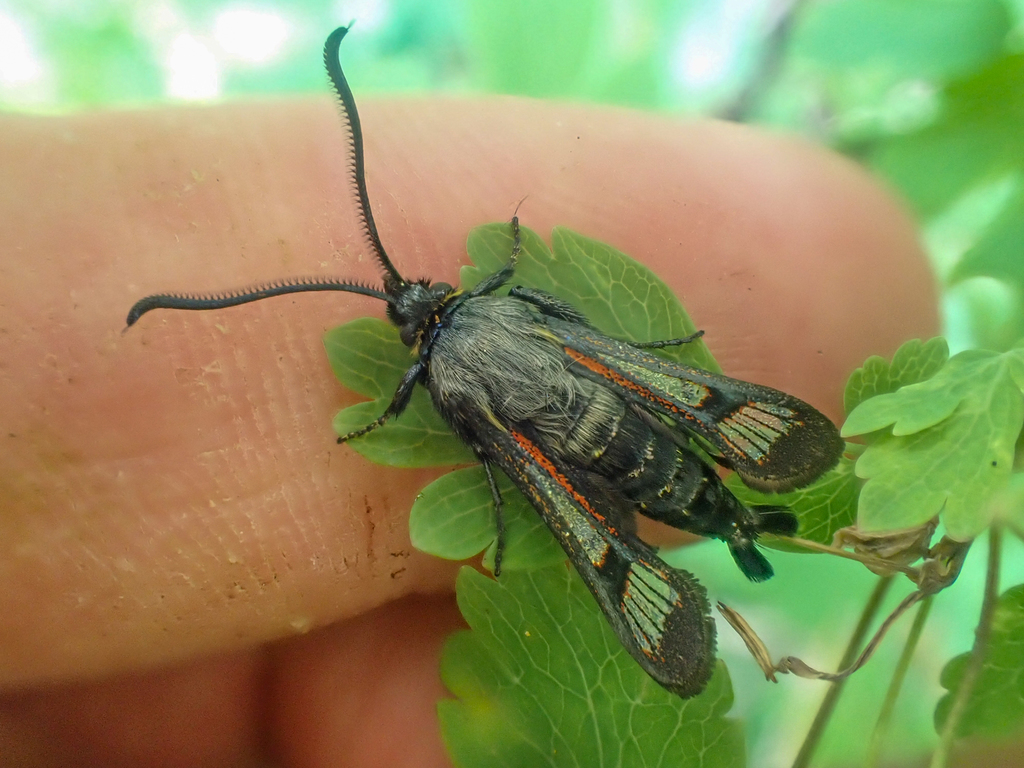
(c) Trevor Van Loon, some rights reserved (CC BY) · licence
Family: Sesiidae · Class: Insecta · Order: Lepidoptera
Albuna pyramidalis (Fireweed Clearwing Moth) is a California animal in the Sesiidae family.
The Fireweed Clearwing Moth (Albuna pyramidalis) is a medium-sized clearwing moth in the family Sesiidae. Adults are yellowjacket mimics with predominantly yellow and black coloration and transparent wing patches typical of clearwing moths. The species exhibits sexual dimorphism, with males typically smaller and more slender than females. Like other sesiids, adults have narrow, elongated forewings and broader hindwings with extensive clear areas that aid in their wasp-like appearance. Albuna pyramidalis has a broad distribution across North America, ranging from Alaska south through western Canada and the western United States. In Alaska, the species has been documented from interior regions including the Steese Highway near Fairbanks, representing the northernmost extent of its range (Lepidopterists' Society 2014). The species occurs throughout the Rocky Mountain states and extends into California, though specific California distribution records require further documentation. This moth inhabits areas where its host plants in the family Onagraceae are present. Primary host genera include Chamaenerion (fireweed), Epilobium (willowherbs), and Oenothera (evening primroses) (Powell & Opler 2009). The species shows a preference for habitats ranging from montane meadows to disturbed areas where fireweed commonly establishes, including roadsides, clearcuts, and burned areas. Elevational range extends from low valleys to subalpine zones, with records documented up to 7,700 feet in Colorado (Lepidopterists' Society 2012). Larvae function as borers in the deep, perennial roots of their Onagraceae host plants (Powell & Opler 2009). This root-boring behavior distinguishes them from many other lepidopteran larvae that feed on foliage or stems. The extended larval development period in woody root systems likely contributes to the species' univoltine life cycle in most regions. Adults are active during summer months, with peak flight periods varying by latitude and elevation. In Alaska, adults have been observed in late July through early September, while southern populations may emerge earlier in the season. Males exhibit typical sesiid behavior, flying during daylight hours and being attracted to pheromones. Mating pairs have been observed on various flowering plants, including cultivated peonies near fireweed patches (Lepidopterists' Society 2014). No formal conservation status has been assigned to Albuna pyramidalis, and the species appears to be relatively widespread across its range. The moth's association with fireweed, a pioneer species that colonizes disturbed habitats, may provide some resilience to habitat modification. However, specific population trends and potential threats have not been systematically assessed. The species' dependence on Onagraceae host plants means that conservation of native plant communities containing these genera is important for maintaining local populations. Climate change effects on montane and boreal ecosystems where the species occurs may represent a long-term conservation consideration, though specific vulnerability assessments have not been conducted.
Classification
Class: Insecta · Order: Lepidoptera · Family: Sesiidae
Frequently asked questions
How is Albuna pyramidalis classified?
Albuna pyramidalis belongs to class Insecta, order Lepidoptera, family Sesiidae.
What family does Albuna pyramidalis belong to?
Albuna pyramidalis is in the Sesiidae family.
What is Albuna pyramidalis?
The Fireweed Clearwing Moth (Albuna pyramidalis) is a medium-sized clearwing moth in the family Sesiidae.
Is Albuna pyramidalis found in California?
Yes. Albuna pyramidalis is recorded in California in The California Species Project's catalogue.
Related species
Other California species in the same genus, family, or bioregion.
Data from The California Species Project — 14,000+ California species with verified data from CNPS, CDFW, USFWS, and more.