Aleurodicus dugesii
Giant Whitefly
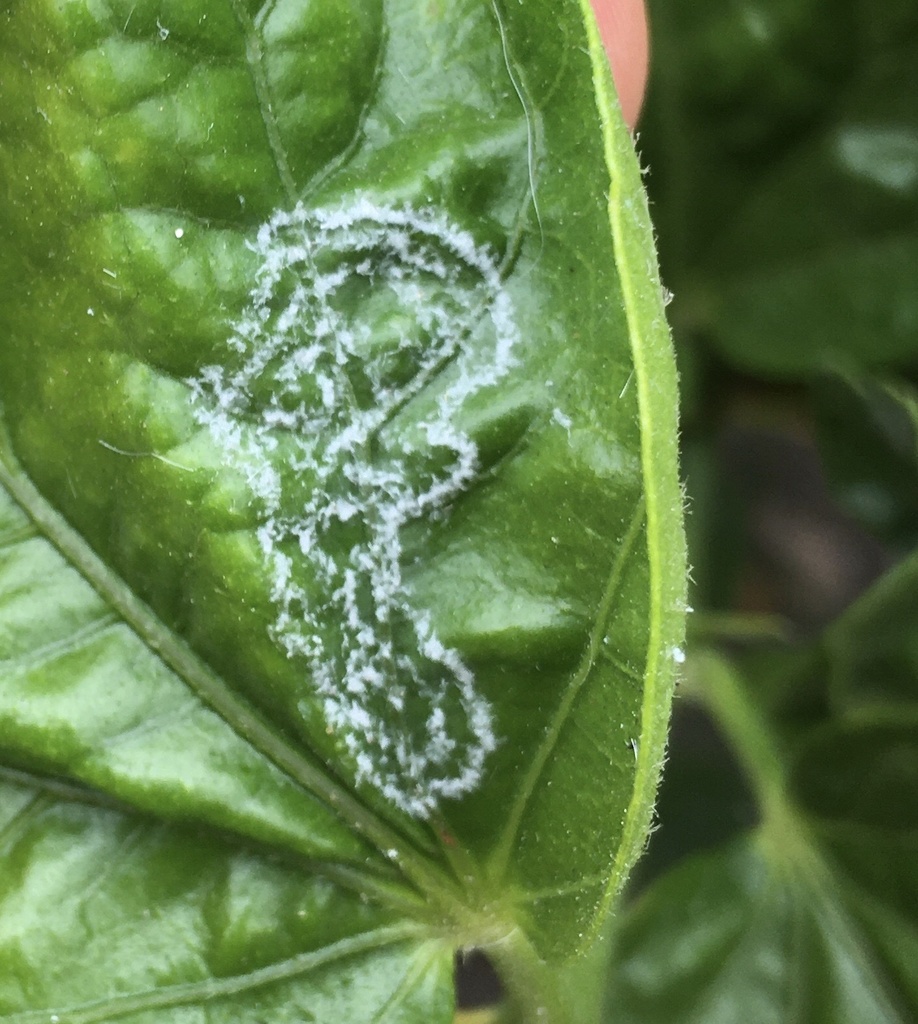
no rights reserved · CC0
Family: Aleyrodidae · Class: Insecta · Order: Hemiptera
Aleurodicus dugesii (Giant Whitefly) is a California animal in the Aleyrodidae family.
The giant whitefly (Aleurodicus dugesii) is a large hemipteran insect in the family Aleyrodidae, notable for being significantly larger than most whitefly species. Adults measure approximately 3-5 mm in length with conspicuous white, waxy wings that give the insect its common name. The species displays typical whitefly characteristics including four membranous wings held tent-like over the body when at rest and a piercing-sucking mouthpart adapted for feeding on plant sap. Native to Mexico, the giant whitefly has established populations across the southwestern United States. According to BugGuide, the species now occurs in California, Arizona, Texas, Louisiana, Florida, and Hawaii. The species was first discovered in San Diego County, California in October 1992, marking its initial detection in the United States (BugGuide 2025). Since this introduction, populations have spread to other regions with suitable climate conditions. The giant whitefly inhabits areas with warm, subtropical to tropical climates where its host plants are available. The species shows a preference for urban and suburban landscapes, particularly areas with ornamental plantings. Like other whiteflies, this species requires relatively stable temperatures and is typically found in protected environments during cooler periods. Giant whiteflies are phloem-feeding insects that use their piercing-sucking mouthparts to extract plant juices from their hosts. The species exhibits typical whitefly behavior, with adults congregating on the undersides of leaves where they feed and reproduce. Females deposit eggs in circular or spiral patterns on leaf surfaces, and the species undergoes complete metamorphosis through egg, four nymphal instars, and adult stages. The nymphal stages are sessile, remaining attached to the host plant while feeding and developing. Adults are capable of flight and can disperse to new host plants, though they typically remain close to suitable feeding sites. Development time from egg to adult varies with temperature, typically requiring several weeks under optimal conditions. The species can produce multiple generations per year in suitable climates, with overlapping generations common in areas without significant seasonal temperature variation. Currently, the giant whitefly does not appear on federal or California state endangered species lists, reflecting its status as an introduced species rather than a conservation concern. However, the species is considered an agricultural and horticultural pest due to its feeding damage and potential for transmitting plant pathogens. Management efforts focus on monitoring and controlling populations rather than conservation. The species' establishment in multiple U.S. states demonstrates its adaptability to new environments, and continued range expansion may occur as climate conditions change. Integrated pest management approaches, including biological control agents and targeted pesticide applications, are employed to manage populations where they cause economic damage to agricultural or ornamental plants.
Classification
Class: Insecta · Order: Hemiptera · Family: Aleyrodidae
Frequently asked questions
How is Aleurodicus dugesii classified?
Aleurodicus dugesii belongs to class Insecta, order Hemiptera, family Aleyrodidae.
What family does Aleurodicus dugesii belong to?
Aleurodicus dugesii is in the Aleyrodidae family.
What is Aleurodicus dugesii?
The giant whitefly (Aleurodicus dugesii) is a large hemipteran insect in the family Aleyrodidae, notable for being significantly larger than most whitefly species.
Is Aleurodicus dugesii found in California?
Yes. Aleurodicus dugesii is recorded in California in The California Species Project's catalogue.
Related species
Other California species in the same genus, family, or bioregion.
Data from The California Species Project — 14,000+ California species with verified data from CNPS, CDFW, USFWS, and more.