Aleuroplatus coronata
Crown Whitefly
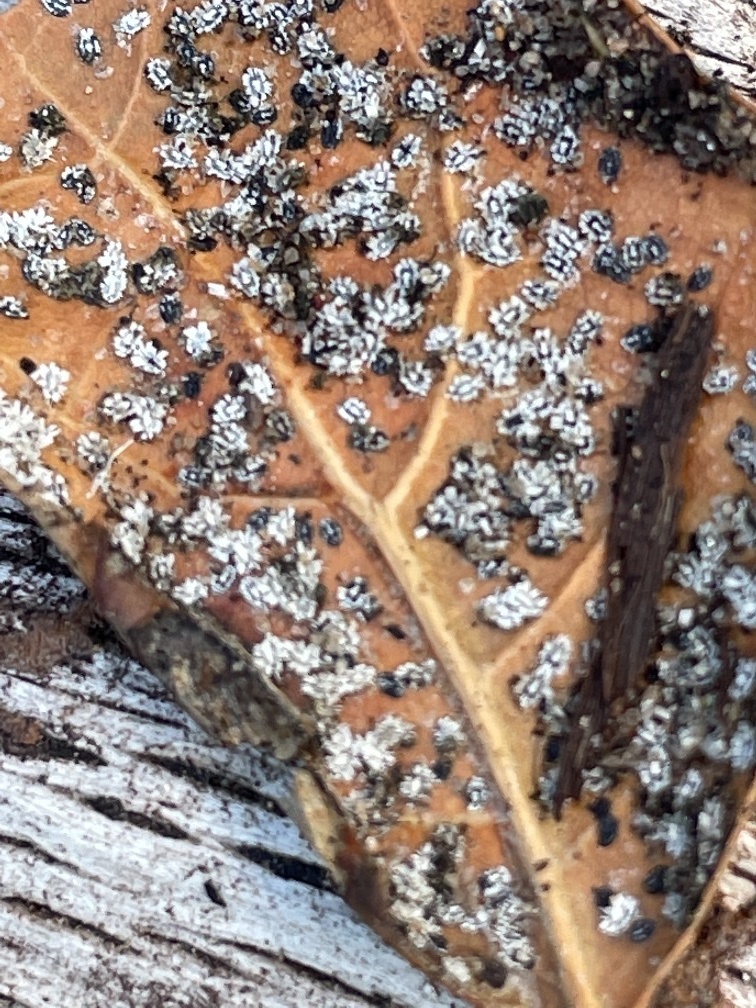
(c) joqatana, some rights reserved (CC BY) · licence
Family: Aleyrodidae · Class: Insecta · Order: Hemiptera
Aleuroplatus coronata (Crown Whitefly) is a California animal in the Aleyrodidae family.
The Crown Whitefly (Aleuroplatus coronata) is a small hemipteran insect in the family Aleyrodidae. Adult whiteflies typically measure 1-3 mm in length, with four wings covered in a white, waxy powder that gives the family its common name. Like other whiteflies, A. coronata has piercing-sucking mouthparts adapted for feeding on plant fluids and exhibits the characteristic whitefly body plan with a somewhat flattened appearance. The specific distribution range of Aleuroplatus coronata has not been comprehensively documented in available literature. The genus Aleuroplatus contains several species found in various regions, but detailed range maps for A. coronata specifically are lacking in current taxonomic resources. This represents a significant knowledge gap for this species that requires further research to establish accurate distribution data. Habitat requirements for the Crown Whitefly remain poorly documented. Like other members of the Aleyrodidae family, this species likely inhabits areas where suitable host plants are present. Whiteflies generally prefer warm environments and are often associated with agricultural areas, gardens, and natural plant communities where they can access their preferred host species. However, specific microhabitat preferences, elevation ranges, and seasonal habitat use patterns for A. coronata have not been scientifically characterized. The behavioral ecology of Aleuroplatus coronata follows the general whitefly life cycle pattern but lacks species-specific documentation. Whiteflies undergo incomplete metamorphosis with egg, four nymphal instars, and adult stages. Females typically deposit eggs on the undersides of host plant leaves. The immature stages, called scales or nymphs, remain sessile and feed by inserting their stylets into plant tissue to extract phloem sap. Adults are capable of flight and may disperse to locate new host plants or mates. Specific information regarding host plant associations, feeding preferences, reproductive timing, and population dynamics for the Crown Whitefly requires further scientific investigation. The conservation status of Aleuroplatus coronata is not well established. The species does not appear on federal or state endangered species lists, nor does it have formal conservation rankings from organizations like NatureServe or the IUCN. This absence from conservation databases may reflect either stable population status or insufficient survey data rather than actual conservation security. Many invertebrate species, particularly smaller insects like whiteflies, remain understudied regarding population trends and conservation needs. Scientific documentation for this species remains extremely limited despite thorough review of available taxonomic and ecological literature. The information presented here represents the current state of knowledge based on general whitefly biology and limited taxonomic references. Detailed ecological studies, distribution surveys, and host plant documentation are needed to develop a comprehensive understanding of this species' biology and conservation requirements. We welcome contributions of verified scientific data, photographs, or field observations to enhance this species account.
Classification
Class: Insecta · Order: Hemiptera · Family: Aleyrodidae
Frequently asked questions
How is Aleuroplatus coronata classified?
Aleuroplatus coronata belongs to class Insecta, order Hemiptera, family Aleyrodidae.
What family does Aleuroplatus coronata belong to?
Aleuroplatus coronata is in the Aleyrodidae family.
What is Aleuroplatus coronata?
The Crown Whitefly (Aleuroplatus coronata) is a small hemipteran insect in the family Aleyrodidae.
Is Aleuroplatus coronata found in California?
Yes. Aleuroplatus coronata is recorded in California in The California Species Project's catalogue.
Related species
Other California species in the same genus, family, or bioregion.
Data from The California Species Project — 14,000+ California species with verified data from CNPS, CDFW, USFWS, and more.