Allacrotelsa spinulata
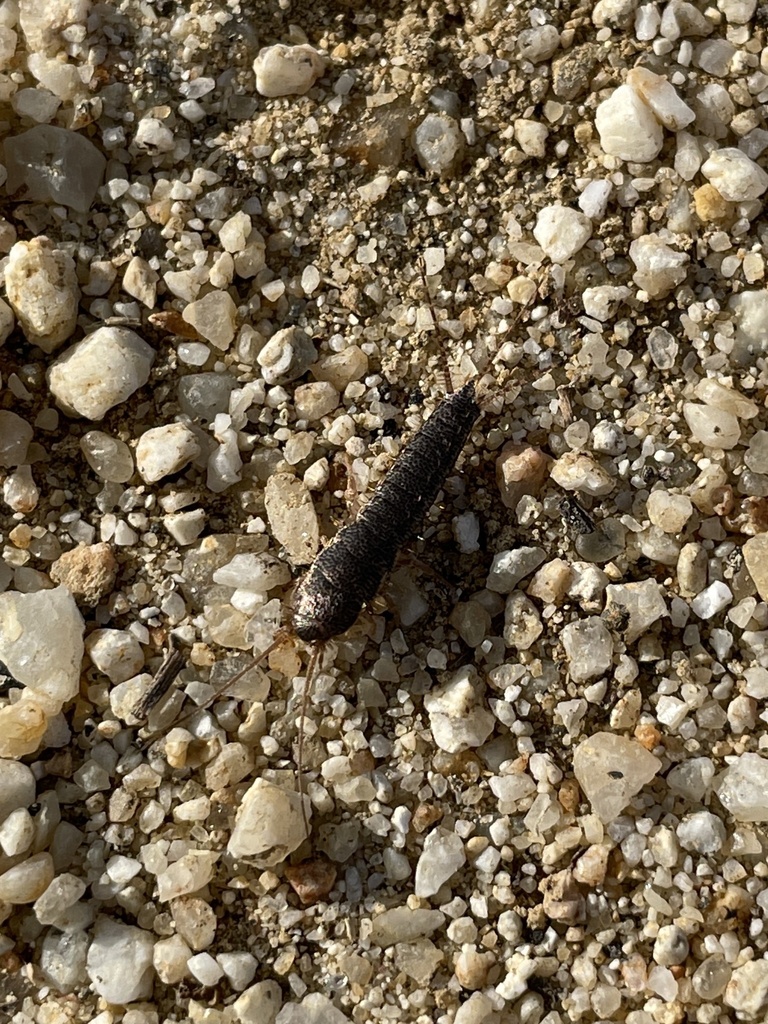
no rights reserved · CC0
Family: Lepismatidae · Class: Insecta · Order: Zygentoma
Allacrotelsa spinulata is a California animal in the Lepismatidae family.
Allacrotelsa spinulata is a silverfish species in the family Lepismatidae, order Zygentoma. This small, wingless insect belongs to the primitive group of insects known as bristletails, characterized by their elongated antennae and three terminal filaments extending from the abdomen. This species occurs in California, with documented populations in the Los Angeles area. Historical records indicate A. spinulata was present in the Ballona Wetlands region, including areas that are now part of Los Angeles International Airport (LAX) and the broader Ballona Creek watershed (Mattoni 1991, Nagano et al. 1981). The species has been recorded from coastal salt marsh and adjacent terrestrial habitats in this region. Allacrotelsa spinulata inhabits coastal wetland environments, particularly areas with salt-tolerant vegetation and adjacent upland zones. In the Ballona region, this species was found in association with saltflat communities and transitional zones between wetland and terrestrial habitats (Schreiber 1981). The species appears adapted to the unique conditions of coastal Southern California, where it occupies microhabitats within the complex mosaic of salt marsh, freshwater marsh, and upland plant communities. Like other members of the Lepismatidae, A. spinulata is presumed to be nocturnal and secretive, seeking shelter during daylight hours under debris, in soil crevices, or among vegetation. Silverfish are typically omnivorous scavengers, feeding on organic matter including dead plant material, fungi, and small invertebrates. The species likely plays a role in nutrient cycling within its coastal wetland ecosystem by processing organic detritus. The conservation status of Allacrotelsa spinulata has not been formally assessed by state or federal agencies. The U.S. Fish and Wildlife Service maintains taxonomic records for this species but has not assigned conservation rankings. Given the extensive development and habitat modification in the Los Angeles coastal area over the past several decades, populations may face pressure from urban expansion and wetland loss. The Ballona Wetlands, where this species was historically documented, have experienced significant anthropogenic alteration, though restoration efforts in recent years may benefit remaining arthropod communities. Current population status and distribution remain poorly documented. The species represents one of many specialized invertebrates associated with California's coastal wetland ecosystems, highlighting the importance of preserving these threatened habitats. Further surveys would be needed to determine if viable populations persist in the Ballona region or other suitable coastal areas. The limited taxonomic and ecological information available for A. spinulata reflects the broader challenge of understanding and conserving California's diverse but understudied invertebrate fauna.
Classification
Class: Insecta · Order: Zygentoma · Family: Lepismatidae
Frequently asked questions
How is Allacrotelsa spinulata classified?
Allacrotelsa spinulata belongs to class Insecta, order Zygentoma, family Lepismatidae.
What family does Allacrotelsa spinulata belong to?
Allacrotelsa spinulata is in the Lepismatidae family.
What is Allacrotelsa spinulata?
Allacrotelsa spinulata is a silverfish species in the family Lepismatidae, order Zygentoma.
Is Allacrotelsa spinulata found in California?
Yes. Allacrotelsa spinulata is recorded in California in The California Species Project's catalogue.
Related species
Other California species in the same genus, family, or bioregion.
Data from The California Species Project — 14,000+ California species with verified data from CNPS, CDFW, USFWS, and more.