Allograpta obliqua
Oblique Streaktail
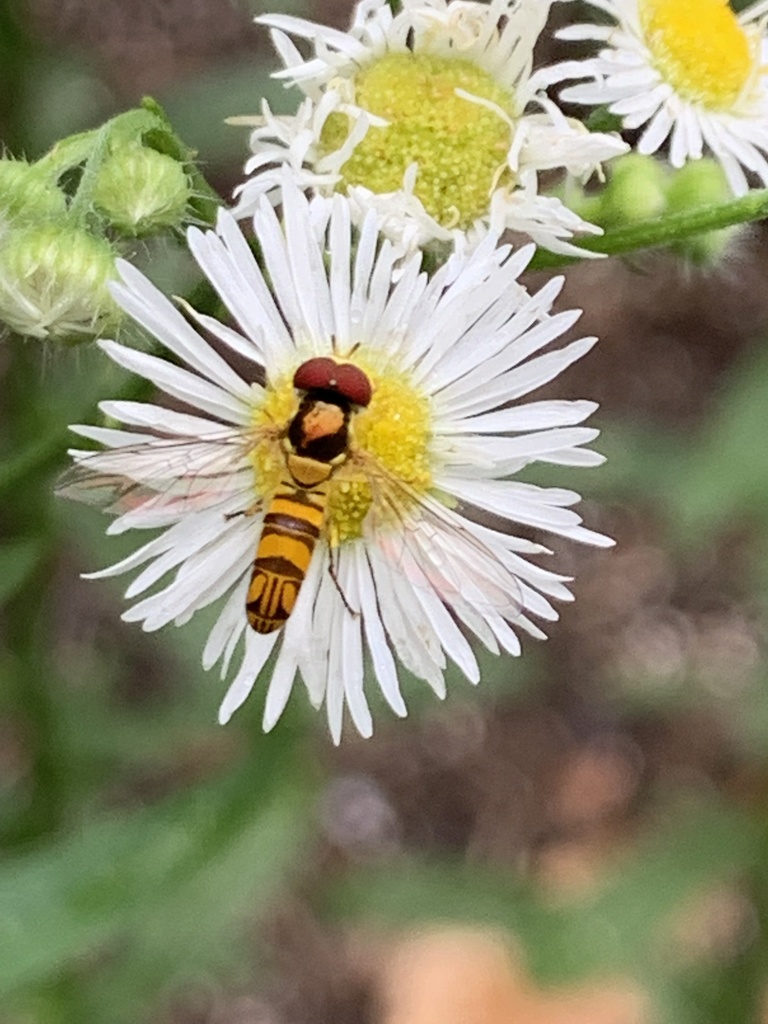
(c) David George, some rights reserved (CC BY) · licence
Family: Syrphidae · Class: Insecta · Order: Diptera
Allograpta obliqua (Oblique Streaktail) is a California animal in the Syrphidae family.
The oblique streaktail (Allograpta obliqua) is a small syrphid fly measuring 6 to 8.5 mm (0.24 to 0.33 inches) in length (BugGuide.net). This hover fly is characterized by transverse yellow bands across its dark abdomen and two distinctive oblique yellow marks near the abdominal tip, which give the species its common name. Like other members of the Syrphidae family, adults exhibit the typical hover fly body plan with large compound eyes, short antennae, and a single pair of wings. Allograpta obliqua has a broad distribution across North America, with documented occurrences in California. The species was described by Say in 1823 and belongs to the tribe Syrphini within the subfamily Syrphinae. In California, this species has been documented in coastal areas, including records from the greater Ballona Wetlands region near Los Angeles (Mattoni 1991). The fly appears to have a wide ecological tolerance, occurring across various elevations and habitat types throughout its range. The species inhabits diverse environments from coastal areas to inland regions. Adults are typically found in areas with abundant flowering plants, as they depend on nectar sources for energy. Like other syrphid flies, oblique streaktails are often observed hovering near flowers or resting on vegetation. They demonstrate the characteristic hover fly behavior of remaining stationary in mid-air before darting quickly to new locations. Adult oblique streaktails are important pollinators, visiting various flowering plants to feed on nectar and pollen. The larvae are typically aphidophagous, meaning they feed on aphids and other soft-bodied insects, making them beneficial predators in agricultural and natural ecosystems. Females lay eggs near aphid colonies, and the developing larvae consume substantial numbers of these plant pests during their development. The species likely has multiple generations per year in warmer regions, with adults most active during spring through fall when flowers are abundant. Allograpta obliqua currently holds a global conservation status of G5 (secure) according to NatureServe, indicating the species is common and widespread with no immediate conservation concerns (NatureServe Explorer 2021). The species is not federally listed and appears to maintain stable populations across its range. As a generalist species capable of utilizing various habitats and flower resources, A. obliqua appears resilient to moderate environmental changes. However, like many beneficial insects, populations may be affected by habitat loss, pesticide use, and climate change impacts on flowering plant communities. The species' role as both pollinator and biological control agent makes it ecologically valuable in both natural and agricultural systems throughout California and beyond.
Classification
Class: Insecta · Order: Diptera · Family: Syrphidae
Frequently asked questions
How is Allograpta obliqua classified?
Allograpta obliqua belongs to class Insecta, order Diptera, family Syrphidae.
What family does Allograpta obliqua belong to?
Allograpta obliqua is in the Syrphidae family.
What is Allograpta obliqua?
The oblique streaktail (Allograpta obliqua) is a small syrphid fly measuring 6 to 8.5 mm (0.24 to 0.33 inches) in length (BugGuide.net).
Is Allograpta obliqua found in California?
Yes. Allograpta obliqua is recorded in California in The California Species Project's catalogue.
Related species
Other California species in the same genus, family, or bioregion.
Data from The California Species Project — 14,000+ California species with verified data from CNPS, CDFW, USFWS, and more.