Alopochen aegyptiaca
Egyptian Goose
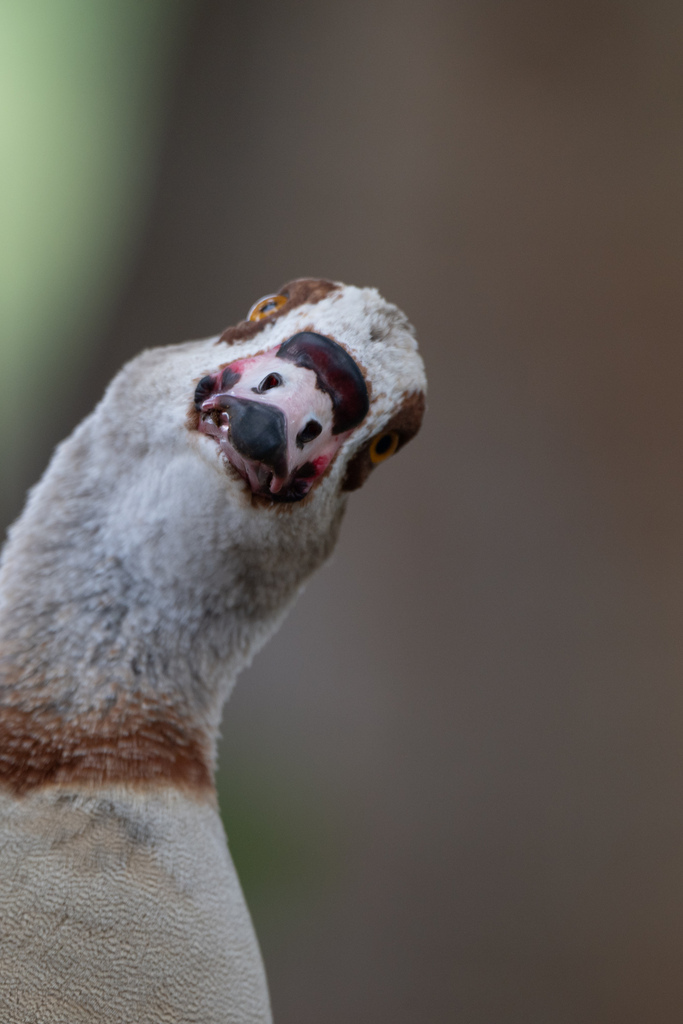
(c) cello caruso-turiello, some rights reserved (CC BY) · licence
Family: Anatidae · Class: Aves · Order: Anseriformes
Alopochen aegyptiaca (Egyptian Goose) is a California animal in the Anatidae family.
The Egyptian goose (Alopochen aegyptiaca) is a large waterfowl species native to the Nile Valley and sub-Saharan Africa. Adults measure 63 to 73 cm (25 to 29 inches) in length with a wingspan reaching 134 to 154 cm (53 to 61 inches). Males typically weigh 1.5 to 2.25 kg (3.3 to 5.0 pounds), while females are slightly smaller at 1.3 to 1.8 kg (2.9 to 4.0 pounds). The species displays distinctive plumage with buff to rusty-brown upperparts and pale underparts. A prominent dark patch encircles each eye, and males exhibit a small dark patch on the lower breast. In flight, the species shows conspicuous white wing patches contrasting with dark flight feathers. Historically, Egyptian geese were restricted to the Nile River valley in Egypt and northeastern Africa, with populations extending south through Sudan, Ethiopia, and across sub-Saharan Africa. The species has been introduced to various locations outside its native range, including parts of Europe where established populations now exist in the Netherlands, Belgium, and southeastern England. In California, Egyptian geese are not established as breeding residents but may occasionally appear as escaped or released captive birds. In their native range, Egyptian geese inhabit a variety of wetland environments including river valleys, lakes, marshes, and irrigated agricultural areas. The species shows preference for areas with a combination of open water for feeding and nearby grasslands or cultivated fields for foraging. They nest in diverse locations including tree cavities, cliff ledges, abandoned structures, and occasionally on the ground among vegetation. Elevation range extends from sea level to approximately 1,500 meters (4,900 feet) in mountainous regions. Egyptian geese are primarily grazers, feeding on grasses, seeds, and green plant material. They also consume aquatic vegetation, small fish, and invertebrates. The species exhibits strong pair bonds and territorial behavior during breeding season. Nesting occurs from February through June, with females laying 5 to 8 cream-colored eggs. Incubation lasts 28 to 30 days, performed primarily by the female. Both parents care for the precocial young, which fledge at approximately 70 days. The species is known for aggressive territorial defense, particularly males protecting nesting areas and broods. Globally, the Egyptian goose maintains stable populations throughout most of its native range and is classified as Least Concern by the International Union for Conservation of Nature (IUCN). However, the species has experienced local declines in Egypt due to habitat loss and hunting pressure along the Nile River. In introduced European populations, the species has shown rapid expansion and is sometimes considered a management concern due to agricultural impacts and competition with native waterfowl. The species is not federally or state-listed in California, as it is not part of the native fauna. According to the California Department of Fish and Wildlife, any individuals observed in California likely represent escaped captive birds rather than natural vagrants, and the species is not considered established in the state's avifauna.
Classification
Class: Aves · Order: Anseriformes · Family: Anatidae
Frequently asked questions
How is Alopochen aegyptiaca classified?
Alopochen aegyptiaca belongs to class Aves, order Anseriformes, family Anatidae.
What family does Alopochen aegyptiaca belong to?
Alopochen aegyptiaca is in the Anatidae family.
What is Alopochen aegyptiaca?
The Egyptian goose (Alopochen aegyptiaca) is a large waterfowl species native to the Nile Valley and sub-Saharan Africa.
Is Alopochen aegyptiaca found in California?
Yes. Alopochen aegyptiaca is recorded in California in The California Species Project's catalogue.
Related species
Other California species in the same genus, family, or bioregion.
Data from The California Species Project — 14,000+ California species with verified data from CNPS, CDFW, USFWS, and more.