Alosa sapidissima
American shad
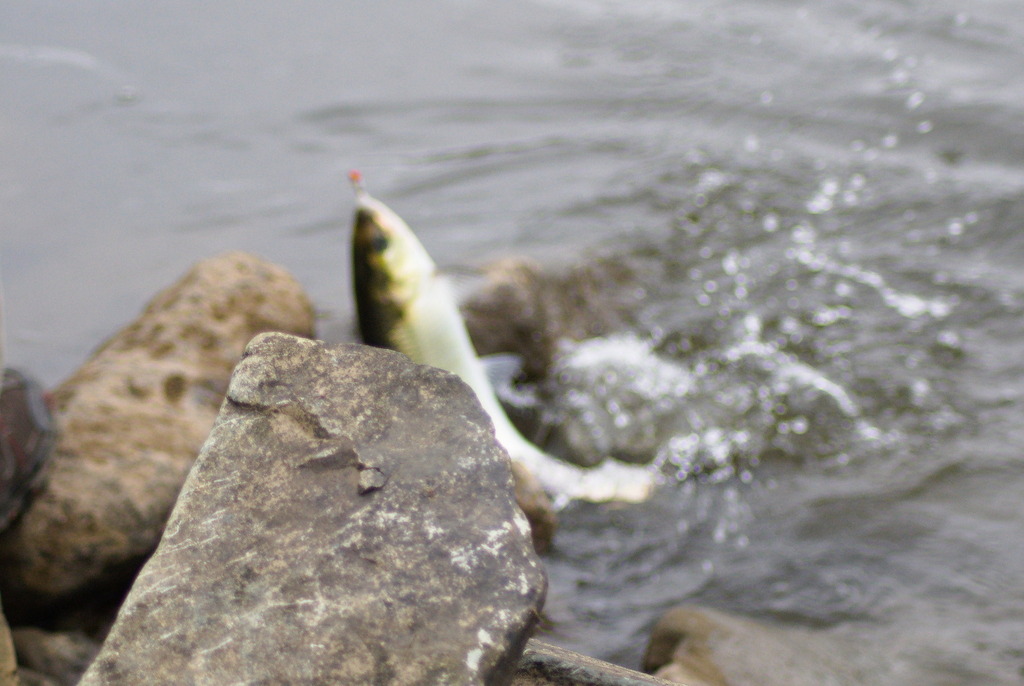
(c) Mike Ostrowski, some rights reserved (CC BY-SA) · licence
Family: Clupeidae · Class: Actinopterygii · Order: Clupeiformes
Alosa sapidissima (American shad) is a California animal in the Clupeidae family.
American shad is an anadromous fish native to the Atlantic coast but introduced to Pacific waters in the late 19th century. Adults typically measure 35 to 60 centimeters (14 to 24 inches) in length and weigh 1 to 3 kilograms (2 to 7 pounds). The body is laterally compressed and silvery, with a bluish-green dorsal surface. The species is distinguished by a series of dark spots along the upper sides behind the head, typically numbering four to six. The lower jaw projects slightly beyond the upper jaw, and adults develop a notched upper jaw during spawning season. American shad were introduced to California waters in 1871 when juvenile fish were transported from the Hudson River and released into the Sacramento River. The species subsequently established populations throughout the Sacramento-San Joaquin river system and colonized coastal rivers from Monterey Bay to the Columbia River. Current California populations spawn primarily in the Sacramento, San Joaquin, Feather, American, and Mokelumne rivers, with smaller runs in coastal streams including the Russian River and Salinas River. Adult American shad inhabit marine and estuarine environments along the Pacific coast, moving into freshwater rivers to spawn. Spawning occurs in flowing water over gravel, sand, or rocky substrates, typically in areas with moderate current. Adults prefer water temperatures between 13 and 18 degrees Celsius (55 to 64 degrees Fahrenheit) during spawning. Juveniles rear in freshwater for several months before migrating to the ocean. American shad are planktivorous, feeding primarily on copepods, mysid shrimp, and small fish while in marine waters. During their freshwater spawning migration, adults typically cease feeding. Spawning occurs from April through June in California rivers, with peak activity in May. Females produce large numbers of semi-buoyant eggs that drift downstream while developing. Males may spawn multiple times during a season, while females typically spawn once before returning to the ocean. Unlike their Atlantic coast counterparts, Pacific coast American shad rarely survive spawning and most die after reproduction. The species is not federally or state listed in California, and populations appear stable. American shad support recreational fisheries throughout their introduced range in California. The California Department of Fish and Wildlife manages American shad as a sport fish, with recreational fishing seasons established on major rivers. Primary management concerns include dam construction that blocks access to historical spawning areas and water diversions that alter river flows. The species has adapted well to California's modified river systems and continues to provide recreational fishing opportunities in the Sacramento-San Joaquin system and coastal rivers.
Classification
Class: Actinopterygii · Order: Clupeiformes · Family: Clupeidae
Frequently asked questions
How is Alosa sapidissima classified?
Alosa sapidissima belongs to class Actinopterygii, order Clupeiformes, family Clupeidae.
What family does Alosa sapidissima belong to?
Alosa sapidissima is in the Clupeidae family.
What is Alosa sapidissima?
American shad is an anadromous fish native to the Atlantic coast but introduced to Pacific waters in the late 19th century.
Is Alosa sapidissima found in California?
Yes. Alosa sapidissima is recorded in California in The California Species Project's catalogue.
Related species
Other California species in the same genus, family, or bioregion.
Data from The California Species Project — 14,000+ California species with verified data from CNPS, CDFW, USFWS, and more.