Altica ambiens
Alder Flea Beetle
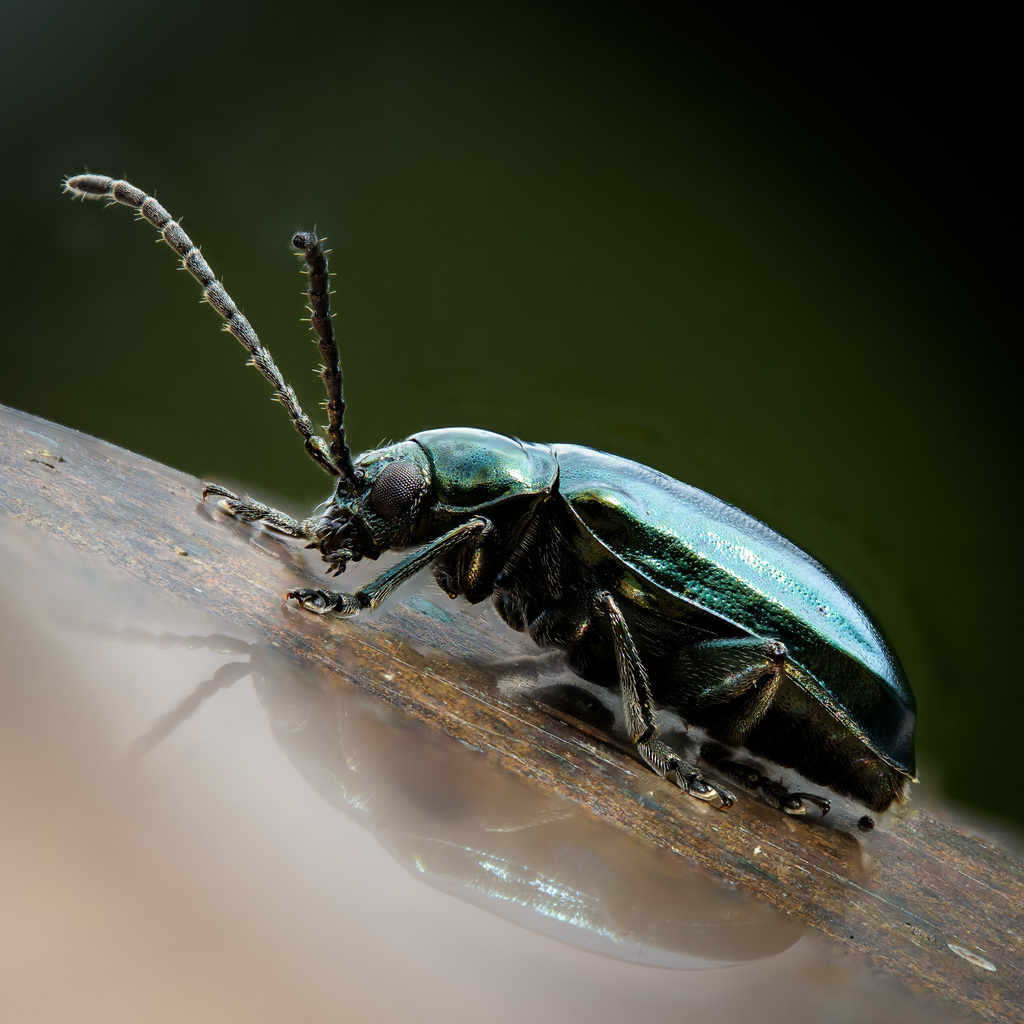
(c) Claus Giloi, some rights reserved (CC BY) · licence
Family: Chrysomelidae · Class: Insecta · Order: Coleoptera
Altica ambiens (Alder Flea Beetle) is a California animal in the Chrysomelidae family.
The Alder Flea Beetle (Altica ambiens) is a small chrysomelid beetle in the tribe Alticini, first described by J.L. LeConte in 1859. This species exhibits the typical flea beetle morphology with enlarged hind femora adapted for jumping when disturbed. Adults are small beetles that overwinter and emerge in spring to feed and reproduce on their host plants. Altica ambiens has a broad North American distribution spanning most of the continent, with two distinct subspecies occupying different regions (BugGuide). The northeastern subspecies ranges from Nova Scotia and Massachusetts west to Manitoba and Minnesota, while the western subspecies occurs from British Columbia and California east to Montana and New Mexico. In California, this species is present wherever suitable alder habitat exists, from coastal areas to montane regions. This beetle is exclusively associated with alder trees (Alnus species) in the family Betulaceae, making it a specialist herbivore with a narrow host range (BugGuide). Alders typically grow in riparian zones, wet meadows, and other moist habitats, often forming dense stands along streams and in areas with high water tables. The beetle's distribution closely follows that of its host plants, which are common throughout California's mountain ranges and coastal regions. Adults overwinter and become active in spring when alder leaves emerge. Females deposit eggs on the undersurface of alder leaves, where they are protected from environmental conditions and predators (BugGuide). Larvae feed on both upper and lower leaf surfaces, creating characteristic feeding damage as they develop over approximately five weeks. The species is univoltine in northern portions of its range but may produce two generations annually in warmer southern areas (BugGuide). Both adults and larvae are leaf feeders, with adults creating small round holes in leaves while larvae skeletonize leaf tissue between the veins. The beetle's feeding activity can occasionally cause noticeable defoliation of alder trees, particularly during outbreak years when populations reach high densities. However, alder trees typically recover from this herbivory through compensatory growth. Adults possess well-developed jumping ability typical of flea beetles, allowing them to escape quickly from predators or disturbance. As a native species with no formal conservation status, Altica ambiens is not currently considered at risk. Its close association with alder trees means its populations are tied to riparian habitat health and water availability. Climate change and altered precipitation patterns could potentially affect alder distribution and, consequently, beetle populations. Urban development and water diversions that impact riparian zones may create localized population pressures, though the species' broad distribution provides resilience against regional habitat loss. The beetle serves ecological roles as both herbivore and prey species, contributing to nutrient cycling in riparian ecosystems and supporting insectivorous wildlife. Its specialized relationship with alders demonstrates the interconnected nature of plant-herbivore relationships in North American forest ecosystems.
Classification
Class: Insecta · Order: Coleoptera · Family: Chrysomelidae
Frequently asked questions
How is Altica ambiens classified?
Altica ambiens belongs to class Insecta, order Coleoptera, family Chrysomelidae.
What family does Altica ambiens belong to?
Altica ambiens is in the Chrysomelidae family.
What is Altica ambiens?
The Alder Flea Beetle (Altica ambiens) is a small chrysomelid beetle in the tribe Alticini, first described by J.L.
Is Altica ambiens found in California?
Yes. Altica ambiens is recorded in California in The California Species Project's catalogue.
Related species
Other California species in the same genus, family, or bioregion.
Data from The California Species Project — 14,000+ California species with verified data from CNPS, CDFW, USFWS, and more.