Alypia mariposa
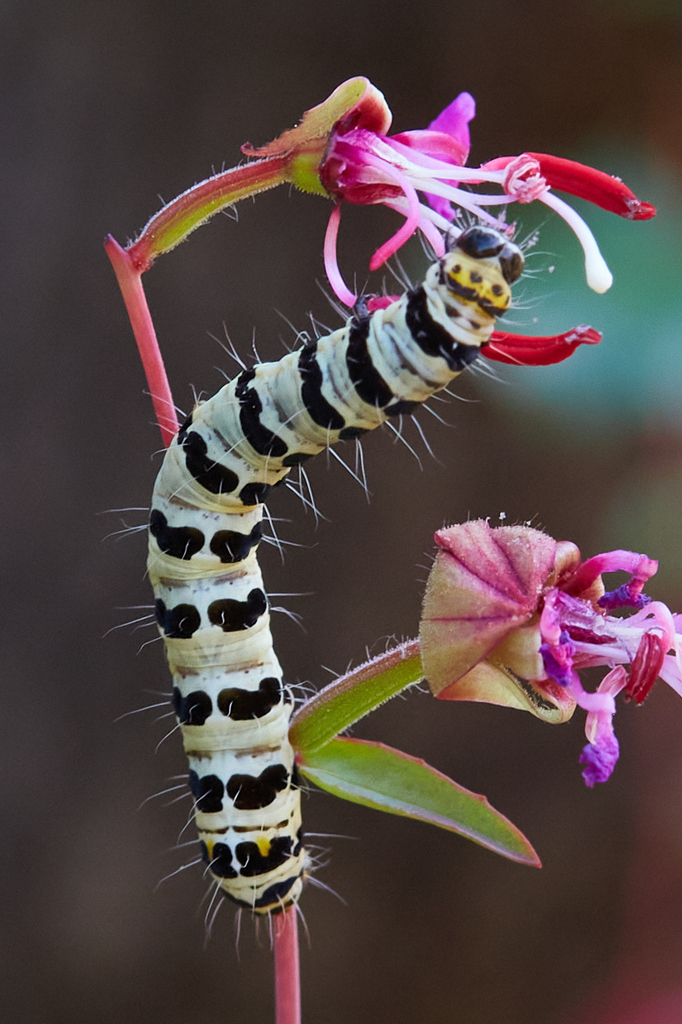
(c) Ken-ichi Ueda, some rights reserved (CC BY) · licence
Family: Noctuidae · Class: Insecta · Order: Lepidoptera
Alypia mariposa is a California animal in the Noctuidae family.
Alypia mariposa is a moth species in the family Noctuidae, subfamily Agaristinae. This day-flying moth is characterized by metallic blue-black forewings marked with distinctive white or cream-colored patches. The hindwings display bright orange or reddish coloration with dark borders, creating a striking contrast when the wings are spread. Adults typically measure 25-35 mm in wingspan. The thorax and abdomen are dark with metallic reflections, and the antennae are club-shaped, which is unusual among noctuid moths. The species occurs in the California coast ranges and southern Sierra Nevada foothills, representing a relatively restricted distribution within the state. This range encompasses portions of the Coast Range from the San Francisco Bay Area south through the central coast, and extends into the western foothills of the Sierra Nevada. The species appears to be endemic to California, with no confirmed populations outside the state. Alypia mariposa inhabits oak woodlands, chaparral, and adjacent grassland areas within its range. The species is typically found at elevations ranging from near sea level to approximately 1,500 meters in the foothills. Adults are most commonly observed in areas where host plants are abundant, particularly in openings within woodland habitats and along edges between different vegetation types. This species exhibits diurnal flight behavior, which distinguishes it from most other noctuid moths. Adults are active during daylight hours, particularly on warm, sunny days. The larvae feed specifically on plants in the genus Clarkia (family Onagraceae), which includes various species of farewell-to-spring and godetia. This host plant specialization links the moth's distribution closely to areas where Clarkia species occur naturally. The relationship between Alypia mariposa and its Clarkia hosts represents a specialized evolutionary adaptation, as the larvae have developed the ability to process compounds that may be toxic to generalist herbivores. Reproduction follows a typical lepidopteran pattern, with females laying eggs on or near host plants. Larvae develop through several instars before pupating, likely overwintering in the pupal stage. The timing of adult emergence appears to coincide with the blooming period of Clarkia species, ensuring availability of fresh host plant material for oviposition and larval development. No federal or state conservation listing status has been assigned to Alypia mariposa as of December 2025. However, the species' restricted range within California and its dependence on specific host plants may make it vulnerable to habitat loss and fragmentation. Urban development, agricultural conversion, and altered fire regimes in oak woodland and chaparral habitats could potentially impact populations. The conservation status of this species would benefit from systematic surveys to better understand population trends and distribution limits throughout its range.
Classification
Class: Insecta · Order: Lepidoptera · Family: Noctuidae
Frequently asked questions
How is Alypia mariposa classified?
Alypia mariposa belongs to class Insecta, order Lepidoptera, family Noctuidae.
What family does Alypia mariposa belong to?
Alypia mariposa is in the Noctuidae family.
What is Alypia mariposa?
Alypia mariposa is a moth species in the family Noctuidae, subfamily Agaristinae.
Is Alypia mariposa found in California?
Yes. Alypia mariposa is recorded in California in The California Species Project's catalogue.
Related species
Other California species in the same genus, family, or bioregion.
Data from The California Species Project — 14,000+ California species with verified data from CNPS, CDFW, USFWS, and more.