Amatitlania nigrofasciata
Convict Cichlid
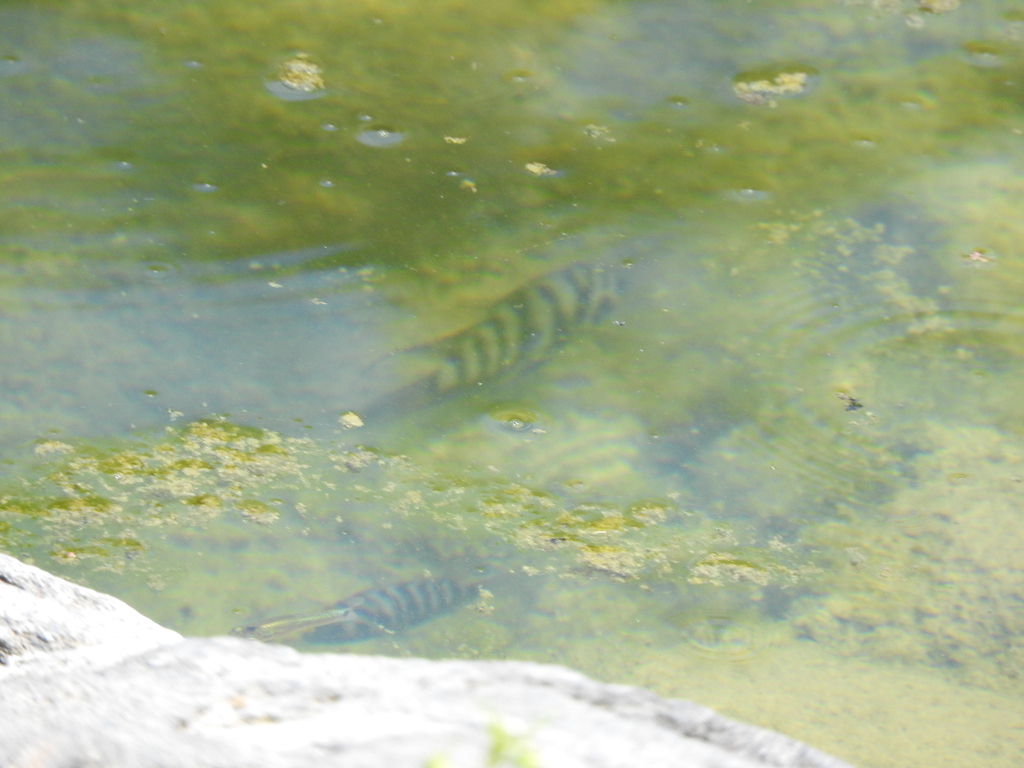
(c) Oscar Alejandro Morales Juárez, some rights reserved (CC BY-SA) · licence
Family: Cichlidae · Class: Actinopterygii · Order: Perciformes
Amatitlania nigrofasciata (Convict Cichlid) is a California animal in the Cichlidae family.
The convict cichlid is a small freshwater fish native to Central America, specifically the Pacific slope from Río Sucio, El Salvador to Río Suchiate, Guatemala, and Atlantic slope drainages in Guatemala, Honduras, and El Salvador (USFWS 2025). Adults typically reach 4-6 cm standard length in natural populations, though maximum size can reach 15-17 cm in optimal conditions. The species displays distinctive black vertical bars across a silver-gray body, giving rise to its common name. Males are generally larger than females and develop more pronounced coloration during breeding periods. In the United States, convict cichlids are established in California, Arizona, Louisiana, Idaho, Wyoming, Nevada, Hawaii, and Puerto Rico, with many populations restricted to thermal waters (USFWS 2025). The species has been classified as high risk for invasion due to its documented ability to displace and negatively alter the behavior of native species where introduced. Climate matching analysis indicates establishment concern particularly along the southern border and Gulf Coast of the United States, with highest potential in Louisiana and Arizona. Convict cichlids inhabit freshwater environments with pH ranges of 6.5-7.5 and temperatures between 23-33°C. They are benthopelagic, occupying both bottom and mid-water zones of rivers, streams, and spring systems. The species demonstrates high adaptability to various freshwater habitats, from natural waterways to ornamental ponds and modified thermal environments. This species exhibits typical cichlid behavior including territorial defense and parental care. Adults are omnivorous, feeding on invertebrates, plant matter, and fish eggs. Convict cichlids are substrate spawners that practice biparental care, with both parents guarding eggs and fry. Their aggressive territorial behavior and ability to outcompete native species for resources contributes to their invasive success. Reproduction occurs year-round in suitable climates, with females producing multiple broods annually. The convict cichlid is not federally listed and maintains a global conservation status of G5 (secure) according to NatureServe. However, its presence in the United States represents a significant conservation concern due to impacts on native fish communities. In Nevada, convict cichlids have negatively affected endangered species including the Hiko White River springfish, with populations of this native species declining sharply following convict cichlid introduction (USFWS Recovery Plan). The removal of convict cichlids from Crystal Springs resulted in increased Hiko White River springfish populations, demonstrating the species' impact potential. Primary introduction pathways include aquarium releases and ornamental pond escapes, as the species remains popular in the aquarium trade. The U.S. Fish and Wildlife Service continues to monitor established populations and assess risks to native ecosystems. Management efforts focus on prevention of new introductions and control of existing populations where they threaten sensitive native species. Current distribution data suggest continued range expansion is likely in suitable thermal habitats across the southwestern United States.
Classification
Class: Actinopterygii · Order: Perciformes · Family: Cichlidae
Frequently asked questions
How is Amatitlania nigrofasciata classified?
Amatitlania nigrofasciata belongs to class Actinopterygii, order Perciformes, family Cichlidae.
What family does Amatitlania nigrofasciata belong to?
Amatitlania nigrofasciata is in the Cichlidae family.
What is Amatitlania nigrofasciata?
The convict cichlid is a small freshwater fish native to Central America, specifically the Pacific slope from Río Sucio, El Salvador to Río Suchiate, Guatemala, and Atlantic slope drainages in Guatemala, Honduras, and El Salvador (USFWS 2025).
Is Amatitlania nigrofasciata found in California?
Yes. Amatitlania nigrofasciata is recorded in California in The California Species Project's catalogue.
Related species
Other California species in the same genus, family, or bioregion.
Data from The California Species Project — 14,000+ California species with verified data from CNPS, CDFW, USFWS, and more.