Amazilia violiceps
Violet-crowned Hummingbird
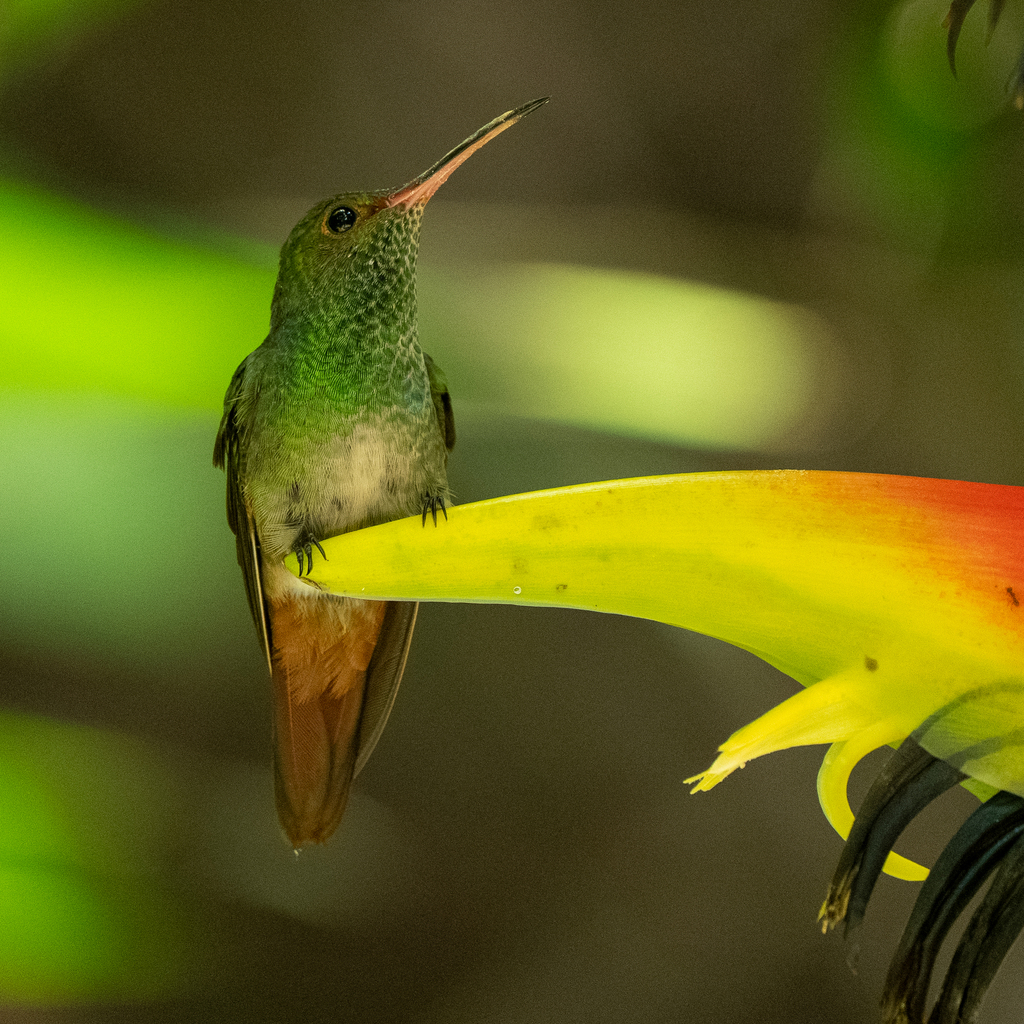
(c) Anthony Batista, some rights reserved (CC BY) · licence
Family: Trochilidae · Class: Aves · Order: Apodiformes
Amazilia violiceps (Violet-crowned Hummingbird) is a California animal in the Trochilidae family.
The Violet-crowned Hummingbird (Amazilia violiceps) is a medium-sized hummingbird measuring approximately 10 to 11 centimeters (4 to 4.3 inches) in length. The species exhibits distinctive plumage with a violet-blue crown that extends from the forehead to the nape, contrasting sharply with white underparts and throat. The back and upper wing surfaces are bronze-green, while the tail appears dark with subtle bronze tones. Males and females are similar in appearance, though males may show slightly more intense crown coloration. The bill is straight and medium-length, typically orange-red with a black tip. The Violet-crowned Hummingbird's breeding range extends from the southwestern United States southward through western and south-central Mexico. In the United States, the species occurs primarily in Arizona and New Mexico, with occasional records in Texas. According to Birds of the World, breeding populations extend southward from the US border throughout most of western and south-central Mexico, with northern populations in Sonora and Chihuahua showing similar distribution patterns to US populations. California records are extremely rare, representing vagrant individuals far outside the normal range. This species inhabits riparian woodlands, oak-pine forests, and desert mountain canyons, typically at elevations ranging from 1,000 to 2,000 meters (3,300 to 6,600 feet). The species shows strong association with sycamore-lined streams and canyons, particularly areas with Arizona sycamore, cottonwoods, and willows. Breeding habitat requirements include proximity to water sources and adequate flowering plants for nectar resources. Violet-crowned Hummingbirds are territorial during breeding season, with males establishing and defending feeding territories around productive nectar sources. The species feeds primarily on nectar from various flowering plants, supplemented by small arthropods for protein. Breeding occurs from April through August, with females constructing small cup nests on horizontal branches, typically 3 to 6 meters above ground. Clutch size consists of two white eggs, with incubation lasting approximately 14 to 16 days. The species exhibits some seasonal movement patterns, with northern populations potentially withdrawing southward during winter months. The Violet-crowned Hummingbird lacks federal listing status but faces localized threats throughout its range. Primary conservation concerns include habitat loss due to riparian area degradation, water diversions affecting stream flows, and climate change impacts on mountain forest ecosystems. The species' dependence on specific riparian habitats makes it vulnerable to drought conditions and water management practices. While not globally threatened, populations in border regions of the southwestern United States remain small and potentially vulnerable to habitat changes. Conservation efforts focus on protecting riparian corridors and maintaining adequate water flows in breeding areas.
Classification
Class: Aves · Order: Apodiformes · Family: Trochilidae
Frequently asked questions
How is Amazilia violiceps classified?
Amazilia violiceps belongs to class Aves, order Apodiformes, family Trochilidae.
What family does Amazilia violiceps belong to?
Amazilia violiceps is in the Trochilidae family.
What is Amazilia violiceps?
The Violet-crowned Hummingbird (Amazilia violiceps) is a medium-sized hummingbird measuring approximately 10 to 11 centimeters (4 to 4.3 inches) in length.
Is Amazilia violiceps found in California?
Yes. Amazilia violiceps is recorded in California in The California Species Project's catalogue.
Related species
Other California species in the same genus, family, or bioregion.
Data from The California Species Project — 14,000+ California species with verified data from CNPS, CDFW, USFWS, and more.