Amazona finschi
Lilac-crowned Parrot
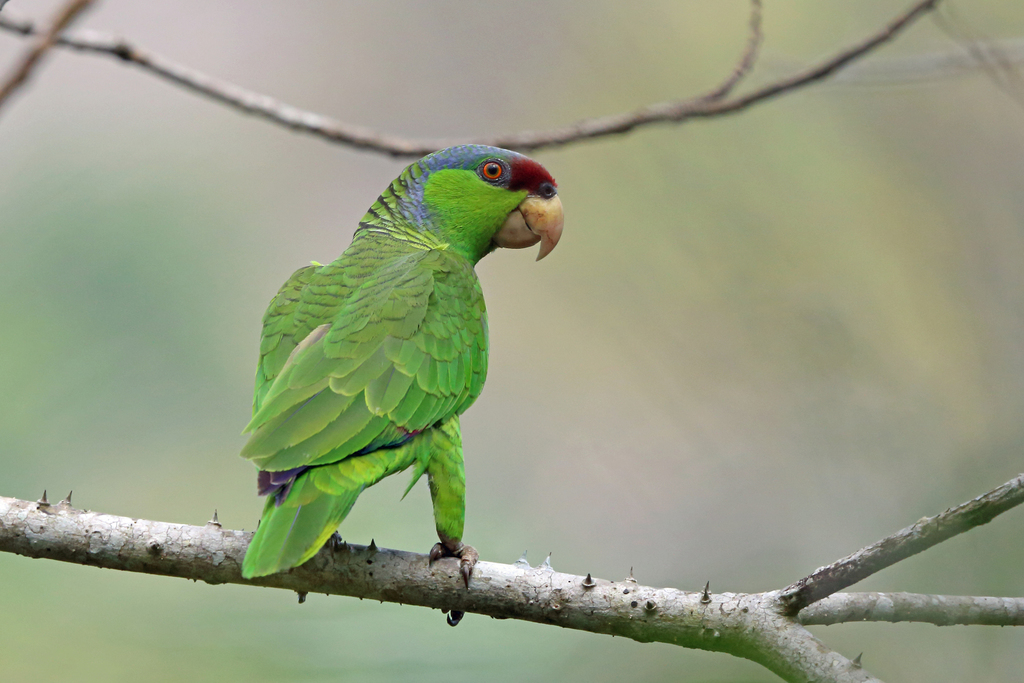
(c) Nigel Voaden, some rights reserved (CC BY) · licence
Family: Psittacidae · Class: Aves · Order: Psittaciformes
Amazona finschi (Lilac-crowned Parrot) is a California animal in the Psittacidae family.
The Lilac-crowned Parrot (Amazona finschi) is a medium-sized neotropical parrot native to western Mexico. Adults measure 33 to 35 cm (13 to 14 inches) in length and weigh 310 to 565 grams. The species displays predominantly green plumage with a distinctive lilac-purple crown that extends from the forehead to the nape. The face shows variable amounts of red coloration, particularly on the cheeks and lores. Flight feathers are blue-black with red speculum patches visible during flight. The tail is green with yellow-green tips and blue outer edges. Males and females are visually similar, though males may show slightly more extensive red facial coloration. Juveniles display less pronounced crown coloration and reduced red on the face. Historically, Lilac-crowned Parrots ranged along the Pacific slope of Mexico from southern Sonora to Colima, including offshore islands. The species naturally occurs from sea level to approximately 1,800 meters elevation in the Sierra Madre Occidental. Small populations have become established in California, primarily in urban areas of Los Angeles, Orange, and Riverside counties, resulting from escaped or released captive birds. These feral populations have persisted for several decades, with breeding confirmed in multiple locations. The species inhabits tropical deciduous forests, pine-oak woodlands, and riparian corridors in its native range. In Mexico, they occupy areas with diverse tree species including figs, legumes, and palms. California populations have adapted to suburban environments with exotic plantings, particularly favoring areas with large trees for roosting and nesting. They utilize palm trees, eucalyptus, and various ornamental species not found in their native habitat. Lilac-crowned Parrots are highly social, typically observed in flocks ranging from 10 to several hundred individuals outside the breeding season. They feed primarily on fruits, seeds, flowers, and young shoots. Diet includes figs, palm fruits, legume pods, and various agricultural crops. In California, they consume ornamental fruits, palm dates, and suburban vegetation. Breeding occurs from February to June in Mexico, with pairs nesting in tree cavities 6 to 20 meters above ground. Females lay 2 to 4 white eggs with an incubation period of 25 to 28 days. Both parents participate in chick care, with fledging occurring after 60 to 70 days. The species is not federally listed in the United States, as California populations represent introduced rather than native occurrences. In Mexico, habitat loss from deforestation, agricultural conversion, and urban development represents the primary conservation concern. The pet trade has historically impacted wild populations through capture for the international bird market. According to BirdLife International, the global population has declined due to these pressures, though the species maintains stable populations in protected areas. California's feral populations face different challenges including competition with native species, though their long-term ecological impacts remain under study by researchers.
Classification
Class: Aves · Order: Psittaciformes · Family: Psittacidae
Frequently asked questions
How is Amazona finschi classified?
Amazona finschi belongs to class Aves, order Psittaciformes, family Psittacidae.
What family does Amazona finschi belong to?
Amazona finschi is in the Psittacidae family.
What is Amazona finschi?
The Lilac-crowned Parrot (Amazona finschi) is a medium-sized neotropical parrot native to western Mexico.
Is Amazona finschi found in California?
Yes. Amazona finschi is recorded in California in The California Species Project's catalogue.
Related species
Other California species in the same genus, family, or bioregion.
Data from The California Species Project — 14,000+ California species with verified data from CNPS, CDFW, USFWS, and more.