Ambigolimax parvipenis
Striped Garden Slug
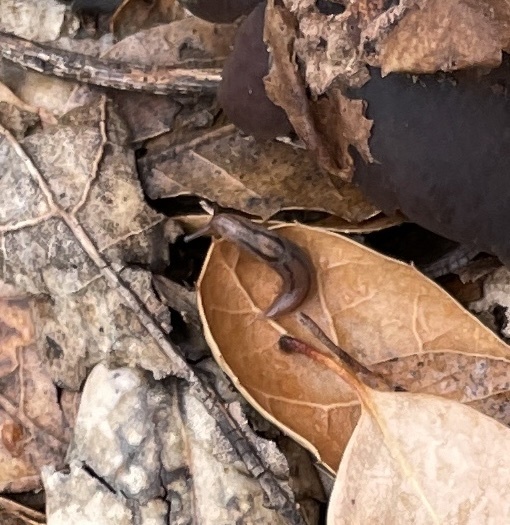
(c) barranquer, some rights reserved (CC BY) · licence
Family: Limacidae · Class: Gastropoda · Order: Stylommatophora
Ambigolimax parvipenis (Striped Garden Slug) is a California animal in the Limacidae family.
Ambigolimax parvipenis, commonly known as the striped garden slug, is a terrestrial gastropod belonging to the family Limacidae within the order Stylommatophora. This species represents one of many slug species found in California, though detailed scientific documentation remains limited in readily accessible sources. As a member of the Limacidae family, this species likely exhibits the typical characteristics of garden slugs, including a soft, elongated body without an external shell. The common name suggests the presence of striped patterning, which would be a distinguishing feature for field identification. Like other members of this family, individuals likely possess a pneumostome (breathing pore) located on the right side of the mantle, and two pairs of retractable tentacles, with the upper pair bearing eyes. The specific distribution and range of A. parvipenis in California has not been well documented in available scientific literature. Many slug species in this family are cosmopolitan in distribution, often associated with human-modified environments including gardens, agricultural areas, and urban landscapes. Without specific range data, the extent of this species' occurrence within California remains uncertain. Habitat preferences for this species have not been clearly established in available sources. Members of the Limacidae family typically inhabit moist environments and are often found in gardens, under logs, stones, or leaf litter, and in other areas that provide adequate moisture and shelter. They generally require humid conditions and are most active during periods of high moisture, such as after rainfall or during early morning hours when dew is present. Like other terrestrial slugs, A. parvipenis likely exhibits hermaphroditic reproduction, with individuals possessing both male and female reproductive organs. Feeding behavior presumably follows the typical pattern of limacid slugs, which are generally omnivorous, consuming decomposing organic matter, fungi, algae, and occasionally living plant material. Their ecological role likely includes participation in nutrient cycling through decomposition processes. This species does not appear on federal or state endangered species lists, and no specific conservation status has been established. The lack of comprehensive distributional and ecological data makes it difficult to assess population trends or conservation needs. Many slug species can be sensitive to habitat modification, pesticide use, and changes in moisture regimes, but without species-specific studies, the particular vulnerabilities of A. parvipenis remain unclear. Scientific documentation for this species remains limited. The information presented here is based on taxonomic classification and general knowledge of related species within the Limacidae family. Detailed studies of this species' distribution, ecology, and conservation status are needed to provide a more complete understanding of its biology and status in California.
Classification
Class: Gastropoda · Order: Stylommatophora · Family: Limacidae
Frequently asked questions
How is Ambigolimax parvipenis classified?
Ambigolimax parvipenis belongs to class Gastropoda, order Stylommatophora, family Limacidae.
What family does Ambigolimax parvipenis belong to?
Ambigolimax parvipenis is in the Limacidae family.
What is Ambigolimax parvipenis?
Ambigolimax parvipenis, commonly known as the striped garden slug, is a terrestrial gastropod belonging to the family Limacidae within the order Stylommatophora.
Is Ambigolimax parvipenis found in California?
Yes. Ambigolimax parvipenis is recorded in California in The California Species Project's catalogue.
Related species
Other California species in the same genus, family, or bioregion.
Data from The California Species Project — 14,000+ California species with verified data from CNPS, CDFW, USFWS, and more.