Ambrysus funebris
Nevares Spring Naucorid Bug
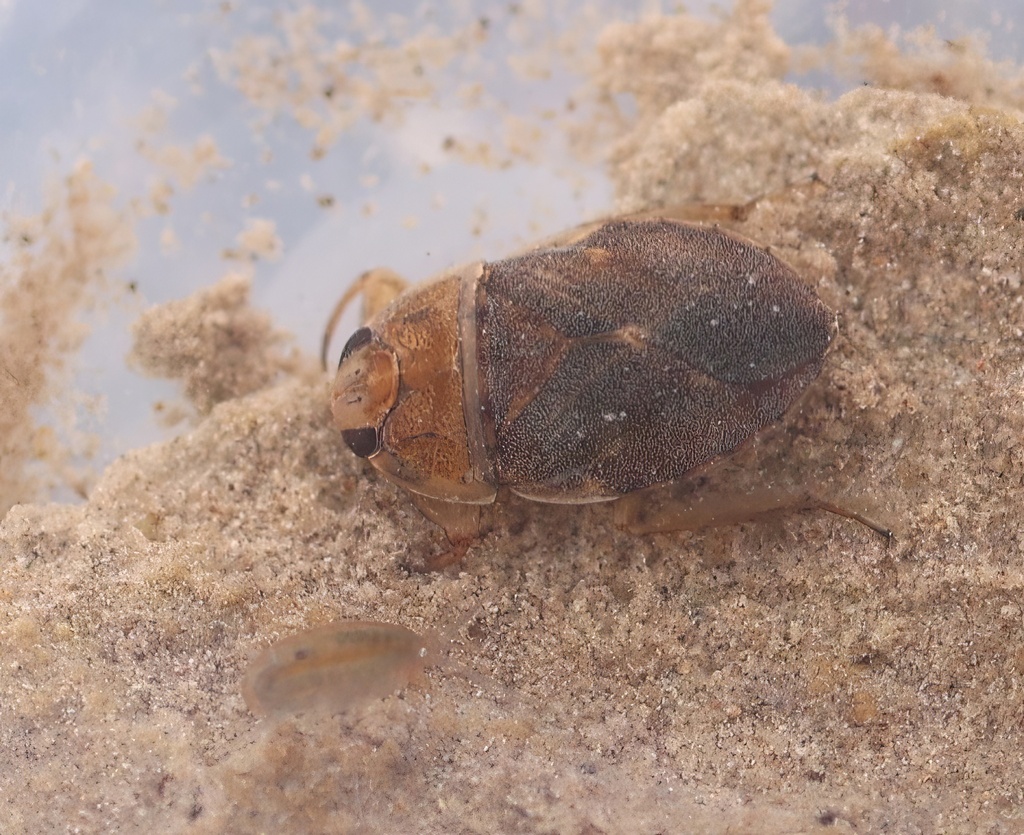
(c) nmoorhatch, some rights reserved (CC BY) · licence
Family: Naucoridae · Class: Insecta · Order: Hemiptera
Conservation status: G1 S1
Ambrysus funebris (Nevares Spring Naucorid Bug) is a California animal in the Naucoridae family.
The Nevares Spring naucorid bug is an aquatic insect endemic to the Travertine-Nevares Springs Complex within Death Valley National Park, Inyo County, California. This hemipteran belongs to the family Naucoridae, commonly known as creeping water bugs or saucer bugs. Like other naucorids, this species likely possesses the characteristic flattened, oval body shape and raptorial forelegs adapted for capturing prey in aquatic environments. The species has an extremely restricted distribution, occurring only within the spring-fed aquatic habitats of the Travertine-Nevares Springs Complex. According to the U.S. Fish and Wildlife Service, surveys indicate this naucorid is an extremely rare component of the local aquatic invertebrate community (USFWS 2004). The species' range appears to have contracted significantly from historical levels, though specific information about its pre-development distribution is not available. Nevares Spring naucorid bugs inhabit the permanent aquatic environments created by the natural spring systems in this desert region. These springs provide critical oasis habitats in the harsh Death Valley ecosystem, supporting water temperatures and flow conditions suitable for aquatic invertebrates. The species likely requires specific microhabitat features within these spring-fed streams and pools, though detailed habitat requirements have not been comprehensively documented. As a naucorid, this species is presumed to be a predator, using its modified forelegs to capture small aquatic invertebrates and other prey items. The reproductive biology and life cycle of A. funebris have not been well studied, but other naucorids typically lay eggs on submerged substrates and undergo incomplete metamorphosis through several nymphal stages before reaching adulthood. Seasonal activity patterns and specific dietary preferences for this species remain undocumented. The Nevares Spring naucorid bug faces significant conservation challenges due to its extremely limited range and specialized habitat requirements. The primary threat is habitat modification and loss resulting from water collection activities within the springs complex. According to USFWS assessments, the Travertine and Nevares Springs areas contain eight water collection facilities that provide water for commercial and domestic uses (USFWS 2004). These diversions have led to widespread loss of aquatic habitat within the springs complex, with the most pronounced effects occurring during summer months when aquatic habitats become increasingly restricted. The species likely experienced major reductions in abundance and distribution as stream environments were eliminated or reduced in extent following installation of water collection systems. Additional threats include potential predation and competition from introduced mosquitofish, which may directly prey upon naucorid bugs and compete for limited food resources in these already constrained aquatic habitats. The species was included in USFWS candidate species reviews due to the high magnitude of these ongoing threats (USFWS 2004). Despite occurring within Death Valley National Park, the specialized nature of spring habitats and continued water extraction activities pose continuing risks to this endemic aquatic insect's persistence.
Classification
Class: Insecta · Order: Hemiptera · Family: Naucoridae
Conservation status
G1 S1
Frequently asked questions
How is Ambrysus funebris classified?
Ambrysus funebris belongs to class Insecta, order Hemiptera, family Naucoridae.
What family does Ambrysus funebris belong to?
Ambrysus funebris is in the Naucoridae family.
Is Ambrysus funebris protected or of conservation concern?
Ambrysus funebris carries the following status: G1 S1.
What is Ambrysus funebris?
The Nevares Spring naucorid bug is an aquatic insect endemic to the Travertine-Nevares Springs Complex within Death Valley National Park, Inyo County, California.
Is Ambrysus funebris found in California?
Yes. Ambrysus funebris is recorded in California in The California Species Project's catalogue.
Related species
Other California species in the same genus, family, or bioregion.
Data from The California Species Project — 14,000+ California species with verified data from CNPS, CDFW, USFWS, and more.