Ambystoma californiense pop. 1
California tiger salamander - central California DPS
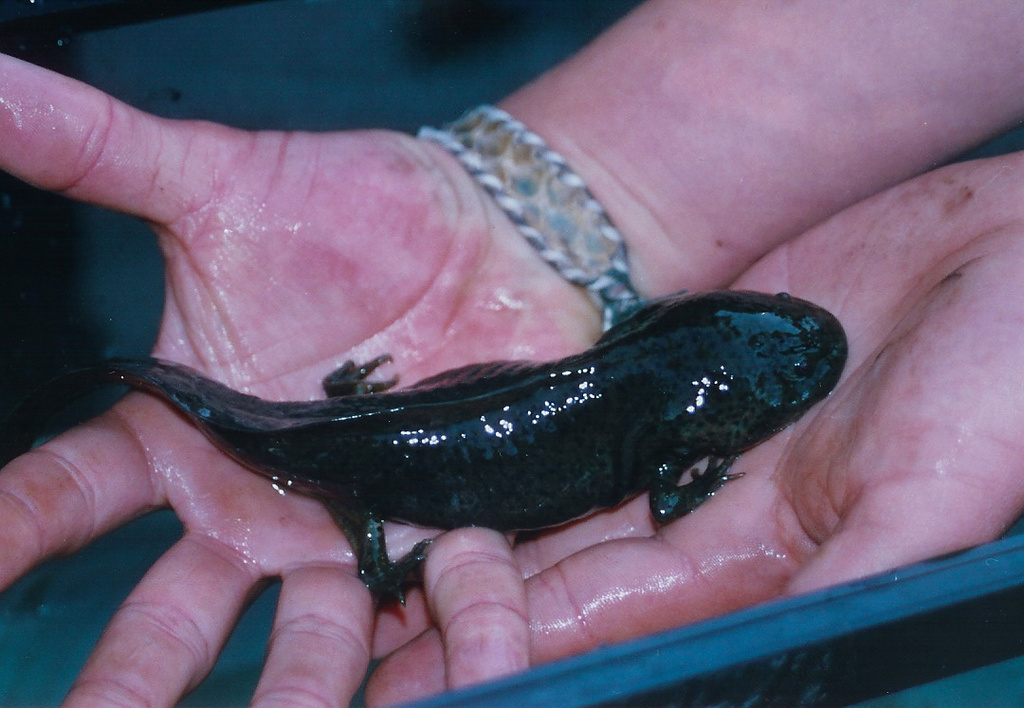
(c) Juan Cruzado Cortés, some rights reserved (CC BY-SA) · licence
Family: Ambystomatidae · Class: Amphibia · Order: Caudata
Conservation status: (ST) · Threatened · G2G3T3 S3
Ambystoma californiense pop. 1 (California tiger salamander - central California DPS) is a California animal in the Ambystomatidae family.
The California tiger salamander - central California DPS (Ambystoma californiense pop. 1) is a large, stocky terrestrial salamander with a broad, rounded snout. Adults typically measure 16 to 20 centimeters (6 to 8 inches) in length, with males reaching about 20 centimeters (8 inches) and females generally smaller at less than 18 centimeters (7 inches). The species displays distinctive coloration consisting of random white or pale yellow spots, bars, or markings against a black dorsal and lateral body surface. The belly varies from nearly uniform white or pale yellow to a variegated pattern of white or pale yellow mixed with black. Small eyes with black irises protrude slightly from the broad head. The central California DPS historically occupied the San Joaquin-Sacramento river valleys, bordering foothills, and coastal valleys of central California. Current distribution forms a fragmented ring along the foothills of the Central Valley and Inner Coast Range, extending from San Luis Obispo and Kern counties northward to at least Yolo County, and in the south coast ranges from San Luis Obispo County north to Monterey Bay and areas east of the San Francisco Bay Area. Critical habitat encompasses approximately 199,109 acres across 19 counties in California (USFWS 2017). Most Central Valley populations have been extirpated, leaving the species restricted to disjunct foothill populations. Central California tiger salamanders primarily inhabit annual grasslands and open woodlands. They require upland habitat occupied by small burrowing mammals, particularly California ground squirrels (Otospermophilus beecheyi) and Botta's pocket gophers, whose burrows provide essential underground refugia. For reproduction, the species depends on temporary aquatic habitats including vernal pools, stock ponds, and seasonal wetlands that retain water for at least 10-12 weeks during winter and spring breeding seasons. Adults are fossorial, spending most of their lives underground in mammal burrows, emerging primarily during winter rains to migrate to breeding sites. Breeding occurs from December through May, depending on rainfall patterns, with peak activity during January and February. Females deposit eggs singly or in small clusters attached to submerged vegetation or debris in temporary pools. Larvae are aquatic and must complete metamorphosis before pools dry, typically requiring 2-4 months of development. Adults feed opportunistically on invertebrates including earthworms, beetles, and other arthropods encountered during nocturnal surface activity. The central California DPS was listed as federally threatened on August 4, 2004, and designated as state threatened by California on August 19, 2010. According to California Department of Fish and Wildlife, the 2004 federal threatened status originally applied to the species throughout its range; subsequent legal action resulted in reclassification of other DPSs to endangered status, while the central California DPS remained threatened. Primary threats include habitat loss and fragmentation from urban and agricultural development, introduction of non-native predatory fish and bullfrogs in breeding ponds, drought effects on breeding habitat, and barriers to migration between breeding and upland habitats. Climate change poses additional challenges through altered precipitation patterns affecting temporary pool hydroperiods essential for successful reproduction.
Classification
Class: Amphibia · Order: Caudata · Family: Ambystomatidae
Conservation status
(ST) · Threatened · G2G3T3 S3
Frequently asked questions
How is Ambystoma californiense pop. 1 classified?
Ambystoma californiense pop. 1 belongs to class Amphibia, order Caudata, family Ambystomatidae.
What family does Ambystoma californiense pop. 1 belong to?
Ambystoma californiense pop. 1 is in the Ambystomatidae family.
Is Ambystoma californiense pop. 1 protected or of conservation concern?
Ambystoma californiense pop. 1 carries the following status: (ST) · Threatened · G2G3T3 S3.
What is Ambystoma californiense pop. 1?
The California tiger salamander - central California DPS (Ambystoma californiense pop.
Is Ambystoma californiense pop. 1 found in California?
Yes. Ambystoma californiense pop. 1 is recorded in California in The California Species Project's catalogue.
Related species
Other California species in the same genus, family, or bioregion.
Data from The California Species Project — 14,000+ California species with verified data from CNPS, CDFW, USFWS, and more.