Ambystoma californiense pop. 3
California tiger salamander - Sonoma County DPS
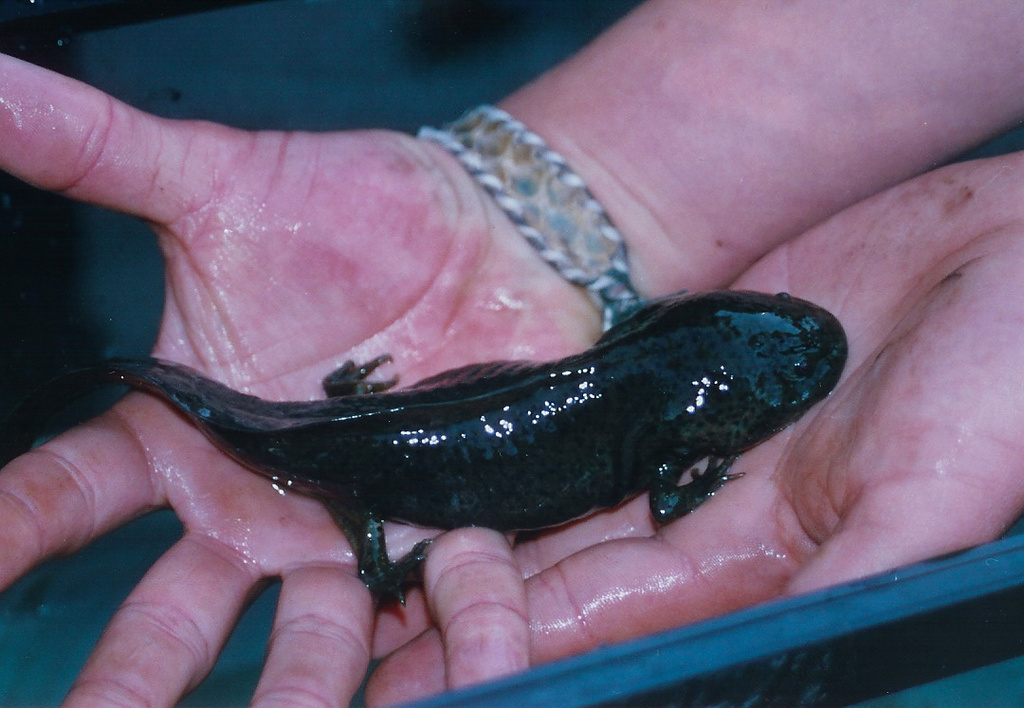
(c) Juan Cruzado Cortés, some rights reserved (CC BY-SA) · licence
Family: Ambystomatidae · Class: Amphibia · Order: Caudata
Conservation status: (ST) · Endangered · G2G3T2 S2
Ambystoma californiense pop. 3 (California tiger salamander - Sonoma County DPS) is a California animal in the Ambystomatidae family.
The California tiger salamander - Sonoma County DPS is a large, stocky, terrestrial salamander with a broad, rounded snout. Adult males reach approximately 20 centimeters (8 inches) in length, while females measure slightly less at about 18 centimeters (7 inches). The species displays distinctive coloration consisting of white or pale yellow spots or bars on a black background across the back and sides. The belly varies from nearly uniform white or pale yellow to a variegated pattern of white or pale yellow and black markings. The Sonoma County distinct population segment represents one of three genetically differentiated and geographically isolated populations of California tiger salamanders. This DPS is endemic to Sonoma County in Northern California, occurring in the coastal valleys and foothills of the region. The population is geographically separated from the Central California DPS, which extends from northern Yolo County southward to northwestern Kern County, and the Santa Barbara County DPS in Southern California. California tiger salamanders inhabit grasslands, oak woodlands, and scrublands where they depend on temporary and permanent pools for breeding. Adults spend most of their lives underground in rodent burrows, particularly California ground squirrel burrows, emerging during winter rains to migrate to breeding ponds. The species requires both terrestrial upland habitat for adult survival and aquatic habitat for reproduction and larval development. Breeding occurs primarily from November through May, coinciding with winter and spring rains. Adults migrate to fishless ponds, stock tanks, and other water bodies to reproduce. Females deposit eggs singly or in small clusters attached to submerged vegetation or debris. Larvae are aquatic and carnivorous, feeding on invertebrates and occasionally other amphibian larvae. The larval period typically lasts 3-6 months, though some larvae may overwinter in permanent water bodies. Adults are opportunistic predators, consuming invertebrates, small vertebrates, and other amphibians. The Sonoma County DPS was initially listed as endangered on July 22, 2002. According to the California Department of Fish and Wildlife, the entire California tiger salamander was federally listed as threatened statewide in 2004, which reclassified the Sonoma County and Santa Barbara County populations from endangered to threatened. However, a U.S. District Court vacated this down-listing on August 19, 2005, restoring the endangered status for both the Sonoma and Santa Barbara populations. The species remains state-listed as threatened throughout California as of December 2025. Primary threats include habitat loss and fragmentation from urban development and agriculture, road mortality during breeding migrations, altered hydrology affecting breeding ponds, and hybridization with introduced barred tiger salamanders. Climate change poses additional risks through altered precipitation patterns that affect breeding pond availability and timing. Population estimates indicate significant declines from historical levels, with many breeding sites lost to development. Recovery efforts focus on habitat protection, pond restoration, and reducing barriers to migration between terrestrial and aquatic habitats.
Classification
Class: Amphibia · Order: Caudata · Family: Ambystomatidae
Conservation status
(ST) · Endangered · G2G3T2 S2
Frequently asked questions
How is Ambystoma californiense pop. 3 classified?
Ambystoma californiense pop. 3 belongs to class Amphibia, order Caudata, family Ambystomatidae.
What family does Ambystoma californiense pop. 3 belong to?
Ambystoma californiense pop. 3 is in the Ambystomatidae family.
Is Ambystoma californiense pop. 3 protected or of conservation concern?
Ambystoma californiense pop. 3 carries the following status: (ST) · Endangered · G2G3T2 S2.
What is Ambystoma californiense pop. 3?
The California tiger salamander - Sonoma County DPS is a large, stocky, terrestrial salamander with a broad, rounded snout.
Is Ambystoma californiense pop. 3 found in California?
Yes. Ambystoma californiense pop. 3 is recorded in California in The California Species Project's catalogue.
Related species
Other California species in the same genus, family, or bioregion.
Data from The California Species Project — 14,000+ California species with verified data from CNPS, CDFW, USFWS, and more.