Ambystoma gracile
Northwestern Salamander
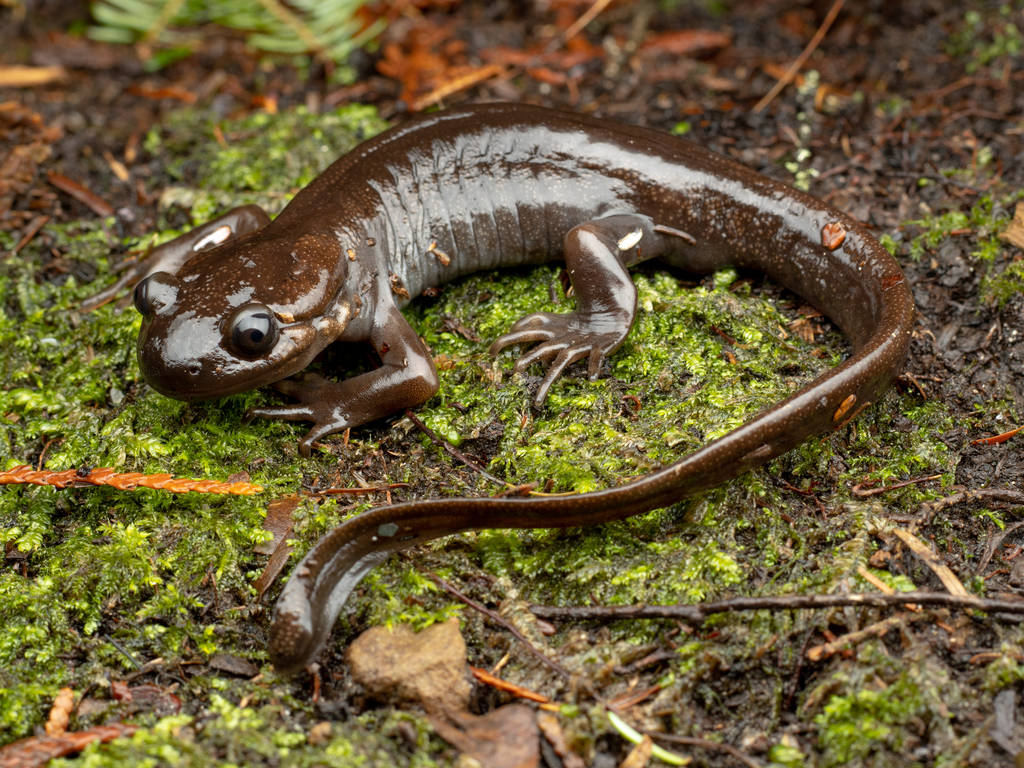
(c) andrewnydam, some rights reserved (CC BY) · licence
Family: Ambystomatidae · Class: Amphibia · Order: Caudata
Ambystoma gracile (Northwestern Salamander) is a California animal in the Ambystomatidae family.
The Northwestern salamander (Ambystoma gracile) is a robust, medium-sized mole salamander native to the Pacific Northwest. Adults typically measure 140 to 220 mm (5.5 to 8.7 inches) in total length, with females generally larger than males. The species exhibits a stocky build with a broad, flattened head and small eyes. Coloration ranges from dark brown to nearly black dorsally, often with lighter brown or tan mottling. The ventral surface is typically lighter, ranging from gray to yellowish-brown. A distinctive feature is the presence of prominent parotoid glands behind the eyes, which secrete a milky toxin when threatened. The tail is laterally compressed and comprises approximately 40-45% of the total body length. In California, the Northwestern salamander reaches the southern extent of its range, occurring primarily in the coastal counties of Del Norte and Humboldt. The species ranges northward through Oregon, Washington, and into British Columbia, with isolated populations in northern Idaho and western Montana. Within its California range, populations are typically found at elevations from sea level to approximately 760 meters (2,500 feet), though they can occur up to 2,100 meters (6,900 feet) in some northern portions of their range. Northwestern salamanders inhabit coniferous forests dominated by Douglas fir, western hemlock, and redwood. They require moist environments and are typically found in areas with dense canopy cover that maintains high humidity levels. Adults spend most of their time underground in burrows, which they excavate in soft soil or utilize existing rodent tunnels. Breeding habitat consists of ponds, lakes, and slow-moving streams, particularly those that retain water through the summer months. Larvae require aquatic environments with adequate dissolved oxygen and minimal fish predation. The species exhibits a complex life cycle with both aquatic larval and terrestrial adult stages. Breeding occurs from late winter through early spring, typically February through May depending on elevation and temperature. Adults migrate to breeding sites during rainy nights, with males often arriving first to establish territories. Females deposit 30 to 270 eggs in gelatinous masses attached to submerged vegetation or rocks. The larval stage lasts 2 to 4 years in most populations, though some individuals may remain aquatic and reach sexual maturity as permanent larvae (neotenes). Adult Northwestern salamanders are primarily nocturnal and feed on a variety of invertebrates including earthworms, slugs, insects, and spiders. Larvae are opportunistic predators, consuming zooplankton, aquatic insects, and small crustaceans. The Northwestern salamander is not federally listed and appears to have stable populations throughout most of its range. However, like many amphibians, the species faces threats from habitat loss due to logging, urban development, and wetland degradation. Climate change poses additional concerns through altered precipitation patterns and increased temperatures that could affect breeding pond hydrology. Water pollution from agricultural runoff and urban sources may impact both adult and larval stages. The species' dependence on old-growth forest characteristics makes it vulnerable to intensive forest management practices that reduce canopy cover and soil moisture retention.
Classification
Class: Amphibia · Order: Caudata · Family: Ambystomatidae
Frequently asked questions
How is Ambystoma gracile classified?
Ambystoma gracile belongs to class Amphibia, order Caudata, family Ambystomatidae.
What family does Ambystoma gracile belong to?
Ambystoma gracile is in the Ambystomatidae family.
What is Ambystoma gracile?
The Northwestern salamander (Ambystoma gracile) is a robust, medium-sized mole salamander native to the Pacific Northwest.
Is Ambystoma gracile found in California?
Yes. Ambystoma gracile is recorded in California in The California Species Project's catalogue.
Related species
Other California species in the same genus, family, or bioregion.
Data from The California Species Project — 14,000+ California species with verified data from CNPS, CDFW, USFWS, and more.