Ambystoma mavortium
Western Tiger Salamander
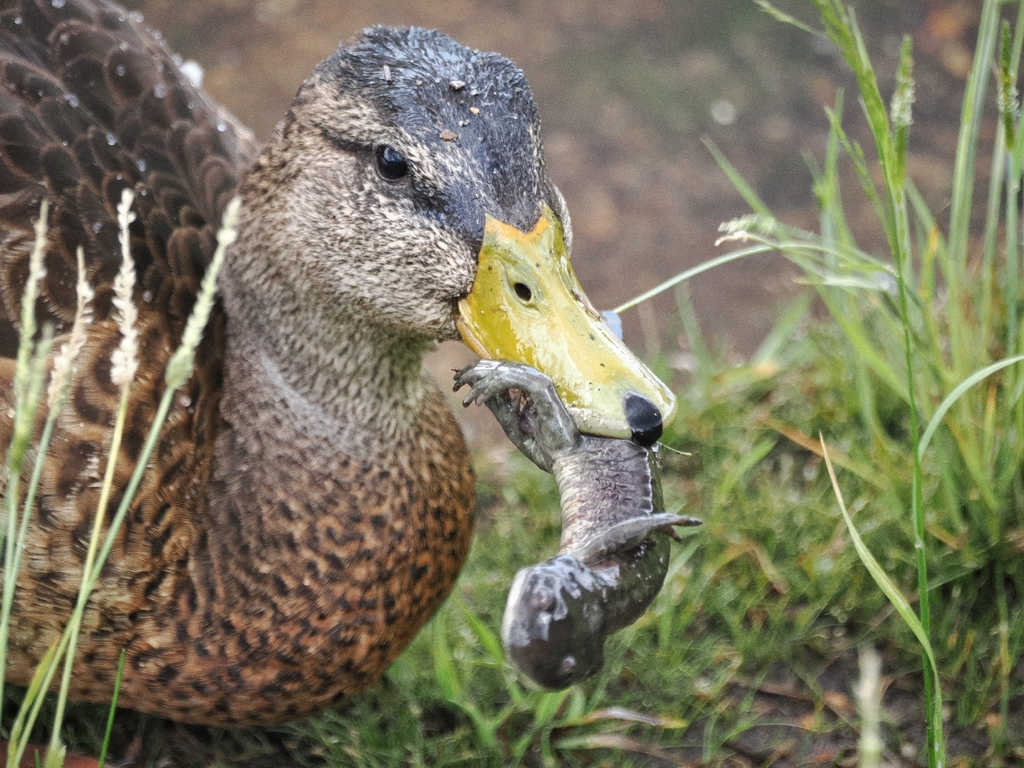
(c) ayden, some rights reserved (CC BY) · licence
Family: Ambystomatidae · Class: Amphibia · Order: Caudata
Ambystoma mavortium (Western Tiger Salamander) is a California animal in the Ambystomatidae family.
The Western Tiger Salamander (Ambystoma mavortium) is a large, terrestrial salamander and the most widely distributed salamander species in North America. Adults typically measure 150 to 230 mm (6 to 9 inches) in total length, with some individuals reaching up to 330 mm (13 inches). The species exhibits considerable color variation across its range, with a base coloration of dark gray, brown, or black marked by irregular yellow, cream, or olive-colored spots, bars, or reticulated patterns. The underside is typically lighter with scattered dark markings. Adults have a broad, flattened head with small eyes and a robust body with a laterally compressed tail. The Western Tiger Salamander occupies a vast range across western North America, from southern Canada to northern Mexico. In California, the species is primarily found in the Central Valley, Sierra Nevada foothills, and scattered locations in the Coast Ranges and southern California. The species occurs from sea level to approximately 3,350 meters (11,000 feet) elevation, though breeding typically occurs below 2,500 meters (8,200 feet). This salamander inhabits a variety of terrestrial environments including grasslands, oak woodlands, pine forests, and agricultural areas. Adults spend most of their lives underground in burrows, often utilizing rodent burrows or natural cavities in soil. The species requires access to permanent or semi-permanent water bodies for reproduction, including natural ponds, stock tanks, irrigation ditches, and slow-moving streams. Breeding sites typically have minimal fish populations and abundant aquatic vegetation. Western Tiger Salamanders are primarily nocturnal and remain underground during dry periods, emerging during rainfall to feed and migrate. Adults are opportunistic predators, consuming earthworms, insects, spiders, and small vertebrates. The species exhibits a complex life cycle involving aquatic larvae that undergo metamorphosis. Breeding occurs from late fall through early spring, triggered by rainfall and temperature conditions. Adults migrate to breeding ponds where females deposit 200 to 1,000 eggs in gelatinous masses attached to submerged vegetation or debris. Larval development takes 60 to 120 days, depending on water temperature and food availability. In some populations, larvae may overwinter and complete metamorphosis the following year. The Western Tiger Salamander is not federally listed but faces significant conservation challenges in California. Habitat loss due to urban development, agriculture intensification, and water diversions has eliminated many breeding sites. Introduction of non-native fish species, particularly mosquitofish and bass, has reduced recruitment success in remaining breeding habitats. Disease, including chytrid fungus, poses an emerging threat to amphibian populations statewide. Climate change may further impact the species through altered precipitation patterns and increased drought frequency. Several subspecies, including the California Tiger Salamander (A. m. californiense), have received federal protection due to severe population declines and restricted distributions.
Classification
Class: Amphibia · Order: Caudata · Family: Ambystomatidae
Frequently asked questions
How is Ambystoma mavortium classified?
Ambystoma mavortium belongs to class Amphibia, order Caudata, family Ambystomatidae.
What family does Ambystoma mavortium belong to?
Ambystoma mavortium is in the Ambystomatidae family.
What is Ambystoma mavortium?
The Western Tiger Salamander (Ambystoma mavortium) is a large, terrestrial salamander and the most widely distributed salamander species in North America.
Is Ambystoma mavortium found in California?
Yes. Ambystoma mavortium is recorded in California in The California Species Project's catalogue.
Related species
Other California species in the same genus, family, or bioregion.
Data from The California Species Project — 14,000+ California species with verified data from CNPS, CDFW, USFWS, and more.