Ameiurus melas
Black bullhead
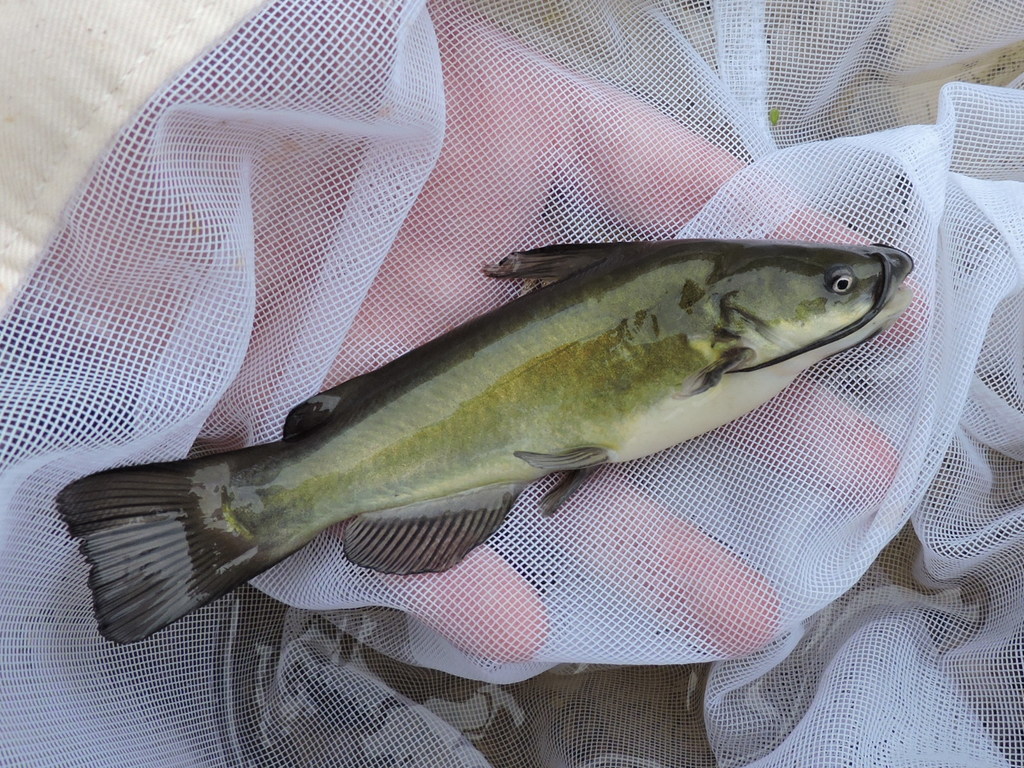
(c) Sam Kieschnick, some rights reserved (CC BY) · licence
Family: Ictaluridae · Class: Actinopterygii · Order: Siluriformes
Ameiurus melas (Black bullhead) is a California animal in the Ictaluridae family.
The black bullhead (Ameiurus melas) is a medium-sized freshwater catfish native to North America and a member of the family Ictaluridae. Adults typically reach 150 to 250 mm (6 to 10 inches) in total length, though some individuals may grow to 300 mm (12 inches). The body is robust and laterally compressed toward the tail, with a broad, flattened head. The skin is scaleless and covered in a protective mucus layer. Coloration ranges from dark brown to black on the dorsal surface, with lighter brown or yellow sides and a pale yellow to white belly. Eight barbels surround the mouth, including four on the chin and four near the nostrils, which are used for locating food in murky water. The anal fin contains 17 to 21 rays, and the tail fin is square to slightly notched. Historically, black bullheads were native to the Great Lakes, Mississippi River basin, and portions of the Atlantic and Gulf coastal drainages. The species has been widely introduced throughout North America, including California, where it is now established in numerous water bodies. In California, black bullheads occur in the Central Valley, including the Sacramento and San Joaquin river systems, and in various reservoirs and farm ponds throughout the state. The species has also been documented in the Colorado River system along California's eastern border. Black bullheads inhabit slow-moving or standing freshwater environments, including lakes, ponds, reservoirs, and backwater areas of rivers and streams. They prefer shallow waters with soft, muddy bottoms rich in organic matter. The species tolerates a wide range of water conditions, including low oxygen levels, high turbidity, and water temperatures from near freezing to 35°C (95°F). They are commonly found in areas with abundant aquatic vegetation and can survive in waters with pH ranging from 6.0 to 9.0. Black bullheads are opportunistic omnivores that feed primarily at night. Their diet includes aquatic insects, worms, crustaceans, mollusks, small fish, fish eggs, and plant material. They use their sensitive barbels to locate food by touch and taste in sediment and among vegetation. Spawning occurs from late spring through early summer when water temperatures reach 18 to 24°C (65 to 75°F). Males construct circular nests in shallow water by fanning away sediment with their fins. Females deposit 2,000 to 4,000 adhesive eggs in these nests, which are then fertilized and guarded by both parents. The male continues to protect the young for several weeks after hatching. Black bullheads can live up to 8 years and reach sexual maturity at 2 to 3 years of age. The black bullhead has no special conservation status in California and is considered a non-native species. While not listed as threatened or endangered, the species' introduction to California waters has raised concerns about potential impacts on native fish populations through competition for resources and habitat modification. Management efforts focus on preventing further spread rather than conservation of the species itself.
Classification
Class: Actinopterygii · Order: Siluriformes · Family: Ictaluridae
Frequently asked questions
How is Ameiurus melas classified?
Ameiurus melas belongs to class Actinopterygii, order Siluriformes, family Ictaluridae.
What family does Ameiurus melas belong to?
Ameiurus melas is in the Ictaluridae family.
What is Ameiurus melas?
The black bullhead (Ameiurus melas) is a medium-sized freshwater catfish native to North America and a member of the family Ictaluridae.
Is Ameiurus melas found in California?
Yes. Ameiurus melas is recorded in California in The California Species Project's catalogue.
Related species
Other California species in the same genus, family, or bioregion.
Data from The California Species Project — 14,000+ California species with verified data from CNPS, CDFW, USFWS, and more.