Ammodramus bairdii
Baird's Sparrow
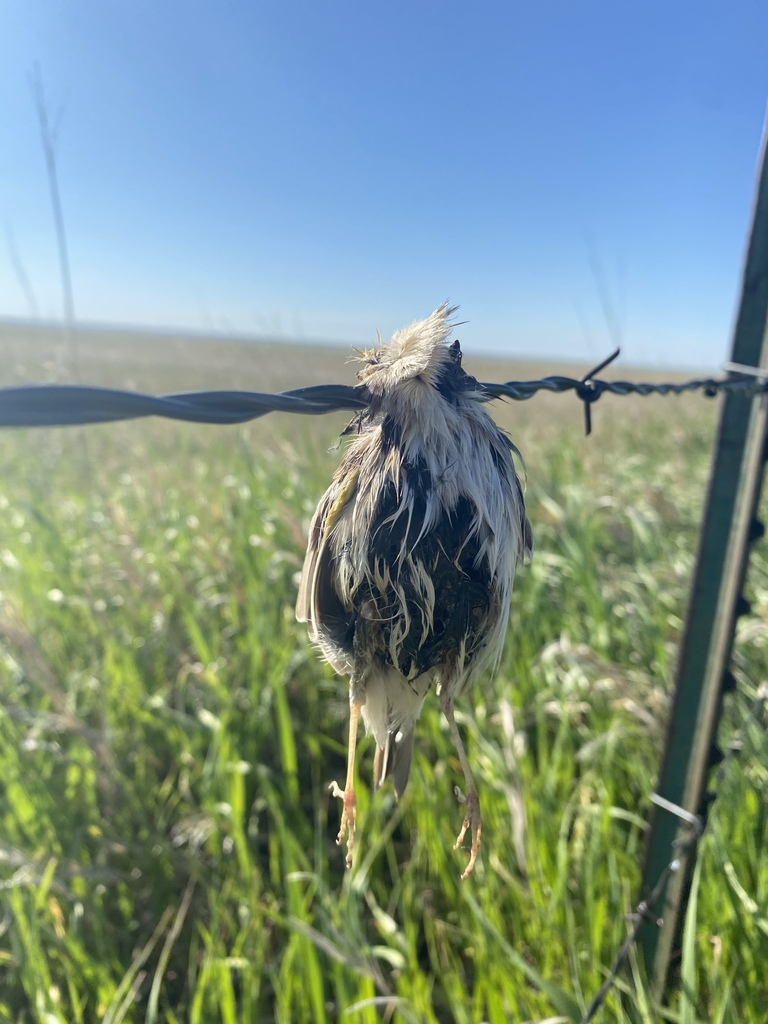
(c) Cole Wolf, some rights reserved (CC BY) · licence
Family: Passerellidae · Class: Aves · Order: Passeriformes
Ammodramus bairdii (Baird's Sparrow) is a California animal in the Passerellidae family.
Baird's Sparrow (Centronyx bairdii) is a small grassland passerine measuring approximately 12 cm (4.7 inches) in length. This sparrow displays brown streaked plumage typical of grassland sparrows, with distinctive markings that help distinguish it from similar species. The species possesses a characteristic song that readily separates it from other grassland sparrows in its range. Historically, Baird's Sparrow bred across the northern Great Plains of North America, including portions of the prairie provinces of Canada and the northern United States. The species' breeding range extended through Montana, North Dakota, South Dakota, and historically into Minnesota. Current distribution has contracted significantly from historical levels, with populations now concentrated in the core northern Great Plains region. During migration and winter, Baird's Sparrows move south through the central United States, reaching wintering grounds in the southwestern United States and northern Mexico. The species occurs as a rare migrant in California, primarily during fall migration. Baird's Sparrow inhabits native grasslands, preferring areas with mixed grass prairie vegetation. The species requires grassland landscapes with moderate vegetation structure, avoiding both heavily grazed areas and dense, ungrazed grasslands. According to NatureServe, season-long heavy grazing reduces bird numbers, though some types of deferred rotational light grazing may be acceptable in certain areas. During migration, birds utilize grasslands, weedy fields, hay fields, and bare ground areas near water bodies. The species shows strong habitat fragmentation sensitivity, with probability of occurrence increasing from less than 10% to greater than 50% when grassland habitat within 3,200 meters increases from less than 40% to greater than 90% coverage. Breeding behavior and ecology remain less thoroughly documented than for many grassland species. Baird's Sparrows construct ground nests concealed in grass clumps, typically laying clutches of 3-5 eggs. The species feeds primarily on insects during the breeding season, switching to seeds during migration and winter. Like other grassland sparrows, Baird's Sparrows are ground foragers, gleaning insects and seeds from vegetation and soil surfaces. Baird's Sparrow faces significant conservation challenges throughout its range. The species has experienced substantial population declines due to habitat loss and fragmentation of native grasslands. Agricultural conversion, energy development, and habitat fragmentation represent primary threats. The U.S. Fish and Wildlife Service has identified this species as a priority for grassland bird conservation efforts. In South Dakota, the species is recognized as having habitat fragmentation concerns, with research showing negative impacts from oil well development and infrastructure within 550 meters of breeding areas. Conservation efforts focus on maintaining large blocks of native grassland habitat and implementing grazing management practices compatible with breeding requirements.
Classification
Class: Aves · Order: Passeriformes · Family: Passerellidae
Frequently asked questions
How is Ammodramus bairdii classified?
Ammodramus bairdii belongs to class Aves, order Passeriformes, family Passerellidae.
What family does Ammodramus bairdii belong to?
Ammodramus bairdii is in the Passerellidae family.
What is Ammodramus bairdii?
Baird's Sparrow (Centronyx bairdii) is a small grassland passerine measuring approximately 12 cm (4.7 inches) in length.
Is Ammodramus bairdii found in California?
Yes. Ammodramus bairdii is recorded in California in The California Species Project's catalogue.
Related species
Other California species in the same genus, family, or bioregion.
Data from The California Species Project — 14,000+ California species with verified data from CNPS, CDFW, USFWS, and more.