Ammodramus leconteii
Le Conte's Sparrow
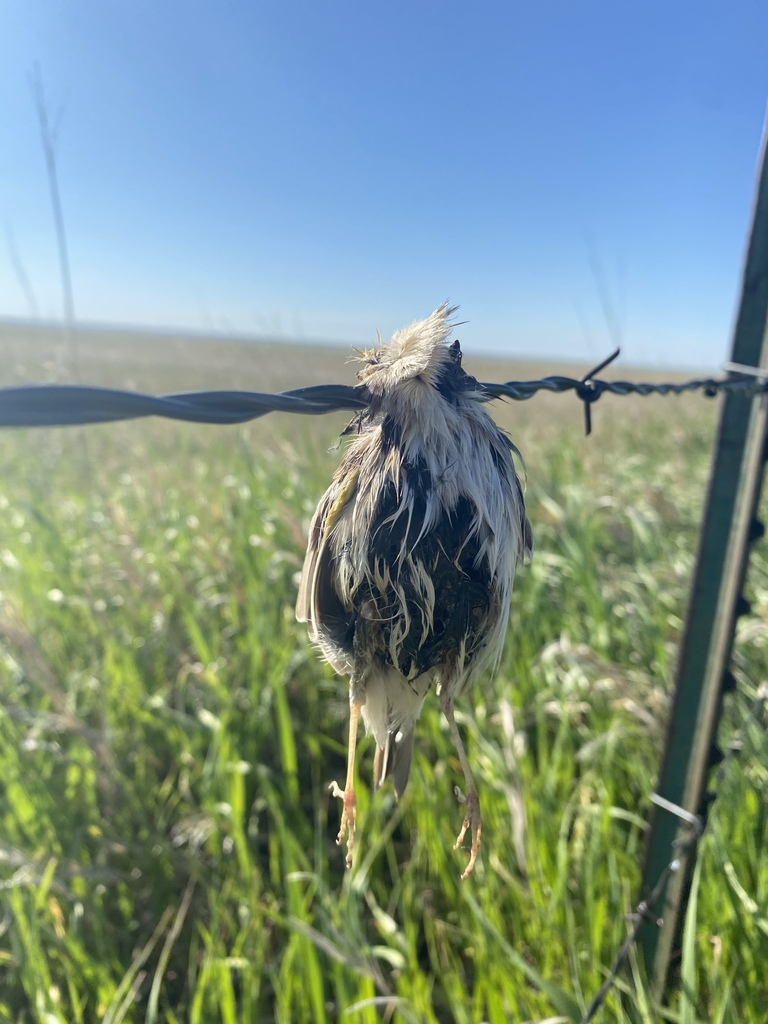
(c) Cole Wolf, some rights reserved (CC BY) · licence
Family: Passerellidae · Class: Aves · Order: Passeriformes
Ammodramus leconteii (Le Conte's Sparrow) is a California animal in the Passerellidae family.
Le Conte's Sparrow (Ammospiza leconteii) is a small, secretive grassland sparrow measuring 11-13 cm (4.3-5.1 inches) in length with a wingspan of 16-17 cm (6.3-6.7 inches). Adults display distinctive plumage featuring a buffy-orange face and breast with fine dark streaking, a light-colored median crown stripe bordered by dark lateral stripes, and a grayish nape. The back shows a complex pattern of black, brown, and buff streaking, while the underparts are pale buff to whitish with fine streaking on the breast and flanks. The species has a short, straight bill and relatively short tail compared to other grassland sparrows. Le Conte's Sparrow breeds primarily across the northern Great Plains from southern Alberta and Saskatchewan south through North Dakota, Minnesota, and parts of South Dakota and Iowa. The species also breeds in portions of Manitoba and extends into some areas of Wisconsin and Michigan. In California, this species occurs only as a rare vagrant or during migration, with very few documented records. The core breeding range encompasses the prairie pothole region and adjacent grasslands of central North America. The species inhabits wet grasslands, shallow marshes, sedge meadows, and the edges of prairie potholes. According to Birds of the World, Le Conte's Sparrows prefer areas with dense grass cover, particularly native tallgrass prairie with moderate moisture levels. They favor habitats with standing water nearby and dense vegetation structure that provides both foraging opportunities and nesting sites. Breeding habitat typically includes areas with grass heights of 30-60 cm and adequate litter layer for ground foraging. Le Conte's Sparrows are primarily insectivorous during the breeding season, feeding on beetles, caterpillars, moths, flies, and other small arthropods. Seeds become more important in the diet during fall and winter months. The species exhibits secretive behavior, often remaining hidden in dense grass and being more easily detected by voice than by sight. Breeding occurs from May through July, with females constructing cup-shaped nests on the ground or slightly elevated in dense grass. Clutch size typically ranges from 3-5 eggs, with an incubation period of 12-13 days. Le Conte's Sparrow is not federally listed under the Endangered Species Act, but populations have experienced declines due to habitat loss from agricultural conversion and wetland drainage. According to NatureServe, the species is considered secure globally but faces regional challenges from grassland fragmentation and degradation. In states like South Dakota, the species is recognized as having habitat fragmentation concerns due to conversion of native prairie to cropland and energy development. Climate change may also affect the species through alterations to precipitation patterns that influence wetland hydrology in breeding areas.
Classification
Class: Aves · Order: Passeriformes · Family: Passerellidae
Frequently asked questions
How is Ammodramus leconteii classified?
Ammodramus leconteii belongs to class Aves, order Passeriformes, family Passerellidae.
What family does Ammodramus leconteii belong to?
Ammodramus leconteii is in the Passerellidae family.
What is Ammodramus leconteii?
Le Conte's Sparrow (Ammospiza leconteii) is a small, secretive grassland sparrow measuring 11-13 cm (4.3-5.1 inches) in length with a wingspan of 16-17 cm (6.3-6.7 inches).
Is Ammodramus leconteii found in California?
Yes. Ammodramus leconteii is recorded in California in The California Species Project's catalogue.
Related species
Other California species in the same genus, family, or bioregion.
Data from The California Species Project — 14,000+ California species with verified data from CNPS, CDFW, USFWS, and more.