Ammodramus nelsoni
Nelson's Sparrow
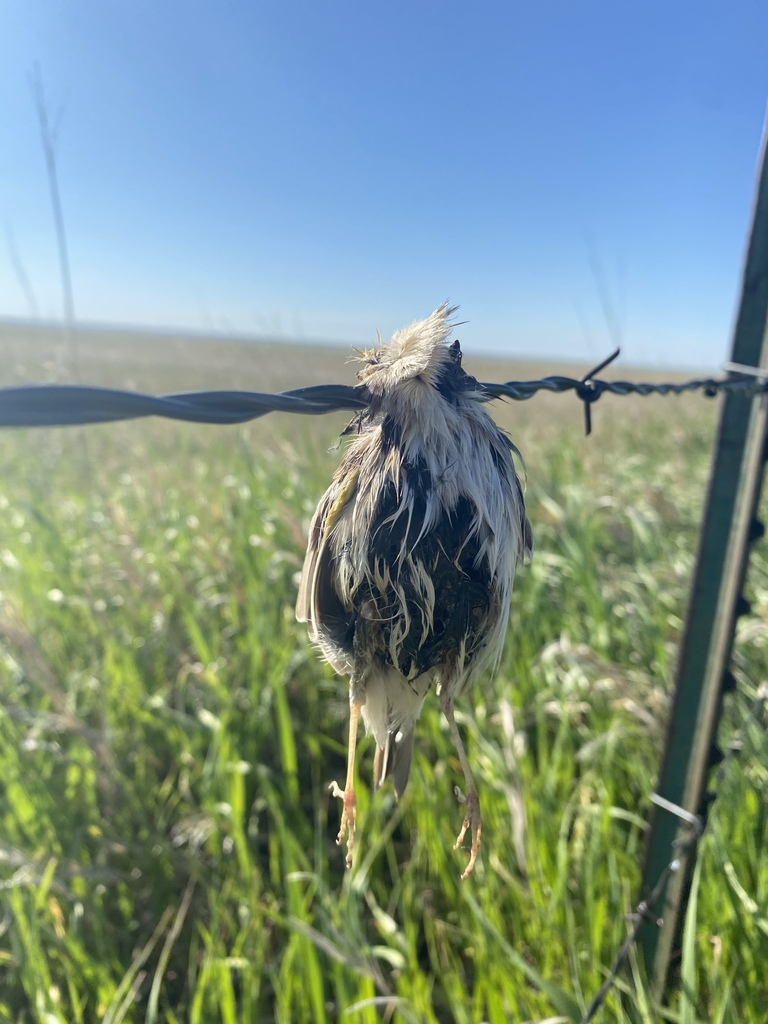
(c) Cole Wolf, some rights reserved (CC BY) · licence
Family: Passerellidae · Class: Aves · Order: Passeriformes
Ammodramus nelsoni (Nelson's Sparrow) is a California animal in the Passerellidae family.
Nelson's Sparrow is a small, secretive passerine bird measuring 11-13 cm (4.3-5.1 inches) in length with a wingspan of 17-18 cm (6.7-7.1 inches). Adults weigh 15-20 grams (0.5-0.7 ounces). The species displays distinctive plumage with a grayish nape, orange-buff face with gray ear patches, and a sharp white supercilium that contrasts with a dark crown stripe. The upperparts are brownish with dark streaking, while underparts are white to pale buff with fine streaking on the breast and flanks. During breeding season, the orange-buff facial coloration becomes more pronounced. Juveniles appear duller with less distinct facial patterns and heavier streaking throughout. Nelson's Sparrow breeds primarily in the northern Great Plains and maritime Canada, with populations extending from southeastern Alberta and southern Manitoba eastward to the Atlantic Maritime provinces. In California, the species occurs as an uncommon to rare migrant and winter visitor along the coast and in suitable inland habitats. According to eBird data, sightings are most frequent in San Francisco Bay Area salt marshes, particularly at locations such as Palo Alto Baylands and Don Edwards San Francisco Bay National Wildlife Refuge. The species also occurs in smaller numbers in coastal Southern California, with records from Bolsa Chica Ecological Reserve and Upper Newport Bay. The species inhabits salt marshes, brackish wetlands, and adjacent upland areas during migration and winter. In California, Nelson's Sparrows show strong preference for pickleweed (Salicornia pacifica) dominated salt marshes and areas with cordgrass (Spartina foliosa). During breeding season in their northern range, they occupy wet meadows, sedge marshes, and shallow wetland edges. The species typically forages in areas where vegetation height ranges from 30-60 cm (12-24 inches), providing cover while allowing access to the ground for feeding. Nelson's Sparrows are primarily insectivorous during breeding season, consuming beetles, flies, moths, and caterpillars. In winter and during migration, their diet shifts to include seeds of grasses and sedges, particularly those of saltmarsh plants. The species forages by walking through dense vegetation, picking prey from stems and the ground surface. Breeding occurs from May through July in their northern range, with females constructing cup-shaped nests of grasses and sedges placed on the ground or in low vegetation. Clutch size typically ranges from 3-5 eggs, with incubation lasting 11-12 days. Young fledge after 8-9 days but remain dependent on parents for an additional 7-10 days. Nelson's Sparrow is not federally listed but faces population pressures from habitat loss and climate change. Partners in Flight estimates the global population at approximately 2.8 million individuals, with populations showing moderate declines in some regions over the past several decades. North American Breeding Bird Survey data indicates population declines of approximately 1.5% per year from 1966-2019. In California, the species benefits from salt marsh restoration efforts, particularly projects that restore native vegetation communities. Sea level rise poses a long-term threat to winter habitat, with studies projecting potential loss of 10-37% of suitable salt marsh habitat along the Pacific Coast by 2100 under various climate scenarios. The species is classified as a Common Bird in Steep Decline by Partners in Flight due to documented population trends and habitat vulnerability.
Classification
Class: Aves · Order: Passeriformes · Family: Passerellidae
Frequently asked questions
How is Ammodramus nelsoni classified?
Ammodramus nelsoni belongs to class Aves, order Passeriformes, family Passerellidae.
What family does Ammodramus nelsoni belong to?
Ammodramus nelsoni is in the Passerellidae family.
What is Ammodramus nelsoni?
Nelson's Sparrow is a small, secretive passerine bird measuring 11-13 cm (4.3-5.1 inches) in length with a wingspan of 17-18 cm (6.7-7.1 inches).
Is Ammodramus nelsoni found in California?
Yes. Ammodramus nelsoni is recorded in California in The California Species Project's catalogue.
Related species
Other California species in the same genus, family, or bioregion.
Data from The California Species Project — 14,000+ California species with verified data from CNPS, CDFW, USFWS, and more.