Ammodytes personatus
Pacific Sand Lance
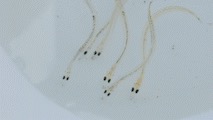
(c) Zaida Schneider, some rights reserved (CC BY) · licence
Family: Ammodytidae · Class: Actinopterygii · Order: Perciformes
Ammodytes personatus (Pacific Sand Lance) is a California animal in the Ammodytidae family.
The Pacific sand lance is a small, elongated marine fish characterized by its slender, eel-like body and distinctive burrowing behavior. Adults typically measure 15 to 20 centimeters (6 to 8 inches) in length, with a compressed body that tapers to a pointed snout. The species displays a silvery coloration with a darker dorsal surface and lacks a swim bladder, an adaptation that facilitates rapid burial in sandy substrates. Pacific sand lance occur along the North Pacific coast from Alaska to central California. In California waters, the species is distributed from the Oregon border south to approximately Monterey Bay, with documented presence in nearshore coastal areas and estuarine environments. According to California's Environmental Sensitivity Index maps, Pacific sand lance are present year-round (January through December) in Northern California coastal waters, with peak abundance occurring from January through April. The species inhabits sandy and muddy bottoms in shallow coastal waters, typically at depths ranging from the intertidal zone to approximately 128 meters (420 feet). Pacific sand lance demonstrate a unique ecological adaptation by burrowing into sandy sediments during periods of inactivity, emerging to feed in the water column during favorable conditions. They are commonly found in surf zones, kelp forests, and eelgrass beds, where they form dense aggregations. Pacific sand lance are planktivorous, feeding primarily on copepods, euphausiids, and other small zooplankton. Their feeding behavior involves rapid vertical migrations from sandy substrates into the water column to capture prey. The species exhibits schooling behavior and serves as a critical forage fish in marine food webs. Spawning occurs during winter and spring months, with females depositing adhesive eggs on sandy bottoms in shallow coastal areas. As a key forage species, Pacific sand lance support numerous marine predators including seabirds, marine mammals, and commercially important fish species. The Marbled Murrelet, a federally threatened seabird, relies heavily on Pacific sand lance as a primary food source, with the fish comprising a significant portion of both adult and nestling diets. Surf smelt also consume larval Pacific sand lance as part of their diverse prey base. Marine predators such as lingcod, salmon, harbor seals, and various seabirds depend on sand lance aggregations for seasonal foraging. Currently, Pacific sand lance lack formal conservation status designations at federal or state levels. However, as a foundational forage species, their populations face potential threats from climate change, coastal development, and altered oceanographic conditions that could affect prey availability and spawning habitat quality. The species' dependence on specific sandy substrate habitats makes them potentially vulnerable to coastal modification and sediment disruption. Their role as essential prey for threatened and endangered species, including the Marbled Murrelet, emphasizes their ecological importance in California's marine ecosystems.
Classification
Class: Actinopterygii · Order: Perciformes · Family: Ammodytidae
Frequently asked questions
How is Ammodytes personatus classified?
Ammodytes personatus belongs to class Actinopterygii, order Perciformes, family Ammodytidae.
What family does Ammodytes personatus belong to?
Ammodytes personatus is in the Ammodytidae family.
What is Ammodytes personatus?
The Pacific sand lance is a small, elongated marine fish characterized by its slender, eel-like body and distinctive burrowing behavior.
Is Ammodytes personatus found in California?
Yes. Ammodytes personatus is recorded in California in The California Species Project's catalogue.
More California species
This species has no close relatives in our California data — here are other species to explore.
Data from The California Species Project — 14,000+ California species with verified data from CNPS, CDFW, USFWS, and more.