Ammophila aberti
Abert's Thread-waisted Wasp
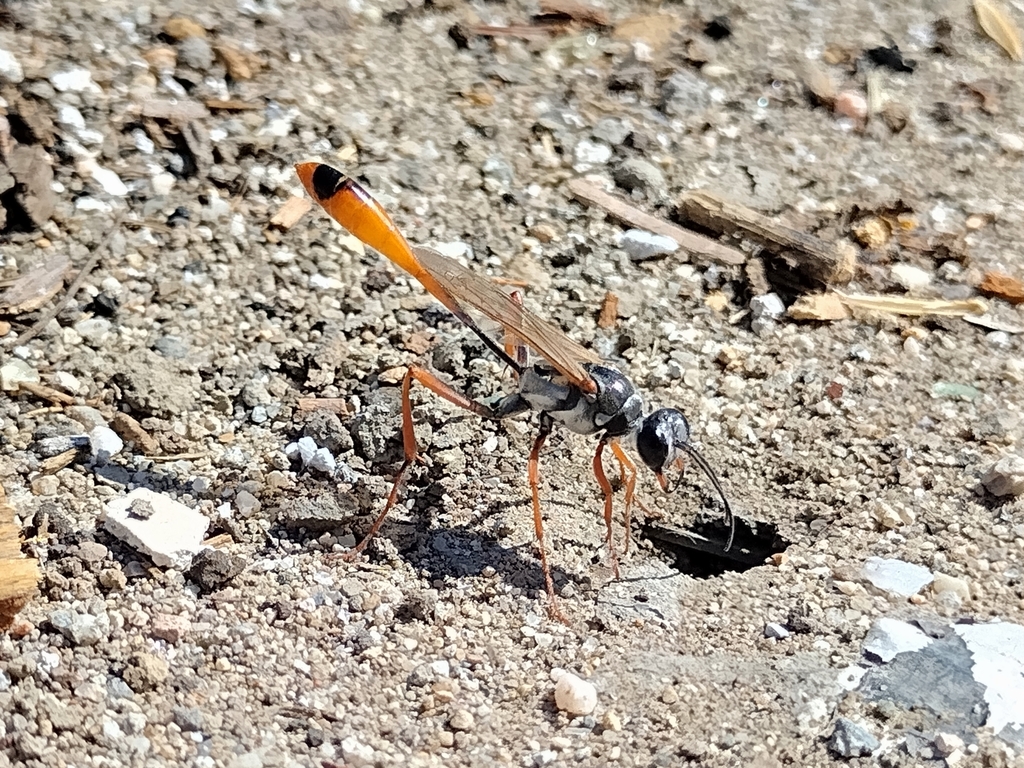
(c) Daniel S., some rights reserved (CC BY) · licence
Family: Sphecidae · Class: Insecta · Order: Hymenoptera
Ammophila aberti (Abert's Thread-waisted Wasp) is a California animal in the Sphecidae family.
Abert's thread-waisted wasp is a solitary hunting wasp in the family Sphecidae, subfamily Ammophilinae. Adult females typically measure 15-25 mm in length, with a characteristic constricted waist that gives the group its common name. The body is primarily black with variable reddish markings on the thorax and anterior abdominal segments. The head features prominent compound eyes and strong mandibles used for prey manipulation and nest excavation. Wings are hyaline with dark veining, and the legs are robust and adapted for digging. This species occurs across much of the western United States, with documented populations in California, Nevada, Arizona, Utah, and extending into parts of Colorado and New Mexico (BugGuide). In California, A. aberti has been recorded from various locations including the greater Los Angeles area, where it was documented in biological surveys of the Ballona Wetlands region (Mattoni 1991). The species appears to have a broad elevational range from desert valleys to montane areas. Abert's thread-waisted wasp inhabits open, sandy or gravelly areas where females can excavate burrows for nesting. Suitable habitat includes desert flats, sandy washes, disturbed ground, and areas with sparse vegetation. The species shows adaptability to human-modified environments, with observations from parks and other developed areas where appropriate substrate conditions exist (BugGuide). Females require loose soil or sand for nest construction and nearby hunting grounds with adequate caterpillar prey. Like other Ammophila species, A. aberti is a specialized predator of lepidopteran larvae. Adult females hunt caterpillars, which they paralyze with their sting and transport to underground burrows. The female provisions each burrow cell with one or more paralyzed caterpillars before laying a single egg. The wasp larva feeds on the paralyzed prey, which remains fresh throughout the larval development period. Adults are active during warm months and can often be observed flying low over the ground while searching for prey or suitable nesting sites. Males are typically smaller than females and patrol territories while seeking mating opportunities. Abert's thread-waisted wasp currently has no formal conservation status at federal or state levels. Population trends and conservation needs have not been systematically assessed, as is common for many solitary wasp species. The species' apparent tolerance for disturbed habitats may provide some resilience against habitat loss, though specific population data are lacking. Like other ground-nesting wasps, A. aberti may be vulnerable to habitat degradation, pesticide use, and intensive land management practices that eliminate suitable nesting substrate or prey populations. Documentation of this species relies primarily on naturalist observations and taxonomic collections, highlighting the need for more comprehensive surveys of solitary wasp diversity and distribution patterns across California's varied ecosystems.
Classification
Class: Insecta · Order: Hymenoptera · Family: Sphecidae
Frequently asked questions
How is Ammophila aberti classified?
Ammophila aberti belongs to class Insecta, order Hymenoptera, family Sphecidae.
What family does Ammophila aberti belong to?
Ammophila aberti is in the Sphecidae family.
What is Ammophila aberti?
Abert's thread-waisted wasp is a solitary hunting wasp in the family Sphecidae, subfamily Ammophilinae.
Is Ammophila aberti found in California?
Yes. Ammophila aberti is recorded in California in The California Species Project's catalogue.
Related species
Other California species in the same genus, family, or bioregion.
Data from The California Species Project — 14,000+ California species with verified data from CNPS, CDFW, USFWS, and more.