Amphipoea americana
American Ear Moth
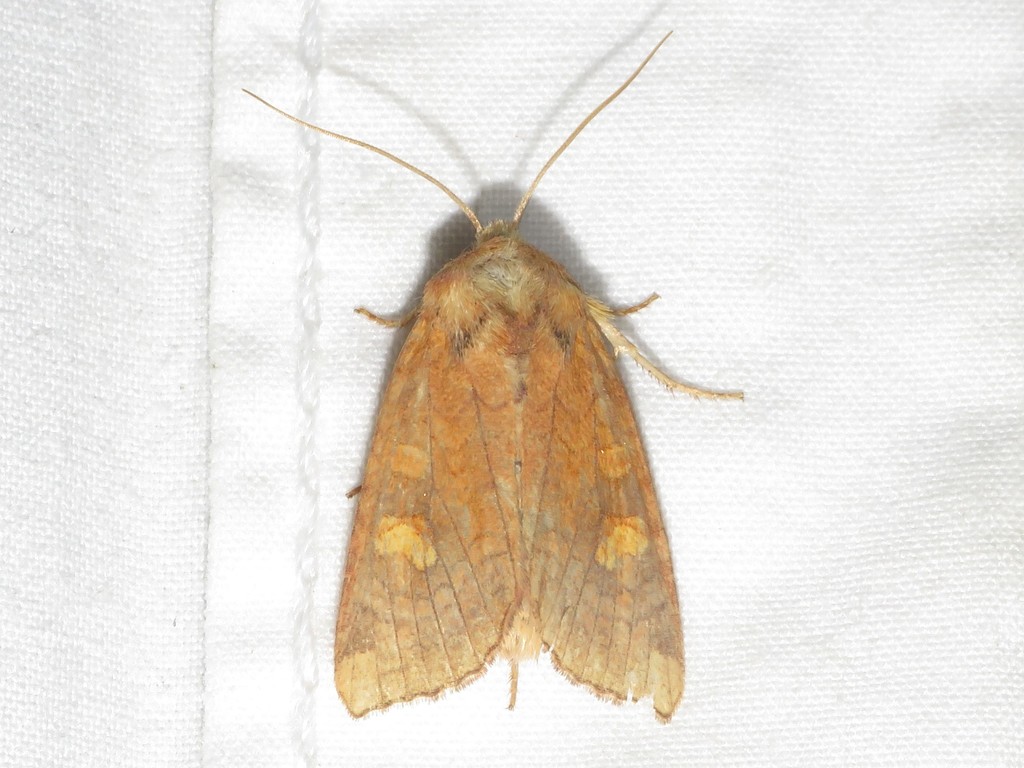
(c) Dan MacNeal, some rights reserved (CC BY) · licence
Family: Noctuidae · Class: Insecta · Order: Lepidoptera
Amphipoea americana (American Ear Moth) is a California animal in the Noctuidae family.
The American Ear Moth is a nocturnal lepidopteran in the family Noctuidae, subfamily Noctuinae, tribe Apameini. This species belongs to the genus Amphipoea, which includes several closely related North American moths that can present identification challenges in the field. Adult American Ear Moths display typical noctuid characteristics with forewings that are generally earth-toned, providing effective camouflage when resting on tree bark or vegetation during daylight hours. The species name "americana" reflects its North American distribution, distinguishing it from related Amphipoea species found in other regions. Positive identification often requires examination of genitalic structures, as several Amphipoea species are morphologically similar (Lepidopterists' Society 2017). Amphipoea americana occurs across multiple regions of North America, with documented populations in California and Nevada. The species has been recorded in various California counties, including Los Angeles County where it appears in regional species checklists (BugGuide). Nevada records include Clark County in the Virgin Mountains, indicating the species' distribution extends into the Great Basin region. The full extent of the species' California range requires additional survey work to document current populations. Habitat preferences for this species have not been extensively documented in the scientific literature. Like other members of the Noctuidae family, American Ear Moths likely inhabit areas with suitable host plants and appropriate microclimate conditions for larval development. The species appears to occur in both urban and natural environments, as evidenced by records from the Los Angeles Basin area. Life history details for Amphipoea americana remain poorly documented compared to more extensively studied noctuid species. Adult flight periods and larval host plant associations require further research to establish comprehensive ecological profiles. The genus Amphipoea typically includes species with larvae that feed on grasses and herbaceous plants, though specific host plant relationships for A. americana have not been definitively established in the available literature. The conservation status of the American Ear Moth has not been formally assessed at federal or state levels. Population trends and abundance estimates are not available in current databases. The species does not appear on federal or California endangered species lists as of December 2025. However, like many nocturnal moth species, populations may face pressures from habitat loss, light pollution, and climate change effects on host plant communities. The species' identification challenges noted in taxonomic literature may result in under-reporting of occurrence records, making population assessment difficult. Scientific documentation for this species remains limited compared to other noctuids. Additional research on habitat requirements, host plant relationships, flight periods, and population distribution would enhance understanding of this species' ecological role and conservation needs. Field surveys using appropriate sampling methods could help clarify the current status and distribution of Amphipoea americana in California.
Classification
Class: Insecta · Order: Lepidoptera · Family: Noctuidae
Frequently asked questions
How is Amphipoea americana classified?
Amphipoea americana belongs to class Insecta, order Lepidoptera, family Noctuidae.
What family does Amphipoea americana belong to?
Amphipoea americana is in the Noctuidae family.
What is Amphipoea americana?
The American Ear Moth is a nocturnal lepidopteran in the family Noctuidae, subfamily Noctuinae, tribe Apameini.
Is Amphipoea americana found in California?
Yes. Amphipoea americana is recorded in California in The California Species Project's catalogue.
Related species
Other California species in the same genus, family, or bioregion.
Data from The California Species Project — 14,000+ California species with verified data from CNPS, CDFW, USFWS, and more.