Amphipyra brunneoatra
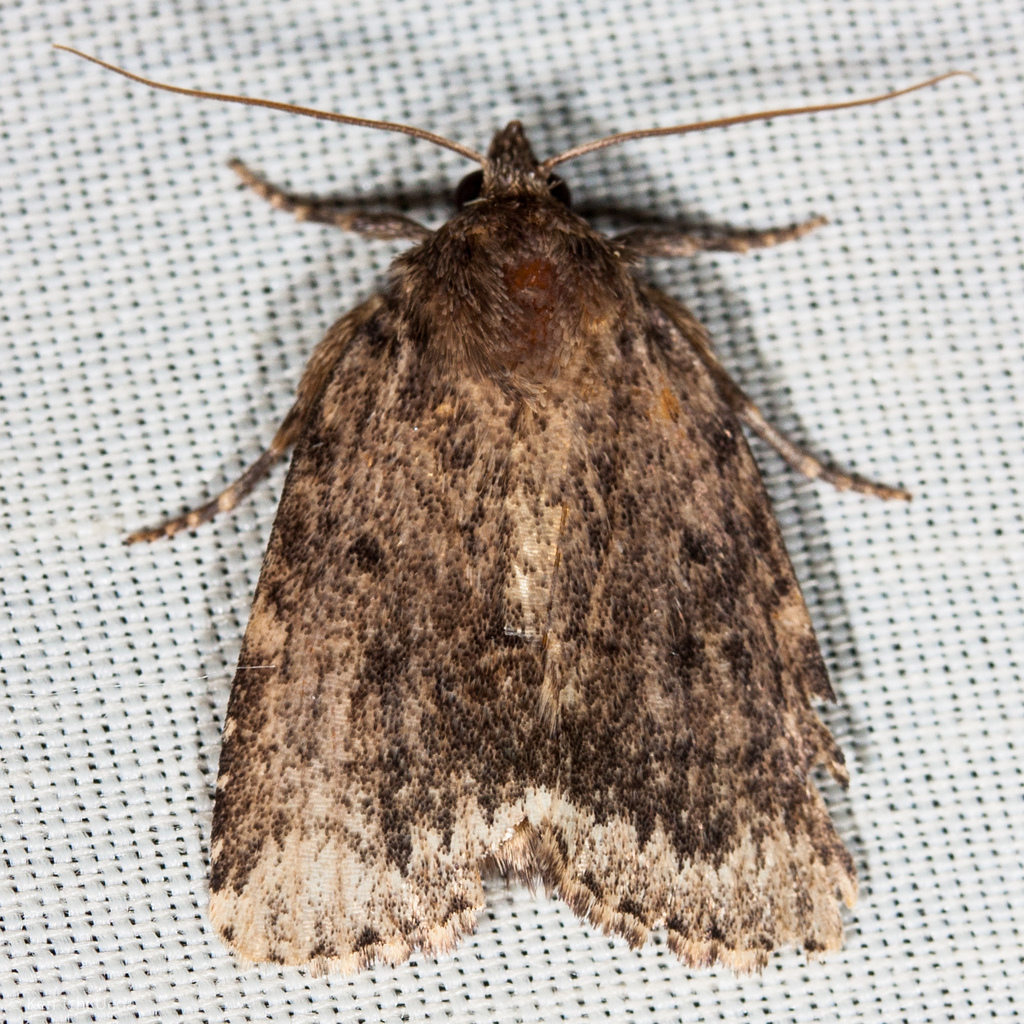
(c) Ken-ichi Ueda, some rights reserved (CC BY) · licence
Family: Noctuidae · Class: Insecta · Order: Lepidoptera
Amphipyra brunneoatra is a California animal in the Noctuidae family.
Amphipyra brunneoatra is a medium-sized moth in the family Noctuidae, commonly known as owlet moths or cutworm moths. Adults typically measure 35 to 45 mm (1.4 to 1.8 inches) in wingspan. The forewings are predominantly brown to dark brownish-gray with subtle darker banding and indistinct reniform and orbicular spots characteristic of the genus. The hindwings are lighter, typically pale gray to whitish with darker marginal areas. The thorax and abdomen match the forewing coloration, providing effective camouflage when the moth rests on tree bark during daylight hours. This species occurs in the southwestern United States and southwestern Oregon, representing a relatively restricted geographic range compared to many noctuids. The distribution includes portions of California, Nevada, Arizona, New Mexico, and extends northward into southwestern Oregon. Within this range, populations appear to be localized and associated with specific habitat conditions. Amphipyra brunneoatra inhabits oak woodlands, mixed coniferous-deciduous forests, and chaparral communities. The species shows a preference for areas with moderate canopy cover and diverse understory vegetation. Adults are attracted to areas with flowering plants that provide nectar sources, including native shrubs and herbaceous perennials. Adults are nocturnal and attracted to artificial lights. Like other moths in the genus Amphipyra, they likely have one generation per year in most of their range. Males can be collected at ultraviolet light traps. The species appears to be active during late summer and fall months based on collection records. Larval host plants and specific life cycle details remain undocumented in the scientific literature for this species. Overwintering stage and pupation timing are unknown but likely follow patterns similar to related Amphipyra species. The conservation status of Amphipyra brunneoatra has not been formally assessed by federal or state agencies, and it does not appear on endangered species lists. Like many specialized moths with restricted ranges, the species may be vulnerable to habitat modification, including urbanization, altered fire regimes, and climate change effects on its montane habitats. The fragmented nature of suitable habitat across its southwestern range could make populations susceptible to local extirpations. Limited survey data makes it difficult to assess population trends, though the species appears to be naturally uncommon throughout its range. Conservation of oak woodlands and mixed forest communities would benefit this species along with other moths and insects dependent on these ecosystems.
Classification
Class: Insecta · Order: Lepidoptera · Family: Noctuidae
Frequently asked questions
How is Amphipyra brunneoatra classified?
Amphipyra brunneoatra belongs to class Insecta, order Lepidoptera, family Noctuidae.
What family does Amphipyra brunneoatra belong to?
Amphipyra brunneoatra is in the Noctuidae family.
What is Amphipyra brunneoatra?
Amphipyra brunneoatra is a medium-sized moth in the family Noctuidae, commonly known as owlet moths or cutworm moths.
Is Amphipyra brunneoatra found in California?
Yes. Amphipyra brunneoatra is recorded in California in The California Species Project's catalogue.
Related species
Other California species in the same genus, family, or bioregion.
Data from The California Species Project — 14,000+ California species with verified data from CNPS, CDFW, USFWS, and more.