Amphipyra pyramidoides
Copper Underwing
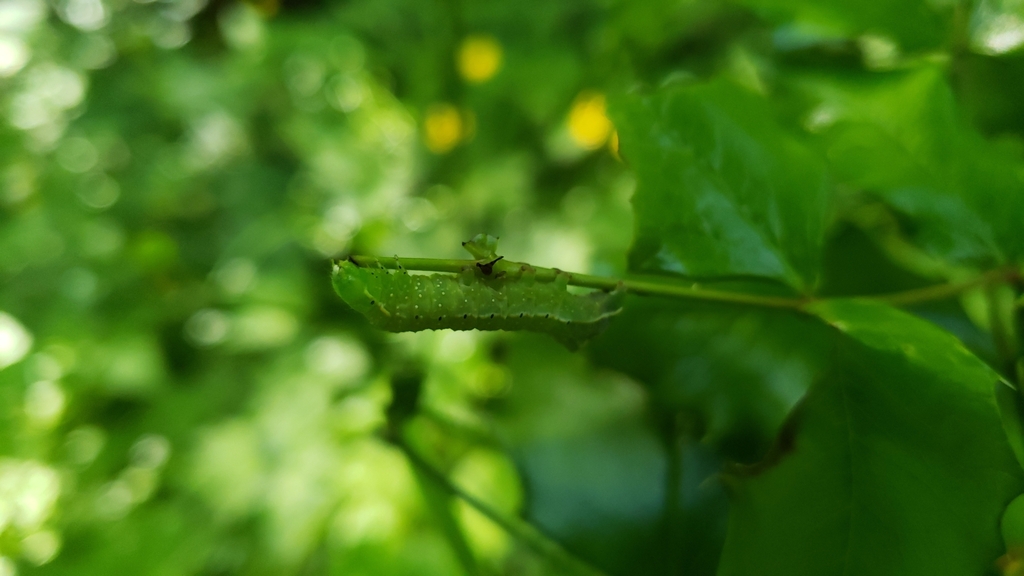
(c) Gavin Slater, some rights reserved (CC BY) · licence
Family: Noctuidae · Class: Insecta · Order: Lepidoptera
Amphipyra pyramidoides (Copper Underwing) is a California animal in the Noctuidae family.
The Copper Underwing (Amphipyra pyramidoides) is a nocturid moth in the subfamily Amphipyrinae, tribe Amphipyrini. Adults typically have a wingspan of 40-50 mm (1.6-2.0 inches), with forewings displaying mottled brown and gray patterns that provide effective camouflage against tree bark. The hindwings are copper-orange to reddish-brown, giving the species its common name. The underwing coloration is most visible during flight or when the moth is disturbed and spreads its wings defensively. This species occurs across much of eastern and central North America, with its range extending from southern Canada south to Florida and west to the Great Plains. According to the Butterflies and Moths of North America database, the Copper Underwing has been documented in numerous states throughout this range (BAMONA). In the western United States, its distribution becomes more limited and patchy. Copper Underwing moths inhabit deciduous and mixed forests, woodlands, and wooded suburban areas. Adults are commonly found in areas with mature trees, particularly where their larval host plants occur. The species shows a preference for forest edges and openings rather than dense, closed-canopy forests. They can be found from sea level to moderate elevations in mountainous regions. Adults are nocturnal and are attracted to artificial lights, making them frequently encountered at moth sheets and porch lights during their flight period. The species is typically active from late summer through early fall, with peak activity occurring in August and September in most of their range. Larvae feed on various deciduous trees and shrubs, with documented host plants including species of oak (Quercus), maple (Acer), cherry (Prunus), and other hardwoods (BugGuide). The caterpillars are typical noctuids, feeding primarily at night and hiding during daylight hours in bark crevices or leaf litter. Females lay eggs singly or in small clusters on host plant foliage or bark. The species overwinters as eggs, with larvae emerging in spring to feed on new growth. Mature caterpillars pupate in the soil or leaf litter, with adults emerging in late summer. The species appears to be univoltine (one generation per year) throughout most of its range. The Copper Underwing is not federally or state listed as threatened or endangered, and appears to maintain stable populations across much of its range. Like many forest-associated moths, populations may be affected by habitat fragmentation, forest management practices, and light pollution, which can disrupt natural behavioral patterns. Climate change may also influence the species' distribution and phenology, particularly at the edges of its range. The species benefits from the maintenance of diverse deciduous forest ecosystems and reduced artificial lighting in natural areas.
Classification
Class: Insecta · Order: Lepidoptera · Family: Noctuidae
Frequently asked questions
How is Amphipyra pyramidoides classified?
Amphipyra pyramidoides belongs to class Insecta, order Lepidoptera, family Noctuidae.
What family does Amphipyra pyramidoides belong to?
Amphipyra pyramidoides is in the Noctuidae family.
What is Amphipyra pyramidoides?
The Copper Underwing (Amphipyra pyramidoides) is a nocturid moth in the subfamily Amphipyrinae, tribe Amphipyrini.
Is Amphipyra pyramidoides found in California?
Yes. Amphipyra pyramidoides is recorded in California in The California Species Project's catalogue.
Related species
Other California species in the same genus, family, or bioregion.
Data from The California Species Project — 14,000+ California species with verified data from CNPS, CDFW, USFWS, and more.