Amydria effrenatella
Brown-blotched Amydria Moth
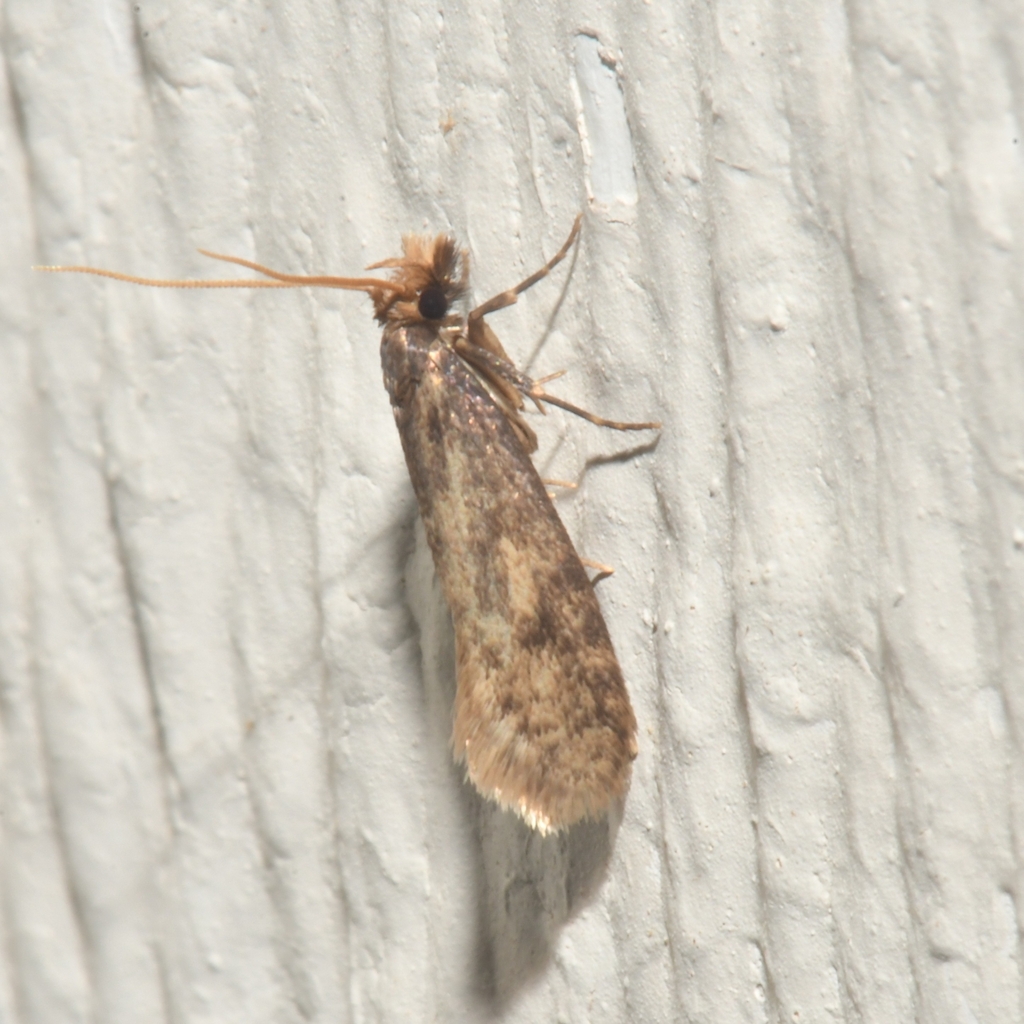
(c) Tom Kennedy, some rights reserved (CC BY) · licence
Family: Tineidae · Class: Insecta · Order: Lepidoptera
Amydria effrenatella (Brown-blotched Amydria Moth) is a California animal in the Tineidae family.
The Brown-blotched Amydria Moth (Amydria effrenatella) is a small member of the Tineidae family, family Tineidae, subfamily Acrolophinae, commonly known as burrowing webworm moths. Adults measure 9 to 12 mm in wingspan (BugGuide). The forewings display a characteristic brown-blotched pattern that gives the species its common name, with mottled brown and lighter coloration that provides effective camouflage. The species was originally described by Clemens in 1859 and carries the Hodges number 0334 in North American moth classification systems. The Brown-blotched Amydria Moth has a broad distribution across North America, occurring in Ontario, Canada, and throughout much of the United States. According to BugGuide, the genus Amydria contains many undescribed species, and taxonomic identification often requires dissection for certainty. The species has been documented across multiple regions, though specific distribution patterns within California remain poorly documented. Habitat preferences for this species have not been extensively studied or published in accessible literature. Like other members of the Acrolophinae subfamily, the Brown-blotched Amydria Moth likely inhabits areas where its larval host plants are present, though specific habitat requirements and elevation ranges have not been well documented in current scientific literature. The life history and ecological behavior of Amydria effrenatella remain largely unstudied. As with other burrowing webworm moths in the subfamily Acrolophinae, larvae likely create silk-lined burrows or galleries, though specific host plants and larval feeding habits have not been documented for this species. Adult flight periods, mating behaviors, and seasonal activity patterns require further research to establish definitive information. Currently, the Brown-blotched Amydria Moth does not hold federal or state endangered species listing status. However, the species appears on Arkansas's list of Species of Greatest Conservation Need (SGCN) as of 2006, indicating conservation concern in at least part of its range (BugGuide). The Arkansas Comprehensive Wildlife Conservation Strategy team included this species on their SGCN list, noting that some species were selected because they are rare, experiencing population declines, or because insufficient information exists to determine their taxonomic, life history, or conservation status. While inclusion on the SGCN list does not confer regulatory protection like federal endangered species listing, it highlights the need for additional research and monitoring. The taxonomic complexity within the genus Amydria presents challenges for conservation assessment. With many undescribed species and the requirement for dissection-based identification, determining the true distribution and abundance of A. effrenatella remains difficult. This taxonomic uncertainty, combined with limited ecological research, underscores the need for comprehensive studies of this and related species to better understand their conservation requirements and population trends.
Classification
Class: Insecta · Order: Lepidoptera · Family: Tineidae
Frequently asked questions
How is Amydria effrenatella classified?
Amydria effrenatella belongs to class Insecta, order Lepidoptera, family Tineidae.
What family does Amydria effrenatella belong to?
Amydria effrenatella is in the Tineidae family.
What is Amydria effrenatella?
The Brown-blotched Amydria Moth (Amydria effrenatella) is a small member of the Tineidae family, family Tineidae, subfamily Acrolophinae, commonly known as burrowing webworm moths.
Is Amydria effrenatella found in California?
Yes. Amydria effrenatella is recorded in California in The California Species Project's catalogue.
Related species
Other California species in the same genus, family, or bioregion.
Data from The California Species Project — 14,000+ California species with verified data from CNPS, CDFW, USFWS, and more.